Algeria
 Egypt
 Libya
 Morocco
 Sudan
 Benin
 Burkina Faso
 Cabo Verde
 Côte d'Ivoire
 Ghana
 Guinea
 Guinea-Bissau
 Liberia
 Mali
 Mauritania
 Niger
 Nigeria
 Senegal
 Sierra Leone
 The Gambia
 Togo
 Cameroon
 Central African Republic
 Chad
 DR Congo
 Equatorial Guinea
 Gabon
 Republic of the Congo
 São Tomé and Príncipe
 Burundi
 Comoros
 Djibouti
 Eritrea
 Ethiopia
 Kenya
 Madagascar
 Malawi
 Mauritius
 Mozambique
 Rwanda
 Seychelles
 Somalia
 South Sudan
 Tanzania
 Uganda
 Angola
 Botswana
 Eswatini
 Lesotho
 Namibia
 South Africa
 Zambia
 Zimbabwe
A case that reaches beyond prison walls
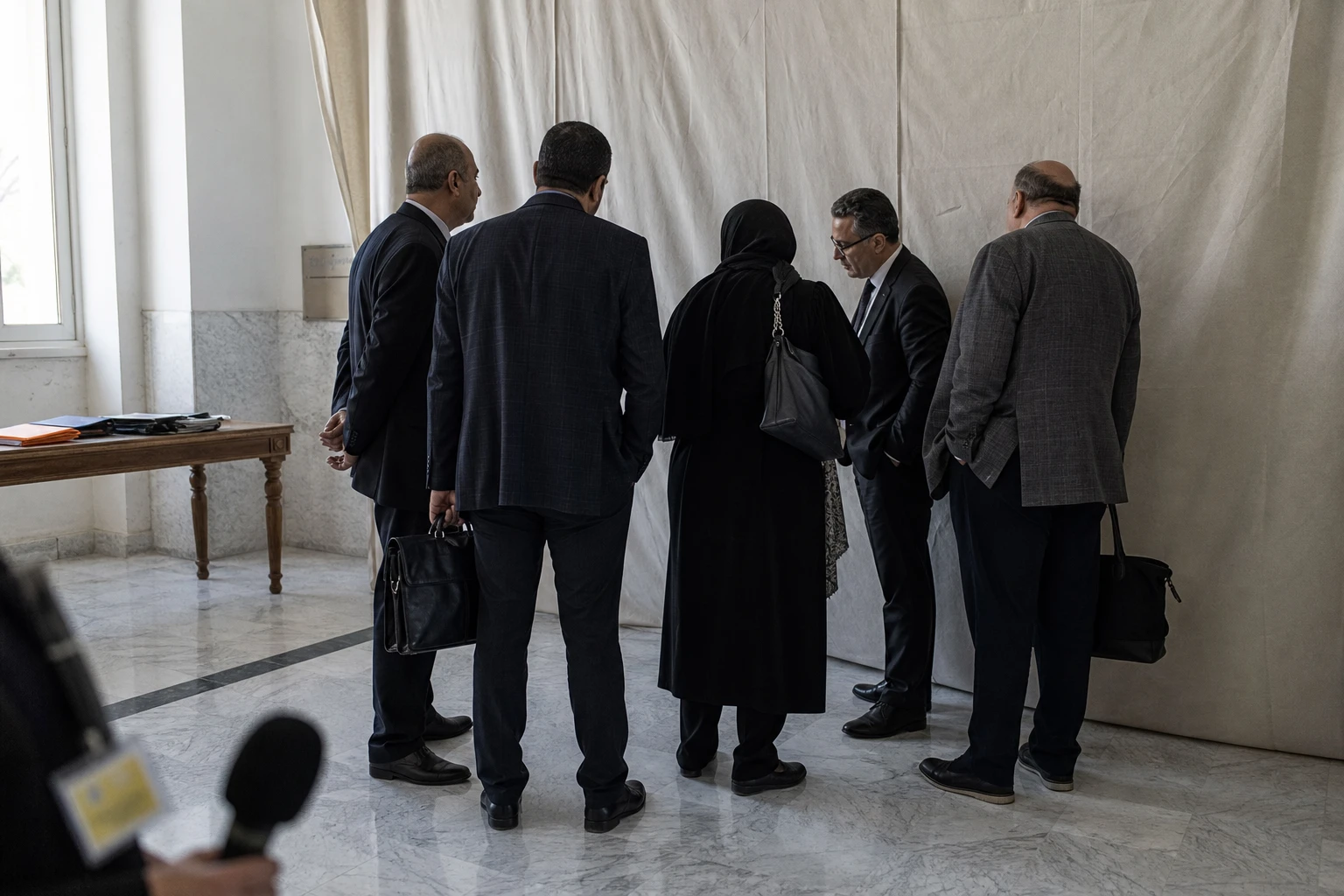
In Tunis, a humanitarian cause can quickly become a weighty legal case. That is what is unfolding around four Tunisian activists from the Gaza flotilla, who remain in pre-trial detention even though their mobilisation was initially presented as an act of civilian solidarity with the Palestinian population.
The case comes amid growing tension in Tunisia over the relationship between the judiciary, public space and protest since Kaïs Saïed concentrated power in July 2021. Since then, opposition figures, journalists, lawyers and activists have faced prosecutions that have fuelled recurring debate over judicial independence and the place of dissent in political life.
In this context, the Gaza support flotilla is not merely a foreign policy issue. It also touches on Tunisia’s domestic scene, freedom of association, the collection of donations and the sometimes-blurred boundary between activism, humanitarian logistics and judicial oversight of funding.
What the judge decided on 11 September
On Friday 11 September 2026, the investigating judge at Tunis’s economic and financial judicial division extended the pre-trial detention of Wael Naouar, Ghassan Henchiri, Nabil Chennoufi and Ghassan Boughdiri by four months, according to several Tunisian and international media outlets. The hearing concerned an investigation into the financial flows of the “Soumoud Flotilla”, amid suspicions of forgery, fraud, money laundering and the misappropriation of funds raised through donations.
The four men have been in detention since March 2026. The case began after an investigation was opened into “suspicious financial flows” linked to donations collected for the solidarity campaign with Gaza, followed by detention orders issued on 16 March against seven members of the flotilla’s Tunisian coordination team. Two other activists, Jawaher Channa and Sana Msahli, were subsequently released, while the investigation continued into the other people targeted.
The defence lawyers argue that the proceedings are part of a wider series of cases targeting critical voices. They link the activists’ case to other trials involving political opponents, civil society figures and journalists, often on the basis of financial offences. Human rights organisations have also echoed this view, denouncing the extensive use of prosecutions to stifle civic activity.
In strictly legal terms, pre-trial detention in Tunisia is governed by the Code of Criminal Procedure, and several legal and human rights sources point out that it can last up to 14 months in certain cases, particularly those involving felonies, with extensions requiring justification. It is precisely this limit that makes each extension politically sensitive, especially in cases carrying a heavy symbolic charge.
Solidarity with Gaza, domestic repression and a wider North African echo
The flotilla activists’ case reveals a tension that has become familiar in Kaïs Saïed’s Tunisia. The state continues to profess support for the Palestinian cause, which is widely shared by Tunisian public opinion, while treating part of the activist mobilisation as a security and financial matter. For the detainees’ supporters, this is where suspicions of a double standard arise. For the judicial authorities, by contrast, the issue is the origin and use of the donations collected.
The case also has a human dimension. Wael Naouar began a hunger strike on 16 August to protest against his continued detention and demand that the charges be dropped. Several sources subsequently reported that his health had deteriorated. The other three detainees joined the hunger strike in early September, increasing the health risks and putting Tunisia’s judiciary under pressure ahead of its decision on whether to keep them in prison.
In Tunis and the country’s other major cities, cases of this kind have a tangible effect on activist networks. They undermine fundraising efforts, chill solidarity networks and prompt organisations to document their finances more thoroughly. At the same time, they fuel distrust among some civil society groups, which see the criminalisation of donations as an indirect way of shrinking the space for collective action.
The implications extend beyond Tunisia. In a Maghreb where initiatives in support of Gaza have often travelled via ports, roads and civil society networks, this case highlights the legal vulnerability of transnational mobilisations. It also resonates across Africa, as the African Union and public opinion in several countries on the continent debate the right to international solidarity, freedom of expression and the limits of security responses to civil protest.
What to watch now is straightforward: the health of the four detainees, the next steps in the investigation by the economic and financial judicial division, and how Tunisia’s judiciary balances oversight of funding with respect for the principle that pre-trial detention should be exceptional. In a country where political and judicial cases increasingly overlap, each new decision has become an indicator of the public climate well beyond this flotilla alone.