Algeria
 Egypt
 Libya
 Morocco
 Sudan
 Benin
 Burkina Faso
 Cabo Verde
 Côte d'Ivoire
 Ghana
 Guinea
 Guinea-Bissau
 Liberia
 Mali
 Mauritania
 Niger
 Nigeria
 Senegal
 Sierra Leone
 The Gambia
 Togo
 Cameroon
 Central African Republic
 Chad
 DR Congo
 Equatorial Guinea
 Gabon
 Republic of the Congo
 São Tomé and Príncipe
 Burundi
 Comoros
 Djibouti
 Eritrea
 Ethiopia
 Kenya
 Madagascar
 Malawi
 Mauritius
 Mozambique
 Rwanda
 Seychelles
 Somalia
 South Sudan
 Tanzania
 Uganda
 Angola
 Botswana
 Eswatini
 Lesotho
 Namibia
 South Africa
 Zambia
 Zimbabwe
A border town pushed to breaking point
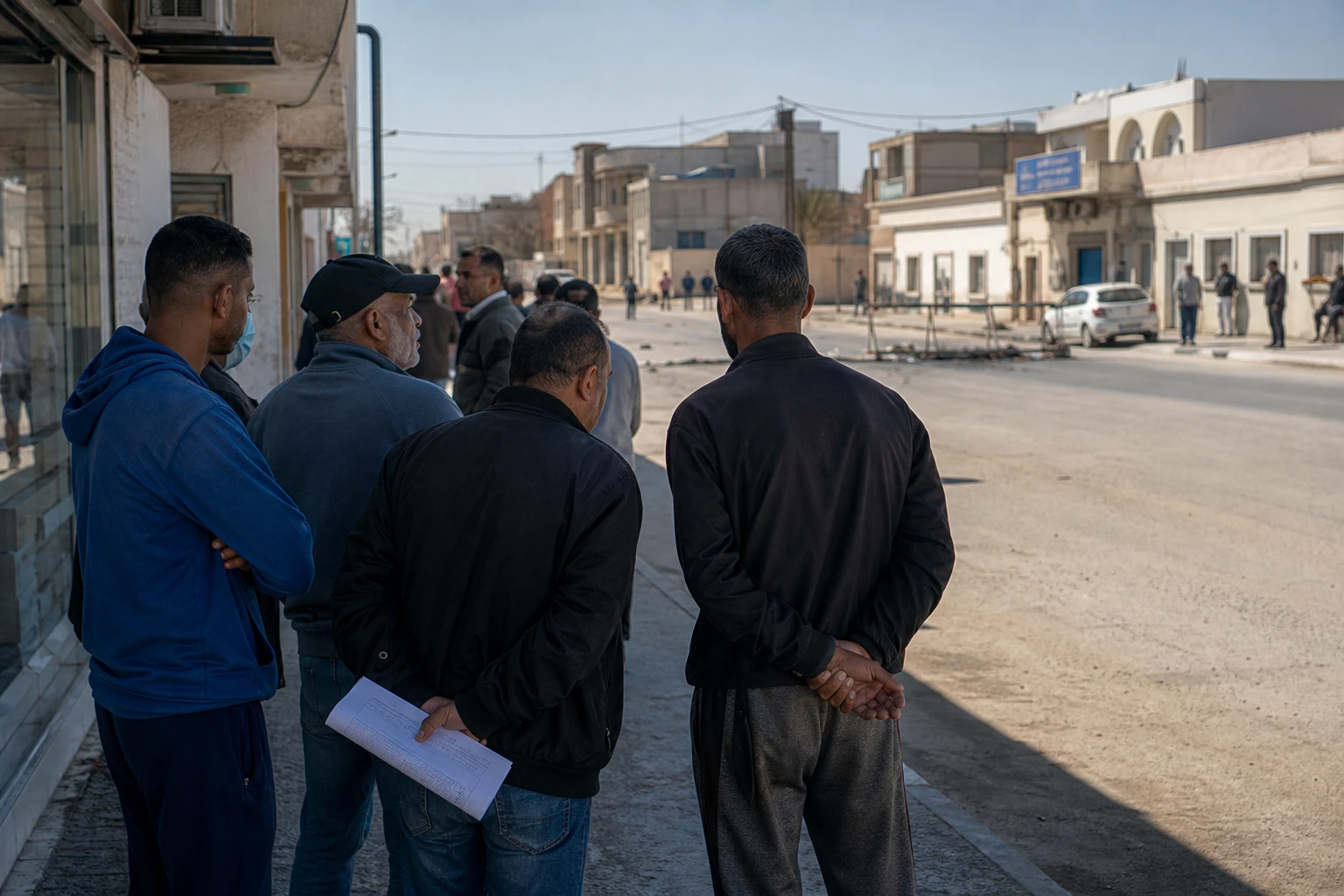
In Ben Guerdane, in south-eastern Tunisia, the sea tells stories not only of departures. All too often, it also returns bodies, missing people and families demanding answers. After a boat that set off from the Zarzis area sank, anger spilled into the streets of this town near the Libyan border, several hundred kilometres from Tunis. Roadblocks and burning tyres point less to a simple disturbance of public order than to a social divide that has become visible.
The tragedy unfolded in a sensitive part of Médenine governorate, where the local economy has long depended on cross-border trade, movement through Ras Jedir and precarious activities. In this region, irregular migration is not an abstract issue. It affects entire neighbourhoods, families, young people with no clear prospects and towns that often feel far removed from decision-making centres in Tunis.
The shipwreck, then the streets
Tunisian authorities said the boat was carrying 15 people. According to information corroborated by the national press, 14 were from Ben Guerdane and one from Zarzis. The search operation continued after the capsizing off the south-eastern coast, in an area near Zarzis. The toll changed over the hours: on 23 August, the National Guard said searches were still under way and reported an initial group of bodies recovered, while other figures circulated later in international media.
The most consistent fact remains the human scale of the tragedy. One survivor was initially reported, then the number of bodies recovered rose as the search progressed. It is precisely this uncertainty that fuels the grief of relatives in shipwrecks of this kind. In Ben Guerdane, people took to the streets quickly. Protesters blocked roads, set tyres alight and voiced their exasperation at a succession of maritime tragedies affecting the same families, often the same neighbourhoods and sometimes the same siblings.
The reaction is therefore not simply an expression of emotion. It also reflects a demand for the truth, for victims to be identified and for explanations about the circumstances of the departure, monitoring and rescue efforts. In this part of Tunisia, residents have already seen similar tragedies trigger weeks of tension when families felt that the authorities were slow to provide information, search for people or return bodies under clear conditions.
The central Mediterranean remains a deadly corridor
The shipwreck is a reminder of a wider reality: the central Mediterranean remains one of the world’s most dangerous migration routes. The International Organization for Migration has reported that deaths and disappearances in the first four months of 2026 had already risen sharply compared with the same period in 2025, with at least 914 people recorded dead or missing on this route. The organisation also notes that its figures remain estimates, as some crossings escape any comprehensive count.
For Tunisia, the phenomenon has become a marker of its domestic tensions. The country is at once a place of departure and transit and, for some migrants from elsewhere in Africa, a place of entrapment. This places Tunis under constant pressure: to monitor its coasts, co-operate with European partners, but also address the social crisis that is driving Tunisians to leave. In the south, questions of jobs, public services and economic opportunities weigh more heavily than official rhetoric about combating networks.
Tunisia signed a partnership agreement with the European Union in 2023. The package announced at the time covered macroeconomic stability, trade, green energy, people-to-people contacts and migration. The European Commission later set out a funding package of nearly €127 million, including around €67 million for operational assistance related to migration. This framework strengthened co-operation on maritime controls and the fight against people smugglers, but it has also drawn criticism from human rights organisations, which denounce a policy of closure without a lasting solution for people on the move.
What Ben Guerdane says about Tunisia today
The Zarzis tragedy and the anger in Ben Guerdane point to something deeper than migration alone. They show the gap between the national strategy of control and the reality experienced on the country’s margins. In Tunis, the authorities speak of maritime security, international co-operation and the fight against clandestine networks. In Ben Guerdane, residents speak of children lost at sea, coffins to be identified and neighbourhoods that feel abandoned.
This divide also matters for North Africa as a whole. Tunisia is not an isolated case. It lies at the crossroads of flows from the Maghreb, routes from the Sahel and departures for Italy or Malta. With every shipwreck, the same equation returns: more controls are not enough to stop people leaving while the economic, social and political causes remain unchanged. That is why maritime death tolls cannot be read simply as police statistics. They are also a barometer of regional imbalances.
What happens next will depend on three concrete factors: the identification of the victims, the final search toll and how the authorities respond to local protests. In Tunisia, as elsewhere on North Africa’s Mediterranean shores, every shipwreck brings the same question to the fore: how can lives be protected without settling for closing off the sea?