Algeria
 Egypt
 Libya
 Morocco
 Sudan
 Tunisia
 Benin
 Burkina Faso
 Cabo Verde
 Côte d'Ivoire
 Ghana
 Guinea
 Guinea-Bissau
 Liberia
 Mali
 Mauritania
 Niger
 Nigeria
 Senegal
 Sierra Leone
 The Gambia
 Togo
 Cameroon
 Central African Republic
 Chad
 DR Congo
 Equatorial Guinea
 Gabon
 Republic of the Congo
 São Tomé and Príncipe
 Burundi
 Comoros
 Djibouti
 Eritrea
 Ethiopia
 Kenya
 Madagascar
 Malawi
 Mauritius
 Mozambique
 Rwanda
 Seychelles
 Somalia
 South Sudan
 Tanzania
 Angola
 Botswana
 Eswatini
 Lesotho
 Namibia
 South Africa
 Zambia
 Zimbabwe
At Tanga, energy is no longer just about oil fields
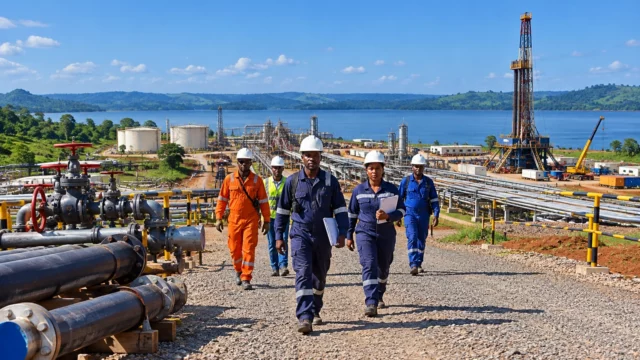
In the Tanga region of eastern Tanzania, the pipelines no longer tell only a story of transport. They also embody a political ambition: to turn this Indian Ocean coast into an industrial hub capable of capturing some of the value generated by oil and gas from Uganda. For Dodoma, the stakes go beyond crude exports. They concern jobs, public revenue, energy security and Tanzania’s place in East African economic integration.
The project is part of a long-standing regional dynamic. East Africa has been seeking for years to better link its electricity networks and logistics corridors. The Eastern Africa Power Pool coordinates cross-border electricity trade, while the East African Community is urging its member states to complete interconnections to facilitate trade. In this context, Tanzania is not merely a transit country. It is becoming an anchor between the region’s markets and the Indian Ocean.
What Kampala and Dodoma are planning
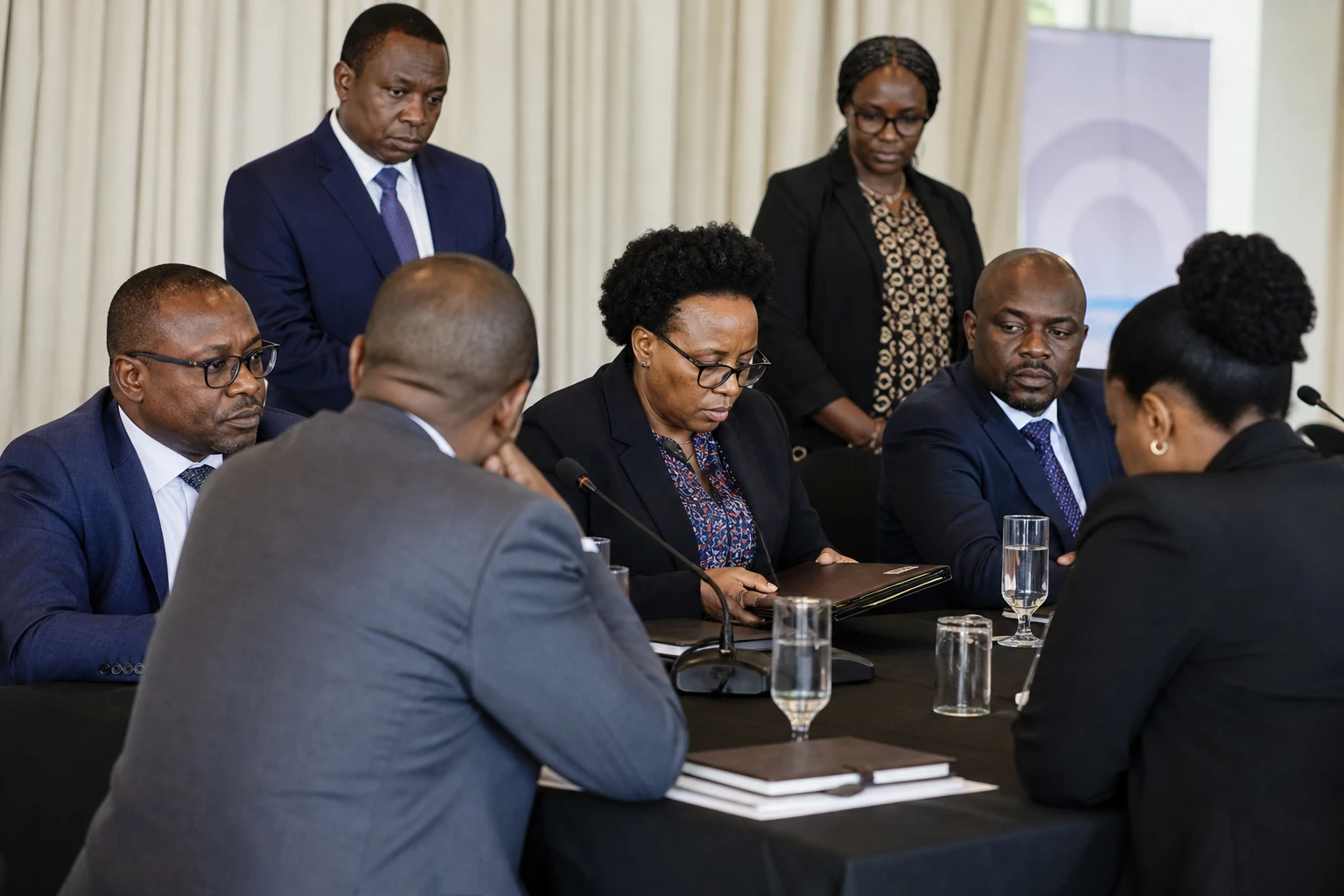
On 7 February 2026, in Dar es Salaam, Yoweri Museveni and Samia Suluhu Hassan confirmed their intention to go beyond the EACOP pipeline alone. They discussed a refined-products pipeline from Uganda to Tanga, as well as a gas pipeline in the opposite direction. The two capitals are now talking about a regional energy hub around Tanga, designed for refining, storage, logistics and petrochemicals. The partners named in the arrangement are Uganda’s national oil company, the Tanzania Petroleum Development Corporation and Vitol Bahrain EC.
Work on the main project is already progressing on the ground. TPDC said in early July 2026 that the Tanzanian section of EACOP was 87% complete and was expected to be finished by the end of August 2026. The Tanzanian state-owned company also noted that the Tanga-Chongoleani section involves substantial investment, with direct effects on local employment, roads, subcontracting and tax revenue. In Uganda, officials say commercial crude exports through the pipeline are due to begin in 2026.
The project’s key figures remain enormous. EACOP is a 1,443-kilometre heated oil pipeline linking Uganda’s oil fields in the Lake Albert basin to the Tanzanian port of Tanga. Its transport capacity is listed as 216,000 barrels per day in the technical documentation, with peak capacity stated as 246,000 barrels per day on the project website.
Why Tanga matters as much as Hoima
At the heart of the debate is added value. A simple export corridor generates less than an industrial ecosystem. By installing refining and storage capacity at Tanga, Tanzania and Uganda are seeking to retain more of the margins on the continent. The message is clear: process some hydrocarbons locally, create technical jobs and reduce dependence on imports of finished fuels. This approach also aligns with the EAC’s priorities, which focus on cross-border infrastructure to support regional trade.
For Uganda, the project addresses a practical need: reducing the cost of imported petroleum products and supporting a future domestic oil industry. For Tanzania, it strengthens Tanga’s role as an energy export point, as well as an area of activity for construction, port services and storage. Another signal came from Kigali in early July 2026, when Rwanda signed an agreement to facilitate the import and storage of refined products via Tanga. This shows that the Tanzanian port can extend beyond its bilateral relationship with Kampala and become a platform for several regional economies.
The World Bank is also supporting the regional energy corridor, but in electricity. In June 2026, it approved a $1.6 billion package for East Africa, including $250 million for the Uganda-Tanzania interconnection. The project is due to link about 260 kilometres of 400 kV lines and strengthen electricity trade between the two countries. This confirms a simple reality: hydrocarbons and electricity networks are now advancing together in regional economic diplomacy.
An economic bet, but also a political test
The bet is not without risks. The stated cost of more than $20 billion puts this type of infrastructure in a category where delays, financial adjustments and controversies are common. Supporters see it as a lever for economic sovereignty. Critics point to environmental concerns, expropriations and prolonged dependence on fossil fuels. These tensions are not abstract. They translate into decisions about land, compensation, taxation and the pace of implementation.
The Tanzanian case is also political. Samia Suluhu Hassan often presents major projects at Tanga as instruments of regional development and infrastructure modernisation. In an economy where informal activity remains significant, the most visible promise is that of temporary construction jobs, service contracts and opportunities for local SMEs. But the more lasting promise will depend on the ability to turn the showcase effect into a real industry, with skills, maintenance, transport, storage and energy management.
The Tanga project also forms part of a broader trend in East Africa: states no longer want simply to export raw materials; they want to organise regional value chains. That is precisely the point of discussions on electricity interconnections, oil corridors, port terminals and shared refineries. If the timetable is met, 2026 could mark a symbolic turning point: a region that is no longer content to produce energy, but is also seeking to process, transport and sell it according to its own priorities.