Algeria
 Egypt
 Libya
 Morocco
 Sudan
 Tunisia
 Benin
 Burkina Faso
 Cabo Verde
 Ghana
 Guinea
 Guinea-Bissau
 Liberia
 Mali
 Mauritania
 Niger
 Nigeria
 Senegal
 Sierra Leone
 The Gambia
 Togo
 Cameroon
 Central African Republic
 Chad
 DR Congo
 Equatorial Guinea
 Gabon
 Republic of the Congo
 São Tomé and Príncipe
 Burundi
 Comoros
 Djibouti
 Eritrea
 Ethiopia
 Kenya
 Madagascar
 Malawi
 Mauritius
 Mozambique
 Rwanda
 Seychelles
 Somalia
 South Sudan
 Tanzania
 Uganda
 Angola
 Botswana
 Eswatini
 Lesotho
 Namibia
 South Africa
 Zambia
 Zimbabwe
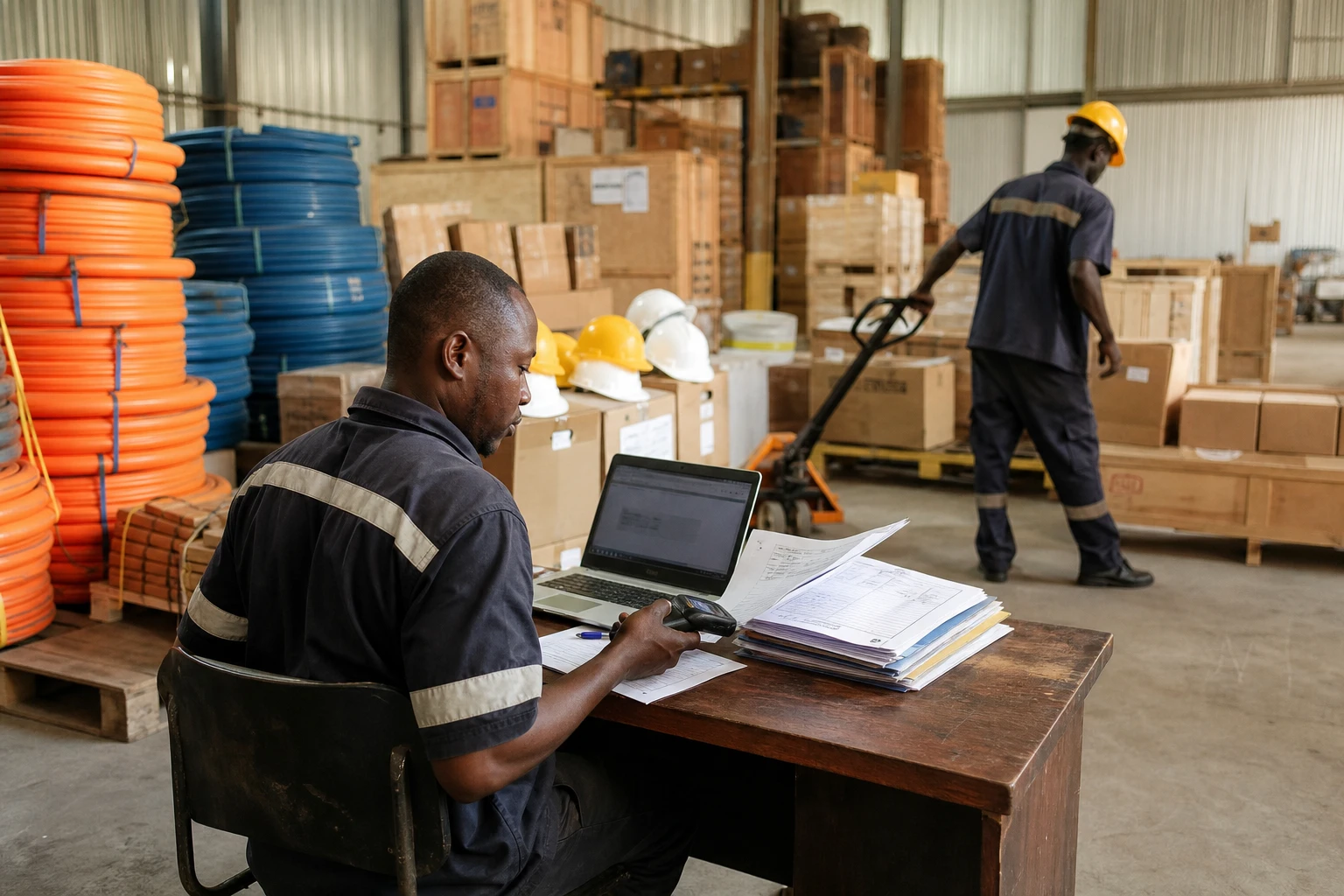
In Bamako, a mine’s performance is a reminder of how closely Malian gold remains tied to roads, supplies and political decisions
When a mine falters, the impact goes beyond a production chart. In Mali, it also affects export revenues, subcontractors, transporters and, more broadly, investors’ confidence in the stability of the operating environment. Syama, in the south of the country, illustrates this very tangible vulnerability.
But the issue extends beyond the mine itself. Since 2023, Bamako has tightened its control of the extractive sector, with a new mining code and a stated desire to capture more of the value created within the country. At the same time, Mali is now part of the Alliance of Sahel States, which seeks to make mineral resources a lever for economic sovereignty across Burkina Faso, Mali and Niger.
A revised forecast confirms logistical pressures at the Syama site
On 21 September 2026, Resolute Mining cut its gold production forecast for Syama to 150,000-160,000 ounces, from an initial range of 195,000 to 210,000 ounces for the year. The group also revised its all-in sustaining cost, or AISC, for the Malian mine to $2,300-$2,400 an ounce.
The company attributed the decision to a challenging operating environment in Mali. It cited delays in the movement of critical supplies, consumables and mining equipment. Disruptions weighed particularly on July and August 2026, with reduced availability of explosives, slower progress in accessing higher-grade areas and increased use of lower-grade ore stockpiles.
According to the operator, Syama produced 74,000 ounces in the first half of 2026, including 30,000 in the second quarter. For the third quarter as a whole, the group now expects about 31,000 ounces, followed by an anticipated 45,000 to 50,000 ounces in the fourth quarter if the improvement seen in September continues.
The contrast with the initial announcements is stark. The mine was originally expected to contribute more to the group’s annual output. This trajectory is a reminder that, in a mining environment, geological potential is not enough. Smooth supply chains, available equipment and consistent industrial execution are also essential.
What the 2025 figures show and why they matter to Mali
The difficulties in 2026 did not come out of nowhere. In its 2025 annual report, Resolute said Syama produced 176,341 ounces of gold, down from a higher level the previous year. The group said the 18% decline was due to lower grades in the sulphide and oxide circuits, as well as increased use of previously mined ore stockpiles.
In other words, Syama is emerging from an already strained period. For an economy such as Mali’s, where gold remains one of the pillars of exports and public revenues, a prolonged decline at a major asset can affect the entire local value chain. The effects are felt in purchases from suppliers, freight and maintenance, as well as in the indirect income of communities near the site.
Mali’s Ministry of Mines is emphasising the modernisation of the mining cadastre, local content and better oversight of mining operations. This approach responds to a central challenge: ensuring that the performance of mines operating in Mali benefits the national economy more, rather than depending solely on decisions made by a head office abroad.
Mali’s reading of the issue is therefore about more than a simple cut to a listed company’s forecast. It raises a practical question of sovereignty: how can supplies, customs clearance times, logistics and the availability of explosives be secured in a landlocked country, where every supply-chain disruption quickly affects production?
A recovery plan is under way, but still depends on the national environment
Resolute says it has launched several measures. The company is building an emulsion plant on site, due to be commissioned in November 2026, to reduce its dependence on explosives supplies. It also plans to expand its mining fleet, improve equipment availability and bring in a new mining contractor to make up for the shortfall in open-pit extraction.
These announcements show that the solution is not purely technical. It is also organisational and political. If delays in moving consumables and equipment persist, the mine will remain vulnerable. If, on the other hand, the new arrangements improve the flow of production, Syama can return to a pace closer to its capacity. But recovery does not depend on the operator alone. It also requires a clear administrative and security environment.
For Bamako, the challenge is twofold. On the one hand, it must preserve the appeal of a sector that brings in foreign currency and jobs. On the other, it must avoid becoming so dependent on a handful of major assets that the state is exposed to operational shocks. That is precisely why the government is emphasising mining diversification, local processing and tighter governance of licences and flows.
The situation at Syama also has regional significance. Resolute says Mako, in Senegal, remains on track to meet its targets, while its projects in Côte d’Ivoire are progressing. This means that a group can cushion its risks across West Africa, while an isolated site is more exposed to local logistical blockages. For countries in the sub-region, the lesson is clear: the future of mining depends not only on what lies underground, but also on transport corridors, customs, energy and the ability to stabilise supply chains.
Beyond Syama, a test of mining sovereignty in West Africa
This issue resonates beyond Mali because it highlights a common tension across West Africa: many countries want to derive more value from their resources, but remain exposed to the very practical constraints of importing equipment, subcontracting and domestic transport. The debate is therefore not only financial. It concerns states’ ability to industrialise their mines without undermining production itself.
In the coming months, the key question will be simple: will the emulsion plant be commissioned on schedule, and will the fourth-quarter ramp-up allow the company to make up some of the lost ground? The answer will say much about the real room for manoeuvre of a major gold mine in Mali, where mining sovereignty has become as much a political marker as an industrial objective.