Algeria
 Egypt
 Libya
 Morocco
 Sudan
 Tunisia
 Benin
 Burkina Faso
 Cabo Verde
 Ghana
 Guinea
 Guinea-Bissau
 Liberia
 Mali
 Mauritania
 Niger
 Nigeria
 Senegal
 Sierra Leone
 The Gambia
 Togo
 Cameroon
 Central African Republic
 Chad
 DR Congo
 Equatorial Guinea
 Gabon
 Republic of the Congo
 São Tomé and Príncipe
 Burundi
 Comoros
 Djibouti
 Eritrea
 Ethiopia
 Kenya
 Madagascar
 Malawi
 Mauritius
 Mozambique
 Rwanda
 Seychelles
 Somalia
 South Sudan
 Tanzania
 Uganda
 Angola
 Botswana
 Eswatini
 Lesotho
 Namibia
 South Africa
 Zambia
 Zimbabwe
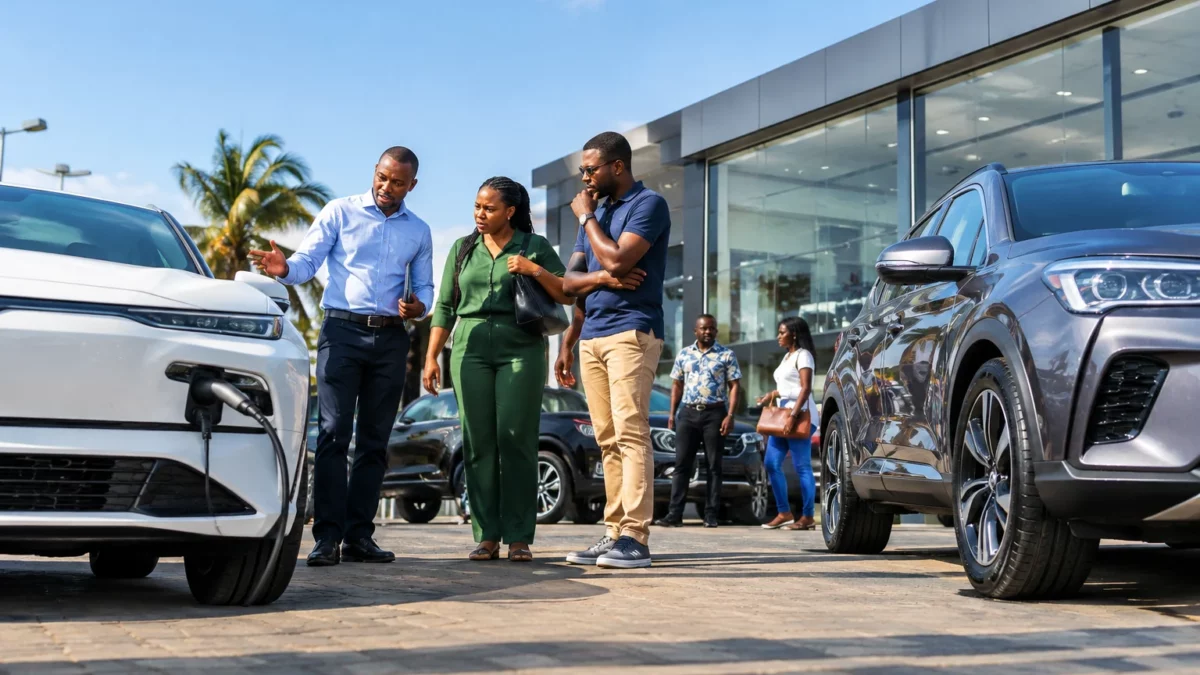
In Abidjan, choosing a car is about more than the price displayed at the dealership. The cost of parts, the availability of a mechanic and fuel consumption matter just as much. Chinese carmakers are seeking to meet these criteria with wider ranges and new technologies. But their growing visibility does not yet mean they dominate the Ivorian market.
A growing market, with practical expectations
Côte d’Ivoire is one of West Africa’s major car markets. In the first half of 2026, sales of new vehicles reached 16,328, up from 15,185 over the same period in 2025, according to the half-year report published by CFAO Mobility Côte d’Ivoire on the Regional Securities Exchange (BRVM). Another company in the sector, Tractafric Motors Côte d’Ivoire, reported a total of 16,244 new vehicles for the half-year. These figures come from two distributors whose reporting scopes differ slightly; they nevertheless point to market growth.
This change is taking place within a regulatory framework that has reshaped supply. Since 1 July 2018, imports of second-hand vehicles have been subject to an age limit: five years for passenger cars and taxis. The measure has not eliminated the second-hand market, but it has changed sourcing options and increased interest in new and recent vehicles.
Chinese brands are entering a sector already structured around major distributors and local dealerships. Some are represented by established networks; others rely on specialist importers. This presence makes it possible to offer models, but buyers’ trust also depends on the quality of after-sales service and the continuity of spare-parts supplies.
Brands expanding their presence
BYD, Geely, JAC, Chery, Great Wall and BAIC are among the Chinese brands distributed or listed in Côte d’Ivoire. The line-up is expanding further: on 1 October 2026, Rimco Motors opened a space in Abidjan dedicated in particular to Wuling and Baojun. The range on display combines combustion-engine, hybrid and electric powertrains, with passenger cars, SUVs and commercial vehicles.
Growth is therefore not based on a single technology. Combustion-engine models and SUVs cater to everyday and business use; hybrid and electric versions target customers focused on energy and maintenance costs. In February 2025, the Ivorian news agency reported that distributor Loxea was already selling three BYD electric models, including the TANG, following the ATTO 3 and Dolphin.
Their commercial pitch is a combination of price, features, design and a range of powertrains. The presence of several networks also makes it easier to compare vehicles at dealerships. However, promises of savings are not enough to decide a purchase. Motorists must consider the purchase price, warranty, resale value, repairs and access to parts over several years.
The contest also plays out after the sale
The available figures point to a distinction between visibility and market share. In the first half of 2026, BYD sold 74 vehicles within the scope reported by CFAO Mobility, or 0.5% of the market cited by the distributor. Suzuki and Toyota remained far ahead, with 2,688 and 2,444 units respectively in these figures. Chinese brands are therefore gaining ground, but the data do not yet confirm a general shift in buying patterns.
After-sales service will be a decisive test. New entrants must build up parts stocks, train technicians and maintain accessible workshops. For motorists in Abidjan, where daily journeys put vehicles under heavy strain, a car being off the road can cost time and income. Outside the economic capital, the distance to dealerships can make repairs even more difficult.
Transport companies, public administrations and tradespeople do not have the same needs as households. A utility vehicle must remain available; a public transport vehicle must be repairable quickly. Private buyers, meanwhile, weigh up monthly payments, fuel consumption and the cost of parts. Local distribution, independent garages and importers will therefore play as important a role as the manufacturers in the lasting adoption of these models.
Electric vehicles raise an additional issue: charging. At the opening of the Wuling and Baojun showroom, the distributor itself stressed that the growth of these vehicles would depend on the development of charging facilities, both at home and at businesses. Hybrids can reduce this dependence in the short term, but they too require appropriate maintenance skills.
A West African trend to watch
Côte d’Ivoire is a member of ECOWAS, the Economic Community of West African States. Decisions made in Abidjan may therefore interest operators working across several countries in the region. Cross-border commercial networks can pool some activities, but import rules, infrastructure and purchasing habits remain specific to each market. It would therefore be premature to infer from a growing presence in Côte d’Ivoire that adoption will be uniform across West Africa.
The trend is also part of a global transformation of the car industry, in which Chinese manufacturers are expanding their exports and electric model ranges. For Côte d’Ivoire, the challenge is not simply to welcome new logos. It concerns the quality of competition, the availability of repairs, the suitability of vehicles for local needs and the actual cost to buyers.
The next indicators to watch will be registrations by brand, sales beyond a single distributor’s network and changes in charging infrastructure. If Chinese brands turn their visibility into a lasting network for parts and maintenance, their foothold could deepen. For now, they are widening the choice in a growing market without dislodging the best-established brands.
For more information, see the Ivorian News Agency’s report on Wuling and Baojun, the market data published on the BRVM by CFAO Mobility and the Ivorian Customs reminder on the age of imported second-hand vehicles.