
 Algeria
 Egypt
 Libya
 Morocco
 Sudan
 Tunisia
 Benin
 Burkina Faso
 Cabo Verde
 Côte d'Ivoire
 Ghana
 Guinea
 Guinea-Bissau
 Liberia
 Mali
 Mauritania
 Niger
 Nigeria
 Senegal
 Sierra Leone
 The Gambia
 Togo
 Cameroon
 Central African Republic
 Chad
 Equatorial Guinea
 Gabon
 Republic of the Congo
 São Tomé and Príncipe
 Burundi
 Comoros
 Djibouti
 Eritrea
 Ethiopia
 Kenya
 Madagascar
 Malawi
 Mauritius
 Mozambique
 Rwanda
 Seychelles
 Somalia
 South Sudan
 Tanzania
 Uganda
 Angola
 Botswana
 Eswatini
 Lesotho
 Namibia
 South Africa
 Zambia
 Zimbabwe
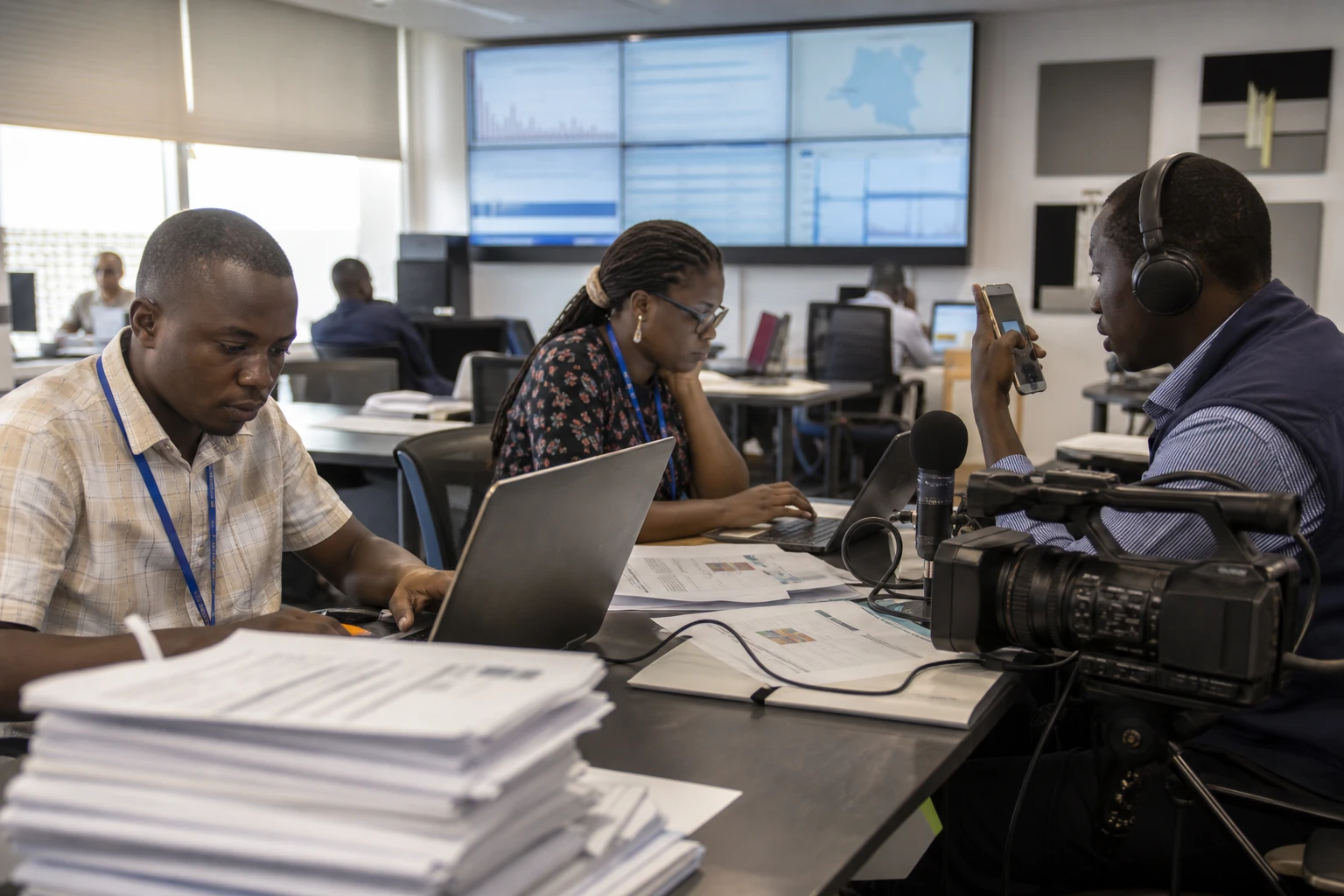
In Bunia, the stakes go beyond an official visit
In Ituri, residents are not waiting for speeches alone. They are waiting for teams, tests, beds and rapid answers. When an epidemic spreads, every day counts. And when the disease is already circulating across several health zones, a political visit is not enough on its own to flatten the curve.
The Prime Minister of the Democratic Republic of the Congo, Judith Suminwa Tuluka, chose this very setting to assess the situation. On 23 July 2026, she stopped in Kisangani before travelling to Bunia, in the heart of Ituri, with planned stops in Mongbwalu and Rwampara. In Kisangani, she called for earlier screening, saying that the earlier people receive care, the fewer deaths there will be.
This visit comes as the province is already grappling with insecurity, population displacement and difficult access to healthcare. The Ebola virus disease epidemic caused by the Bundibugyo virus was declared on 15 May 2026. Less than a week later, the World Health Organization declared it a public health emergency of international concern. For Kinshasa, the challenge is twofold: contain the virus and maintain confidence in the response.
A response under pressure in eastern DR Congo
Ituri is not an isolated point on the Congolese health map. It is a border region, connected to other eastern provinces and neighbouring countries by roads, markets and the movement of families. In this kind of setting, even the slightest delay in reporting, screening or isolation can accelerate transmission. The response therefore depends as much on laboratories as on community engagement.
Ituri accounts for a large share of this outbreak. As of 15 July 2026, 2,124 confirmed cases and 828 deaths had been reported in the Democratic Republic of the Congo, for a crude case fatality rate of 39%. Ituri accounted for 89.6% of confirmed cases and 83.6% of deaths, with Bunia, Rwampara, Mongbwalu, Nizi and Nyankunde among the worst-affected areas. In 21 days, 969 confirmed cases and 524 deaths had been reported in the country, a sign that transmission remained active.
The choice of Bunia, followed by Mongbwalu and Rwampara, is therefore no accident. These localities are among the outbreak hotspots most closely monitored by surveillance teams. In Mongbwalu, the outbreak was first detected in a rural and mining environment, where population movements make contact tracing more difficult. In Rwampara, alerts have also highlighted weaknesses in healthcare facilities.
The joint statement issued in May by the Congolese government and the WHO had already stressed the scale of the work under way in Bunia, with a high-level mission led by the health minister and the communications minister. The message was clear: the response cannot be medical alone. It must also be community-based, logistical and political. The repeated visits by national authorities are part of this effort.
What the visit changes—and what it does not
On the ground, the head of government’s visit first and foremost sends a signal. It shows that the health crisis remains at the top of the national agenda. It also makes it possible to assess the actual needs of hospitals, surveillance teams and community networks. But it does not resolve staff shortages, supply-chain disruptions or the reluctance that can arise when people do not feel sufficiently involved in the response.
The testimony of local civil society reflects this. Residents see delegations come and go, but they are asking for measurable results: fewer deaths, more screening, smoother coordination between authorities, healthcare workers and partners. This expectation is all the stronger because the epidemic is not confined to Ituri. On 15 July, the WHO reported cases across five Congolese provinces: Ituri, North Kivu, South Kivu, Haut-Uele and Tshopo.
The health front also extends beyond the borders of the Democratic Republic of the Congo. Imported cases have been reported in Uganda, although no new cases had been observed there since 21 June 2026, according to the WHO. A case was also detected in France in a person who had been medically evacuated from the DRC, and another patient was treated in Germany. This is a reminder that in an era of regional mobility and medical evacuations, an epidemic that began in Ituri can quickly become a public health concern for the entire Great Lakes region.
For Kinshasa, the equation is as political as it is medical. The government must maintain confidence in the institutions while showing that announcements are backed by resources. The quality of the response will be judged by concrete indicators: faster case detection, better care, staff safety, contact tracing and local communication. Without these, visits will remain visible, but their impact will be limited.
At continental level, this outbreak confirms a reality already familiar to African public health authorities: Ebola circulates in areas where mobility, cross-border markets and fragile basic services converge. The response therefore cannot be strictly national. It requires coordination between Kinshasa, the eastern provinces, neighbouring countries and regional health bodies. The next point to watch will be whether this political presence can be translated into lasting operational gains, while the epidemic remains active and enhanced surveillance has only just begun in several areas.



