Algeria
 Egypt
 Libya
 Morocco
 Tunisia
 Benin
 Burkina Faso
 Cabo Verde
 Côte d'Ivoire
 Ghana
 Guinea
 Guinea-Bissau
 Liberia
 Mali
 Mauritania
 Niger
 Nigeria
 Senegal
 Sierra Leone
 The Gambia
 Togo
 Cameroon
 Central African Republic
 Chad
 DR Congo
 Equatorial Guinea
 Gabon
 Republic of the Congo
 São Tomé and Príncipe
 Burundi
 Comoros
 Djibouti
 Eritrea
 Ethiopia
 Kenya
 Madagascar
 Malawi
 Mauritius
 Mozambique
 Rwanda
 Seychelles
 Somalia
 South Sudan
 Tanzania
 Uganda
 Angola
 Botswana
 Eswatini
 Lesotho
 Namibia
 South Africa
 Zambia
 Zimbabwe
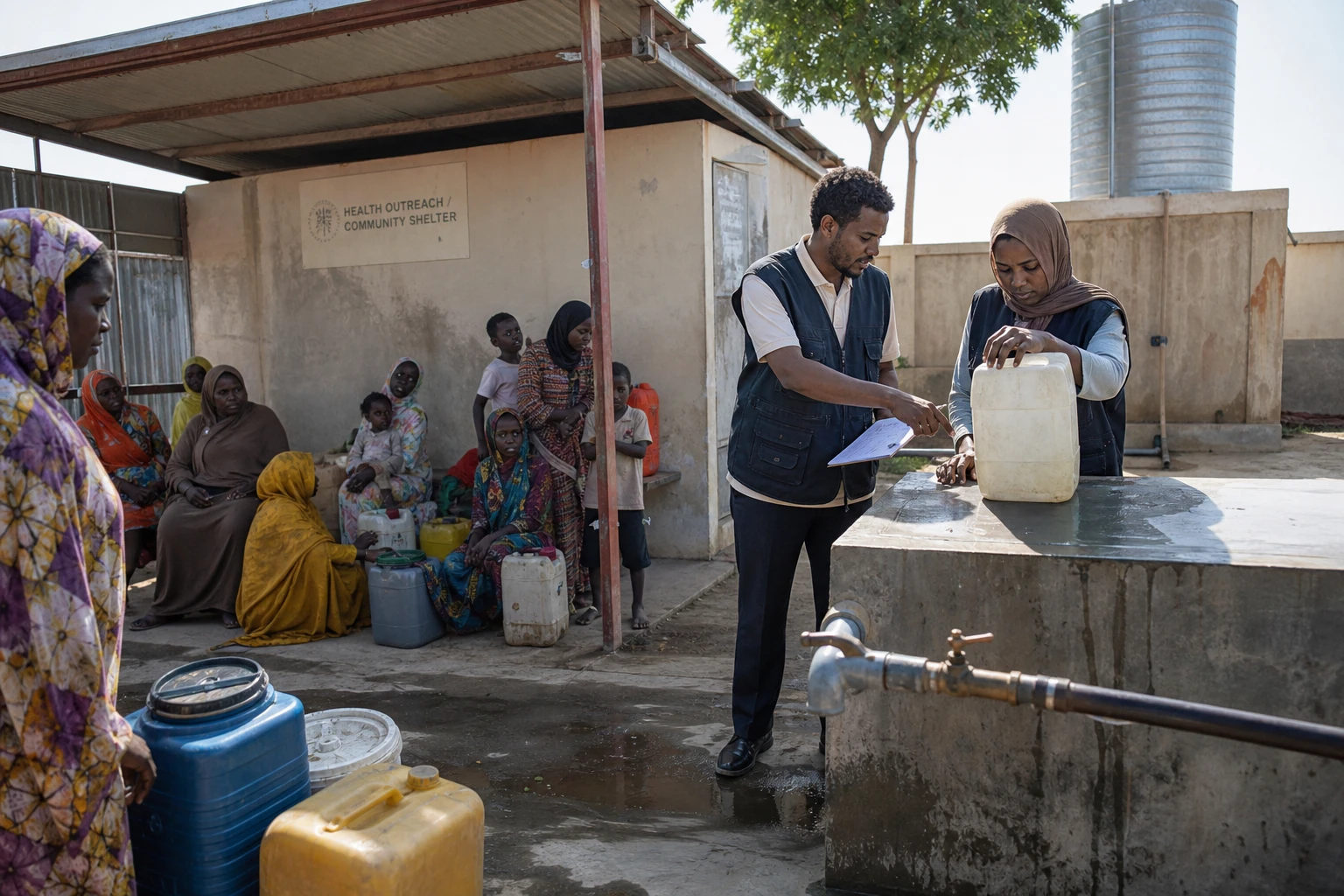
A humanitarian corridor closing in central Sudan
In central Sudan, hunger will not wait for the fighting to end. In South Kordofan, every open road matters because it connects besieged towns, displaced villages and families already on the brink. The latest attack on humanitarian trucks shows how aid can become a target just as cholera is spreading.
Since April 2023, war has pitted the Sudanese Armed Forces against the Rapid Support Forces. It has fragmented the country, displaced millions of people and weakened public services, including in the Kordofan states, a strategic area between Khartoum, Darfur and the routes to the south. In this region, humanitarian access depends on local agreements, protected convoys and security that often deteriorates faster than aid can arrive.
Two trucks destroyed, food supplies lost and thousands at risk
On 30 August, two trucks carrying food were hit in an air strike outside Dilling, in South Kordofan, while travelling towards Kadugli. The vehicles bore the visible markings of the UN agency responsible for global food assistance. The cargo contained more than 50 tonnes of supplies, including cereals, yellow split peas, vegetable oil and salt.
This loss is not merely material. It also deprives about 6,000 people of food assistance planned to last for a month. In Kadugli, humanitarian teams say they are already assisting nearly 60,000 people facing emergency or more severe levels of food insecurity. The message is clear: when convoys are hit, queues, stocks and rations all collapse in a chain reaction.
Most worrying is the pattern of repeated attacks. Since the beginning of the year, eight air strikes are reported to have damaged humanitarian facilities or disrupted operations in the country. In a context where roads are scarce and distances long, each incident further reduces the capacity to deliver flour, oil, medicines and treated water to cut-off areas.
For local people, the consequences are immediate. For traders, transport takes longer and costs more. For displaced families, markets empty faster than distributions increase. And for aid workers, the question is no longer just one of supplies, but of the right to move without being targeted.
Forced displacement and cholera: two crises fuelling each other
Violence does not only block aid. It also forces more civilians to flee. In the Abassiya area, about 730 people fled several localities and sought refuge in other parts of the same locality, as well as in Um Rawaba, in North Kordofan. This kind of internal displacement puts further pressure on host families, water points and already fragile health facilities.
Health workers are also paying the price of insecurity. A vaccinator was killed in an attack on a market in West Kordofan while she was looking for her son, who had himself been injured in an earlier attack. The incident is a reminder that war affects more than the front lines. It reaches the services that still sustain a minimum of civilian life.
Cholera is compounding the insecurity, fuelled by the rainy season, contaminated water and population displacement. At the beginning of August, more than 2,600 cases had been reported in several states, with Kordofan among the most concerning hotspots. Health authorities, with technical support from WHO and UNICEF, have launched targeted oral vaccination campaigns in Darfur and West Kordofan to protect nearly 928,000 people aged one and above.
The response also depends on water. In Abu Jubayhah, in South Kordofan, a municipal network rehabilitated with UNICEF support now provides clean water to about 25,000 residents, including nearly 5,000 displaced people. It may appear to be a technical detail. In reality, it is a concrete barrier against the spread of disease, especially in areas where soap, latrines and health services are in short supply.
More broadly, UN agencies say they provided at least one form of life-saving assistance to 12.3 million people in Sudan between January and July. But only 2.2 million received comprehensive, multi-sectoral assistance. The gap between needs and the response shows the combined effects of insecurity, financial constraints and logistical obstacles.
A test for Khartoum, and for the African response
For humanitarian organisations, Sudan remains one of the continent’s major emergencies. The 2026 humanitarian appeal stands at $2.9 billion and is only about 40% funded, with nearly $1.2 billion raised. This level of funding limits the reach of distributions, healthcare and water and sanitation operations, especially in states such as Kordofan, where needs are mounting.
The Kordofan crisis should therefore not be seen as merely a local episode. It reveals something about the Sudanese conflict as a whole, the militarisation of its roads and its effects on daily life far from Khartoum. It also serves as a reminder that in North Africa and the Horn of Africa, food security, public health and forced displacement have become part of the same equation.
Looking ahead, the focus remains twofold: the effective protection of humanitarian convoys and the spread of cholera during the rainy season. As long as these two fronts advance together, South Kordofan will remain one of the places where Sudan’s capacity to avert a further social collapse is tested in very concrete terms.