Algeria
 Egypt
 Libya
 Morocco
 Tunisia
 Benin
 Burkina Faso
 Cabo Verde
 Côte d'Ivoire
 Ghana
 Guinea
 Guinea-Bissau
 Liberia
 Mali
 Mauritania
 Niger
 Nigeria
 Senegal
 Sierra Leone
 The Gambia
 Togo
 Cameroon
 Central African Republic
 Chad
 DR Congo
 Equatorial Guinea
 Gabon
 Republic of the Congo
 São Tomé and Príncipe
 Burundi
 Comoros
 Djibouti
 Eritrea
 Ethiopia
 Kenya
 Madagascar
 Malawi
 Mauritius
 Mozambique
 Rwanda
 Seychelles
 Somalia
 South Sudan
 Tanzania
 Uganda
 Angola
 Botswana
 Eswatini
 Lesotho
 Namibia
 South Africa
 Zambia
 Zimbabwe
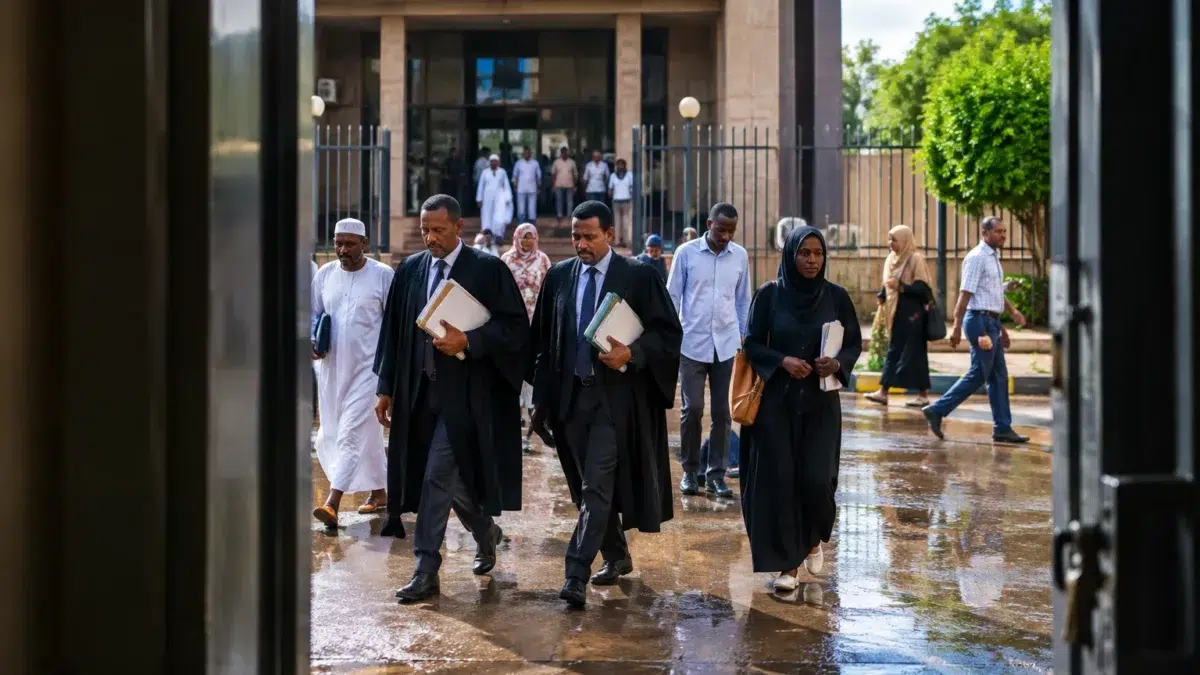
The detention of a former Sudanese official wanted by the International Criminal Court (ICC) raises a practical question: will the authorities hand Ahmed Haroun over to judges, or keep the proceedings under their control? For the victims of Darfur, the arrest announced on 8 November 2026 could open a long-blocked judicial route. It does not yet guarantee that the former official will be transferred to The Hague.
An arrest in a country still at war
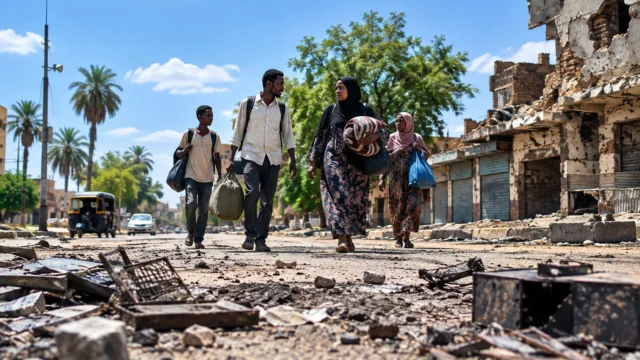
Sudan has been at war since 15 April 2023, with the Sudanese Armed Forces, led by General Abdel Fattah al-Burhan, fighting the Rapid Support Forces (RSF), a paramilitary force commanded by Mohamed Hamdan Dagalo, known as Hemedti. Their rivalry erupted after talks on integrating the RSF into the regular army failed. The fighting interrupted an already fragile political transition.
After Omar al-Bashir was ousted in April 2019, a power-sharing arrangement between the military and civilians opened a transitional period. The October 2021 coup brought it to an end. The war then shifted the centre of power and complicated the functioning of institutions. Khartoum, the capital, and several regions of the country remain in the grip of the conflict’s consequences.
The crisis extends beyond Sudan’s borders. The Intergovernmental Authority on Development (IGAD), a regional organisation in the Horn of Africa, the African Union and the United Nations are involved in diplomatic efforts. The fighting and its repercussions are also putting pressure on neighbouring countries, which are hosting displaced people and refugees.
What is known about the Haroun case
Ahmed Haroun was a state minister at the interior ministry between 2003 and 2005, under Omar al-Bashir. The ICC issued an arrest warrant against him on 27 April 2007 over alleged acts linked to the conflict in Darfur, in western Sudan. The Court charges him with 20 counts of crimes against humanity and 22 counts of war crimes, including allegations of murder, rape, torture and forcible displacement. These are charges, not convictions: Haroun has not yet been tried by the ICC.
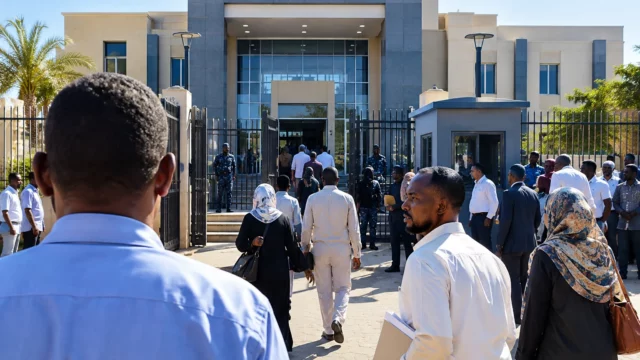
Lawyers and Sudanese and regional media reported his arrest on 8 November. Initial reports differed over the location: some mentioned Omdurman, a city near Khartoum, while others said Kassala State. As of 20 November, the authorities had not publicly announced where he was being held or whether a transfer to the ICC was being considered. This uncertainty makes it essential to verify his place of detention and whether he has access to his lawyers.
Human Rights Watch has called on the Sudanese authorities to transfer Haroun to the Court. The organisation has also called for the handover of Omar al-Bashir and other wanted suspects. The appeal is part of a long-running debate: arrest on national territory does not resolve the question of co-operation with international justice.
An obligation arising from a UN decision
Sudan is not a party to the Rome Statute, the treaty that established the ICC. But in 2005, the UN Security Council referred the situation in Darfur to the Court through Resolution 1593. The text calls on the Sudanese government and the parties to the conflict to co-operate with the ICC. Organisations calling for the transfer are relying on this decision.
The distinction matters: the case does not stem from Sudan’s accession to the treaty, but from a Security Council decision. The resolution establishes a framework for international co-operation, while the actual handover depends on the authorities holding Haroun. The absence of an official announcement therefore leaves the question of what happens next in the legal process unresolved.
The Darfur case is rooted in a history of violence and unfinished justice. Resolution 1593 enabled the ICC to investigate alleged crimes committed since 2002. However, the Court can try a person only if they are present before it. Haroun’s transfer would therefore be a major procedural step, without prejudging the verdict.
Justice and power struggles in Sudan
For the military authorities, the arrest could signal a willingness to regain control of a former political official and respond to domestic and international pressure. But until the place of detention and the transfer decision are confirmed, it is impossible to assess its significance. Detention is neither full co-operation with the ICC nor recognition of the charges.
For victims and human rights defenders, the prospect of an international trial could provide a forum in which the allegations are examined by independent judges. It does not, however, replace efforts to establish the truth and provide redress in Sudan, or the protection of civilians in the current conflict. People in combat zones, displaced people and communities in Darfur face immediate emergencies, while legal proceedings move at a different pace.
The case is also sensitive in a country where rival armed forces are fighting for power and the civilian transition has failed. A credible process must ensure that detention is not used merely as a political tool. This requires clarifying the conditions of custody, guaranteeing Haroun’s rights and complying with co-operation obligations.
A test for African and international co-operation
The next steps will be watched by Sudanese organisations, the ICC, the UN, the African Union and IGAD. In September 2026, the African Union took part in diplomatic discussions on Sudan with regional and international partners, while calling for a truce and a political solution. The legal case is a reminder that a peace process and the pursuit of accountability can proceed in parallel.
For the African Union, the stakes go beyond the case of a single former minister: they touch on the consistency between commitments to justice and mediation efforts aimed at ending the war. For countries in the region, the case also raises the question of co-operation with an international court when a political and military crisis persists. The next decisive indications will be official confirmation of the place of detention and a clear decision on transfer.