Algeria
 Egypt
 Libya
 Morocco
 Tunisia
 Benin
 Burkina Faso
 Cabo Verde
 Côte d'Ivoire
 Ghana
 Guinea
 Guinea-Bissau
 Liberia
 Mali
 Mauritania
 Niger
 Nigeria
 Senegal
 Sierra Leone
 The Gambia
 Togo
 Cameroon
 Central African Republic
 Chad
 DR Congo
 Equatorial Guinea
 Gabon
 Republic of the Congo
 São Tomé and Príncipe
 Burundi
 Comoros
 Djibouti
 Eritrea
 Ethiopia
 Kenya
 Madagascar
 Malawi
 Mauritius
 Mozambique
 Rwanda
 Seychelles
 Somalia
 South Sudan
 Tanzania
 Uganda
 Angola
 Botswana
 Eswatini
 Lesotho
 Namibia
 South Africa
 Zambia
 Zimbabwe
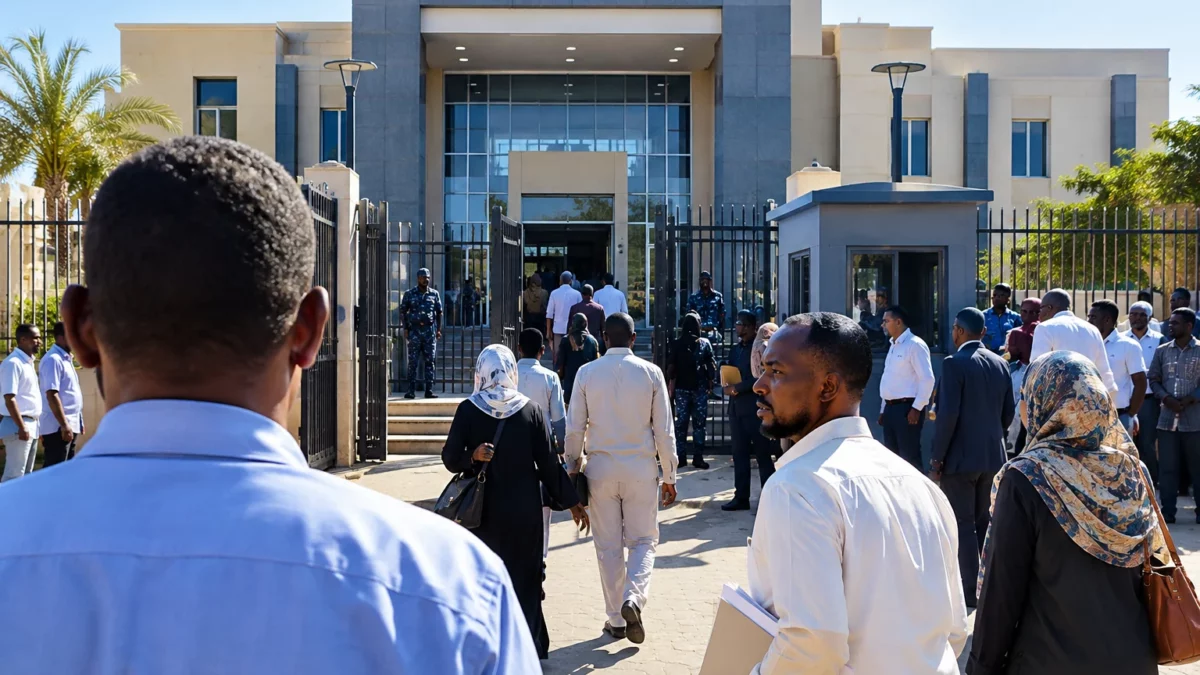
Can a conviction handed down in the defendants’ absence affect a war that is still being fought on the ground? In Sudan, the verdict delivered in Port Sudan targets the head of the Rapid Support Forces (RSF), Mohamed Hamdan Dagalo, known as Hemetti, but its impact will also depend on appeals and the institutions’ ability to enforce the ruling.
A new trial in a country without a unified justice system
Sudan’s army and the RSF have been fighting since 15 April 2023. The conflict arose in part from a dispute over integrating the paramilitaries into the regular army. It has fragmented power and disrupted the functioning of institutions. Khartoum, the capital, was at the heart of the fighting; clashes also spread to Darfur and Kordofan.
Port Sudan, on the Red Sea, has hosted the army-aligned authorities since they left Khartoum. The trial is therefore taking place against a backdrop in which each side claims political legitimacy. The RSF and its allies challenge the legitimacy of proceedings brought by rival authorities. That challenge, in itself, does not settle the legal questions in the case.
Sudan is a member of the Intergovernmental Authority on Development (IGAD), a regional organisation in the Horn of Africa. Mediation efforts involving IGAD and the African Union have run up against continued fighting and divisions among Sudanese actors. The conflict also threatens the stability of neighbouring countries, particularly through population displacement.
Fourteen convictions handed down in absentia
On 18 November 2026, Port Sudan’s anti-terrorism and crimes against the state court sentenced 14 people to death by hanging, all tried in absentia. They include Hemetti, his brothers Abdelrahim and Al-Goni Dagalo, and 11 other RSF officials or commanders. The case concerns the destruction and looting of buildings, warehouses and facilities belonging to the National Medical Supplies Fund.
Hearings began in June 2026, after a complaint was filed in September 2024, according to court reports cited by Sudan Tribune. The court also ordered the confiscation of the defendants’ assets and property, recommended that their citizenship and passports be withdrawn, and set an individual fine of 100 million Sudanese pounds.
The amount of damages requires clarification. Some media reports have cited a figure close to $40 billion. Detailed accounts of the judgment and an Anadolu news agency report instead put the sum at $396.2 million, described as collective compensation owed to the Medical Fund. This is the figure used here, as it appears in both reports.
The judgment must still pass through further legal stages. According to Sudan Tribune, once the appeal period has expired, the case is to be referred to the competent higher court for confirmation. A conviction handed down in the defendants’ absence therefore does not mean a sentence can be carried out immediately. Hemetti and his co-defendants are not in the custody of this court.
A judicial decision with uncertain effects
According to Anadolu, this is the second death sentence against Hemetti in a separate case. In July 2026, the same court sentenced him in absentia alongside other defendants in the case concerning the death of Khamis Abdallah Abakar, the former governor of West Darfur, who was killed in June 2023. The RSF had disputed the charges in that case.
The new verdict also touches on a practical issue for civilians: access to medicines. The alleged destruction involved warehouses and public facilities across several states, including Khartoum, Al-Jazirah, Sennar, Kordofan and Darfur. In wartime, these stocks and supply networks are essential to healthcare facilities and patients. The court says the losses concern property belonging to the Fund; the judgment alone does not measure their health consequences for the population.
The proceedings also raise questions about judicial safeguards. In a report covering January to June 2025, the United Nations High Commissioner for Human Rights recorded at least 108 death sentences handed down by Sudanese courts, often against people accused of links to the RSF. The report raised concerns about fair trials, the right to a defence and the application of the death penalty. This general finding does not prove that the present trial violated the defendants’ rights; it does, however, make scrutiny of appeals and safeguards particularly important.
The military front remains decisive
For the leaders of both sides, the decision adds political and legal pressure. For the people of Sudan, its immediate effects are less certain: it does not halt the fighting, restore destroyed services or guarantee access to healthcare. The legal case is moving forward while clashes and displacement continue to shape daily life.
The regional impact will also depend on IGAD and the African Union’s ability to support a political settlement that is not merely proclaimed from rival capitals. The next stages of the proceedings — confirmation, appeals and possible enforcement of the asset measures — remain to be seen. But as long as the armed forces remain committed to military victory, a court ruling, however weighty its symbolism, is not enough to open negotiations.