Algeria
 Egypt
 Libya
 Morocco
 Tunisia
 Benin
 Burkina Faso
 Cabo Verde
 Côte d'Ivoire
 Ghana
 Guinea
 Guinea-Bissau
 Liberia
 Mali
 Mauritania
 Niger
 Nigeria
 Senegal
 Sierra Leone
 The Gambia
 Togo
 Cameroon
 Central African Republic
 Chad
 DR Congo
 Equatorial Guinea
 Gabon
 Republic of the Congo
 São Tomé and Príncipe
 Burundi
 Comoros
 Djibouti
 Eritrea
 Ethiopia
 Kenya
 Madagascar
 Malawi
 Mauritius
 Mozambique
 Rwanda
 Seychelles
 Somalia
 South Sudan
 Tanzania
 Uganda
 Angola
 Botswana
 Eswatini
 Lesotho
 Namibia
 South Africa
 Zambia
 Zimbabwe
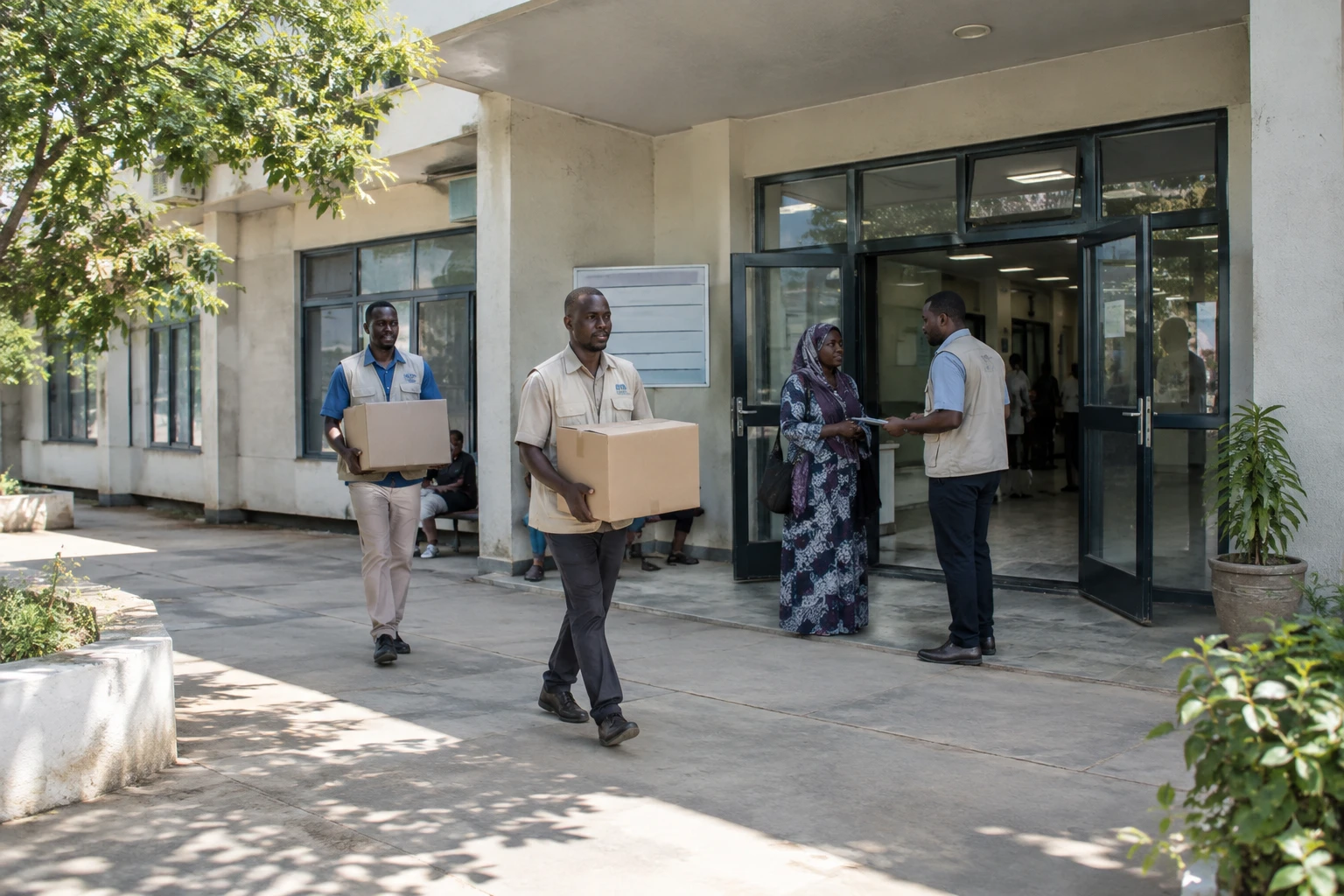
In Goz Al-Salam, near Kosti, food aid can make the difference between getting by for a few days and no longer knowing how to feed one’s family. But in Sudan, needs are growing while available funding is not keeping pace. For displaced people, this tension means reduced distributions and harder choices in daily life.
A war disrupting access to aid
Since April 2023, fighting between the Sudanese Armed Forces and the Rapid Support Forces (RSF) has fragmented the country and displaced millions of people. Clashes, displacement and obstacles to delivering aid are worsening food insecurity. Damaged or dangerous roads also complicate the work of humanitarian organisations.
The crisis affects regions far from the fighting as well as urban centres. Khartoum, the capital, was at the heart of the fighting at the start of the war. Since then, needs and access conditions have varied considerably from one state to another. Displaced families often depend on aid, while the communities hosting them must share services and resources that are already under pressure.
Sudan is a member of the Intergovernmental Authority on Development (IGAD), a regional organisation in the Horn of Africa. After resuming full participation in February 2026, the country remains at the centre of regional efforts to secure a ceasefire, protect civilians and open safe humanitarian access. IGAD says a lasting solution must come through inclusive dialogue led by Sudanese people.
Distributions cut despite massive needs
On 13 November, during a visit to Goz Al-Salam camp, World Food Programme (WFP) Executive Director Luke J. Lindberg called for increased financial support and a diplomatic solution to the conflict. The WFP says it assisted more than four million people in August, including 880,000 in areas at risk of famine.
The situation has changed since then. Faced with insufficient resources, the agency began reducing the number of people it serves in September. About 900,000 vulnerable people have lost their food aid in recent months. The WFP says it now reaches just over three million people in the country. It is seeking $520 million to provide food and nutrition assistance to 5.4 million people until April 2027.
These figures describe the WFP’s operations, not the entire humanitarian response. They nevertheless show the gap between needs and available resources. UNICEF estimates that 33.7 million people in Sudan will need humanitarian assistance in 2026. IGAD, meanwhile, puts the number of people facing crisis levels of hunger or worse at nearly 19.5 million.
The two estimates measure different things: one covers humanitarian needs broadly, while the other concerns food insecurity. They nevertheless point to the scale of the difficulties. The WFP also notes that food and fuel prices are making basic goods less affordable, while insecurity and blocked roads are restricting deliveries.
Funding is not enough without safe access
Additional funding would allow the WFP to maintain or expand its distributions. But money alone cannot overcome obstacles on the ground. Fighting, movement restrictions and risks to civilians and humanitarian workers can prevent aid from reaching its intended recipients. Drone attacks reported in several regions are also disrupting essential services and increasing risks for communities.
The consequences vary by location and household. In camps, displaced people have often lost their livelihoods and depend on distributions. In cities, rising prices are eroding purchasing power, including among families who receive no aid. People in rural areas may face insecurity, limited access to markets and difficulties continuing their farming activities at the same time.
The response also relies on Sudanese actors, including solidarity networks and local organisations. Their knowledge of neighbourhoods and communities can help identify needs and maintain services. But these initiatives cannot replace large-scale supplies, and they too need resources, security and access.
An issue for Sudan, the region and the continent
The war does not stop at the borders. Displacement to neighbouring countries puts pressure on host communities and their services. For IGAD, Sudan’s food crisis is part of a regional situation already marked by food insecurity and forced displacement. African and international organisations are calling for civilians to be protected and diplomatic efforts coordinated, rather than for incoherent initiatives to multiply.
For Sudanese people, the emergency remains immediate: access to food, water, healthcare and essential services. The WFP says it cannot use food aid to offset the effects of a war that continues. The coming months will therefore depend on funding raised, the ability to deliver aid and political decisions capable of reducing the fighting.
Sources consulted: World Food Programme: Luke J. Lindberg’s visit and funding needs in Sudan ; Africanews: report on the visit to Goz Al-Salam ; UNICEF: mid-year humanitarian report 2026 ; IGAD: communiqué on the regional situation and Sudan.