Algeria
 Egypt
 Libya
 Sudan
 Tunisia
 Benin
 Burkina Faso
 Cabo Verde
 Côte d'Ivoire
 Ghana
 Guinea
 Guinea-Bissau
 Liberia
 Mali
 Mauritania
 Niger
 Nigeria
 Senegal
 Sierra Leone
 The Gambia
 Togo
 Cameroon
 Central African Republic
 Chad
 DR Congo
 Equatorial Guinea
 Gabon
 Republic of the Congo
 São Tomé and Príncipe
 Burundi
 Comoros
 Djibouti
 Eritrea
 Ethiopia
 Kenya
 Madagascar
 Malawi
 Mauritius
 Mozambique
 Rwanda
 Seychelles
 Somalia
 South Sudan
 Tanzania
 Uganda
 Angola
 Botswana
 Eswatini
 Lesotho
 Namibia
 South Africa
 Zambia
 Zimbabwe
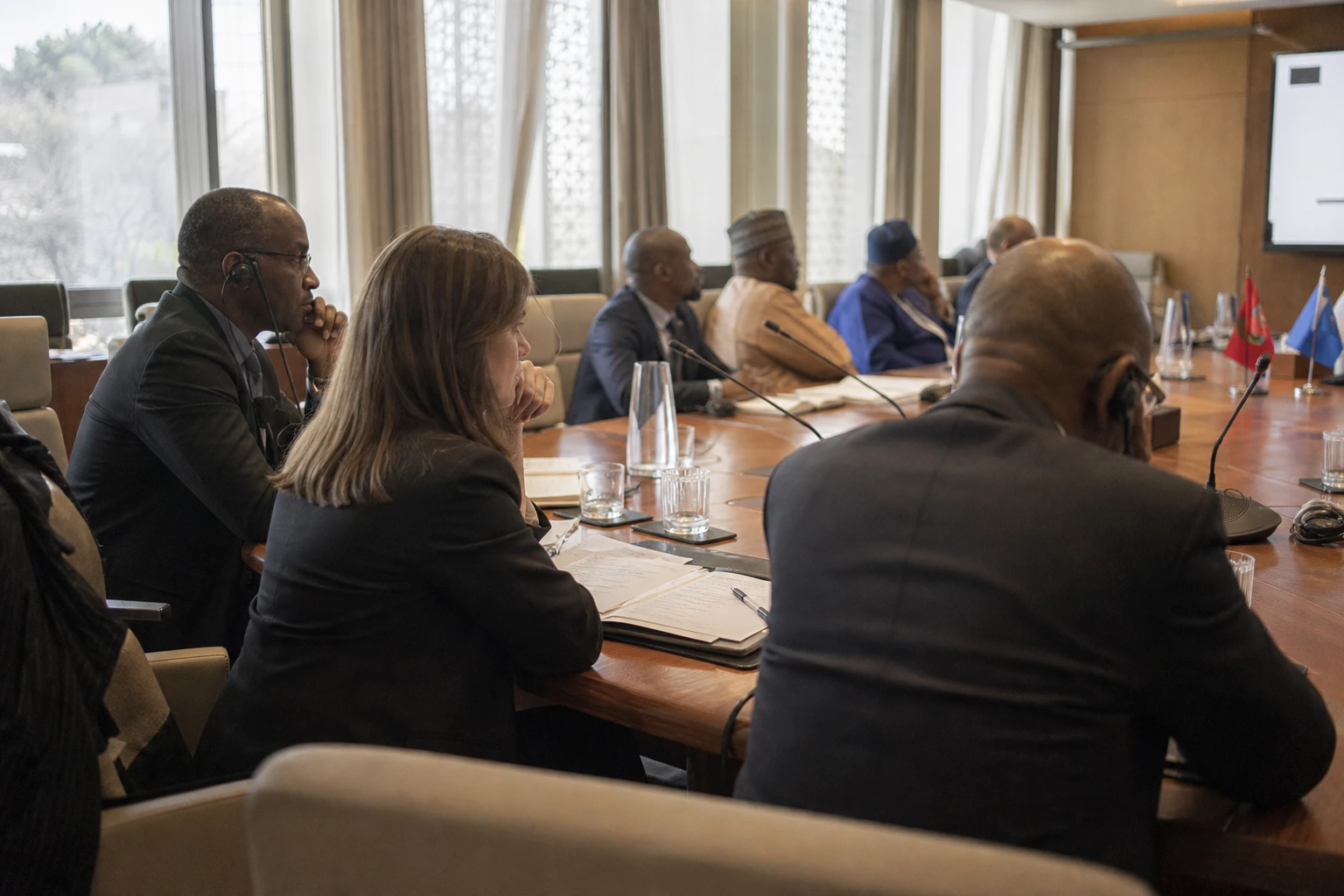
In Rabat, Spain’s 29 November 2026 election is not being played out only in Madrid. It could also redefine the balance of a partnership that has become central to Morocco, spanning economic cooperation, the management of migration and the Western Sahara issue.
A rapprochement built around a diplomatic choice
Spanish Prime Minister Pedro Sánchez has called an early general election for Sunday 29 November 2026. The decree dissolving the Cortes Generales, Spain’s bicameral parliament, was published in the Official State Gazette on 6 October.
For Morocco, the main issue is whether Madrid will maintain the policy it has pursued since March 2022. In a letter to King Mohammed VI, Pedro Sánchez had described Morocco’s autonomy proposal for Western Sahara as « the most serious, realistic and credible basis » for resolving the dispute. The Spanish government nevertheless continued to refer to the United Nations framework and to a mutually acceptable solution.
This wording did not settle the territory’s status. It nevertheless marked a political turning point. Spain is the former colonial power in Western Sahara, so its shift carried particular symbolic weight for Rabat, beyond bilateral cooperation.
The joint declaration adopted in April 2022 opened a new phase in relations between the two kingdoms. It provides for regular political dialogue, stronger cooperation and closer management of sensitive issues. Madrid and Rabat subsequently resumed their high-level meetings, which had been suspended for several years.
People’s Party keeps uncertainty alive
The election nevertheless highlights a weakness: Spain’s position on Western Sahara remains associated with Pedro Sánchez and does not automatically bind the entire political class.
Alberto Núñez Feijóo, leader of the People’s Party, the main opposition party, has repeatedly criticised the method used by the Socialist government. He accuses Pedro Sánchez of changing Spanish policy without sufficiently broad parliamentary debate and without publicly disclosing all the commitments made with Rabat.
The People’s Party leader has offered no clear guarantee that this policy would be maintained in the event of a change of government. This caution does not necessarily signal a return to Spain’s previous position. It does, however, leave open the possibility of political renegotiation, particularly over the terms of the partnership with Morocco.
This ambiguity is of direct interest to Rabat. Morocco now regards Spain’s support for its autonomy initiative as an important diplomatic gain. Any reconsideration, even a partial one, would weaken the political significance of the rapprochement launched in 2022.
The issue could also become a campaign topic. In Spain, migration policy, border security and the status of Ceuta and Melilla regularly feature in election debates. These two North African cities are administered by Spain and claimed by Morocco, although the territorial dispute has not prevented bilateral cooperation.
Ceuta, a source of electoral tension
The Ceuta border remains one of the most sensitive points in the relationship. In 2021, a mass arrival of migrants in the city triggered a diplomatic crisis between Madrid and Rabat. Since then, each migration episode has had the potential to fuel accusations of political pressure or inadequate control.
The People’s Party is calling for a tougher border policy. Vox, a radical right-wing party, goes further. In several regional parliaments, it has backed proposals demanding formal recognition of Spanish sovereignty over Ceuta and Melilla, alongside the threat of tougher diplomatic and trade measures against Rabat.
The Moroccan government has rejected these accusations and condemned the politicisation of the bilateral relationship. Rabat disputes, in particular, any direct involvement by its authorities in episodes of mass border crossings. This disagreement shows the limits of the climate of trust on display since 2022.
A possible coalition between the People’s Party and Vox would further complicate the situation. Spain’s next government could demand more guarantees on the return of migrants, tighten border-control requirements and use the Western Sahara issue as a bargaining chip.
The consequences would not be the same for all those involved. Politicians would seek to respond to the expectations of border-area and conservative voters. Businesses, meanwhile, would have an interest in preserving the smooth flow of trade. Residents of Ceuta, northern Morocco and regions connected to the ports could quickly feel the effects of any deterioration in relations.
The weight of economic interests
A sudden rupture nevertheless remains unlikely. Economic ties have reached a level that imposes a degree of restraint on both capitals.
According to the joint declaration of the 13th Morocco-Spain High-Level Meeting, held in Madrid on 3 and 4 December 2025, Spain has been Morocco’s leading trading partner since 2012. Bilateral trade reached €22.693bn in 2024. Fourteen cooperation agreements were signed at the meeting, covering areas from the economy and energy transition to security and new technologies.
Morocco has also become a major industrial and logistics platform for Spanish companies. Value chains include the automotive, textile, agri-food, renewable energy and services sectors. A prolonged political crisis would therefore affect businesses in both countries, as well as ports, transport operators and workers involved in these exchanges.
The 2030 World Cup is another factor favouring continuity. Co-hosted by Morocco, Spain and Portugal, it is expected to accelerate investment in infrastructure, transport, hotels and digital services. This joint project provides a practical framework for maintaining dialogue, even if the allocation of major tournament events could still fuel rivalries.
A relationship to protect, but not set in stone
For Rabat, the priority will be to distinguish campaign statements from government decisions. Morocco has strong economic ties in Spain and an institutional relationship that is now well established. But political support for the autonomy plan does not yet rest on a national Spanish consensus.
The 29 November 2026 election could therefore usher in a period of clarification. A Socialist Party victory would probably preserve the policy pursued by Pedro Sánchez, while leaving debate over Ceuta, migration and the quid pro quos for cooperation unresolved. A change of government led by the People’s Party would be more likely to prompt a reassessment of commitments, without necessarily calling the entire partnership into question.
The significance of this election thus extends beyond the relationship between Madrid and Rabat. It concerns the management of a strategic border between Europe and Africa, Morocco’s place in Mediterranean production chains and the evolution of the Western Sahara issue within African and international diplomatic balances.