
 Algeria
 Egypt
 Libya
 Sudan
 Tunisia
 Benin
 Burkina Faso
 Cabo Verde
 Côte d'Ivoire
 Ghana
 Guinea
 Guinea-Bissau
 Liberia
 Mali
 Mauritania
 Niger
 Nigeria
 Senegal
 Sierra Leone
 The Gambia
 Togo
 Cameroon
 Central African Republic
 Chad
 DR Congo
 Equatorial Guinea
 Gabon
 Republic of the Congo
 São Tomé and Príncipe
 Burundi
 Comoros
 Djibouti
 Eritrea
 Ethiopia
 Kenya
 Madagascar
 Malawi
 Mauritius
 Mozambique
 Rwanda
 Seychelles
 Somalia
 South Sudan
 Tanzania
 Uganda
 Angola
 Botswana
 Eswatini
 Lesotho
 Namibia
 South Africa
 Zambia
 Zimbabwe
When a single project brings together newspapers, digital platforms, advertising and printing, the stakes go beyond a change of shareholder. In Morocco, the proposed takeover of Groupe Le Matin also raises questions about the governance of a player active at several stages of the information chain.
A transaction still under regulatory review
On 12 November 2026, Morocco’s Competition Council made public the notification of a project under which Moroccan businessman Mohamed Hassan Bensalah wishes to take exclusive control of four companies and their subsidiaries. The publication opens a period during which interested third parties can submit their observations. The deadline set by the Council is 23 November 2026.
This step does not mean the sale has been completed. It informs the public about the project and allows the authority to examine the economic concentration — the grouping of companies under common control. The final decision and any conditions imposed are not specified in the notice made public.
The companies concerned are Word Publishing, Word Distribution, Word Advertising and Word Printing. According to the Council, these holding companies — entities that own stakes in other companies but have no operational activity of their own — jointly control Société Nouvelle Maroc Soir, the parent company of Groupe Le Matin. Acquiring their share capital and voting rights would give Bensalah exclusive control of the whole group.
The Council specifies that the buyer is acting in a personal capacity, not on behalf of Holmarcom, the industrial and financial group he chairs. Holmarcom is active in financial services, agri-food, logistics and real estate, among other sectors. An agreement to pursue the takeover was announced on 1 October 2026, according to Moroccan media outlet LeBrief. The regulatory notice now sets out the scope presented to the authorities.
From newspapers to printing: a broad scope
The group publishes the daily newspapers Le Matin and Assahra Al Maghribia. It also operates news websites and oversees the Matin TV channel. Its activities include advertising sales for its media outlets and the publication of legal and administrative notices.
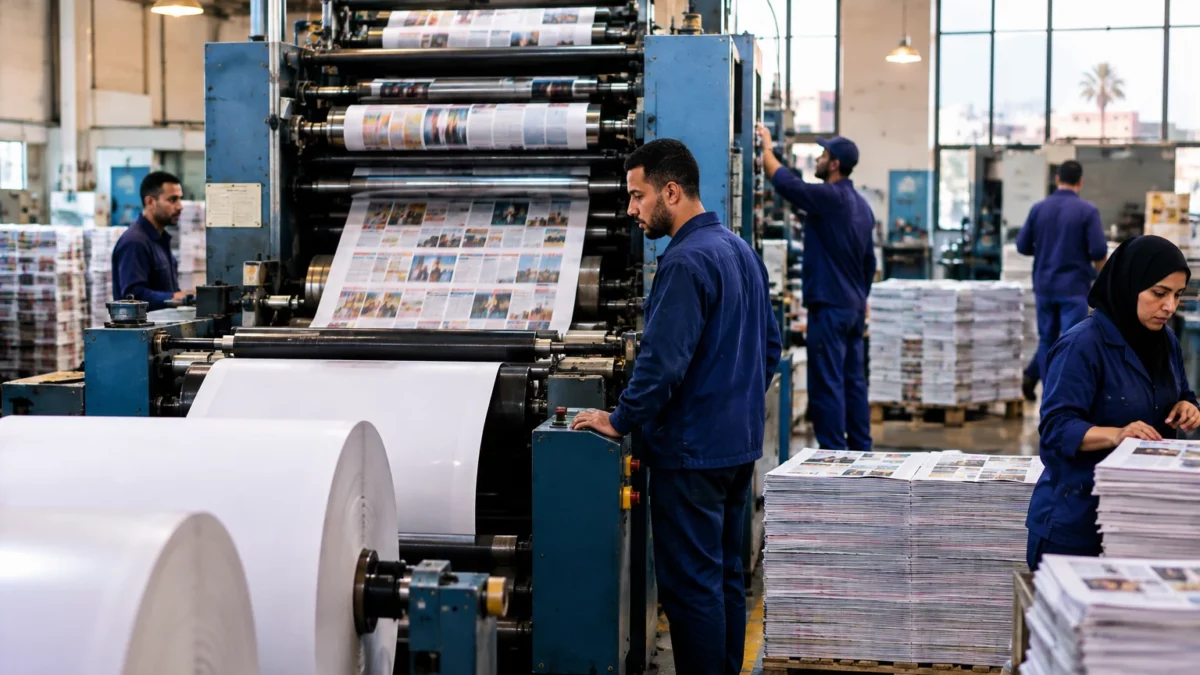
The project also includes Les Imprimeries du Matin, based in Casablanca. The subsidiary prints the group’s publications, but also works for external clients. Its markets include school and supplementary textbooks, advertising materials, commercial printing and folding-carton packaging.
This diversity makes the transaction broader than a simple takeover of press titles. It combines editorial production, digital distribution, advertising and industrial infrastructure. For the buyer, these activities may complement one another. For employees, suppliers, advertisers and readers, their future will depend on management decisions made after any authorisation.
Société Nouvelle Maroc Soir’s share capital is listed at 282.4 million dirhams. This figure describes the company’s share capital; it does not reveal the sale price. The transaction amount and its financing arrangements were not disclosed in the Council’s notice.
Pluralism at the heart of governance questions
In Morocco, the Competition Council is examining the transaction under the rules governing economic concentrations. Its role is distinct from that of newsrooms: it assesses the economic transaction, while editorial safeguards depend in particular on the group’s internal organisation and the rules governing the press.
The issue matters because media ownership can affect a company’s resources, investments and editorial direction, even without direct intervention in journalists’ day-to-day work. In its analysis of the legal framework, the Moroccan Media Observatory notes the obligations to declare certain shareholdings in press companies. The OECD also stresses the importance of ownership transparency and safeguards that promote pluralism.
When the agreement was announced, the stated ambitions included developing the group’s digital and international operations, with a promise to preserve its editorial independence. This was an announced commitment, not a guarantee backed by mechanisms that are already known. The composition of governing bodies, rules separating the shareholder from the newsroom and resources allocated to the titles remain to be specified.
The effects would not be the same for everyone. Editorial teams are directly affected by management and investment decisions. Advertisers and printing clients, meanwhile, depend on the continuity of services and commercial strategy. For readers, the stakes are reflected in the diversity of information, the quality of content and the newsrooms’ ability to retain their autonomy.
A Moroccan case followed across the region
The immediate timetable is regulatory: third-party observations are due by 23 November 2026, before the Council continues its review. Its decision will then be awaited, along with the practical details of the new governance if the transaction goes ahead. The transaction amount also remains unknown.
The case extends beyond Morocco’s borders, though it does not represent the whole of the North African press. It highlights a question shared by many media markets: how to finance the digital transition and the production of news while maintaining newsrooms able to work without pressure from their owners or commercial partners.
For press professionals in the region, the outcome will offer a concrete case to watch: a group in which media operate alongside advertising and printing. What happens next will depend less on general promises than on regulatory decisions and the safeguards actually incorporated into the group’s governance.



