Algeria
 Egypt
 Libya
 Morocco
 Sudan
 Tunisia
 Benin
 Burkina Faso
 Cabo Verde
 Côte d'Ivoire
 Ghana
 Guinea-Bissau
 Liberia
 Mali
 Mauritania
 Niger
 Nigeria
 Senegal
 Sierra Leone
 The Gambia
 Togo
 Cameroon
 Central African Republic
 Chad
 DR Congo
 Equatorial Guinea
 Gabon
 Republic of the Congo
 São Tomé and Príncipe
 Burundi
 Comoros
 Djibouti
 Eritrea
 Ethiopia
 Kenya
 Madagascar
 Malawi
 Mauritius
 Mozambique
 Rwanda
 Seychelles
 Somalia
 South Sudan
 Tanzania
 Uganda
 Angola
 Botswana
 Eswatini
 Lesotho
 Namibia
 South Africa
 Zambia
 Zimbabwe
In Bouré-Balato, in Siguiri prefecture, enforcement of a mining ban resulted in deaths and injuries. The tragedy of 11 November raises an immediate question: how can land and waterways be protected without turning an enforcement measure into a confrontation with communities that depend on artisanal gold mining?
A gold-producing region caught between mining and a ban
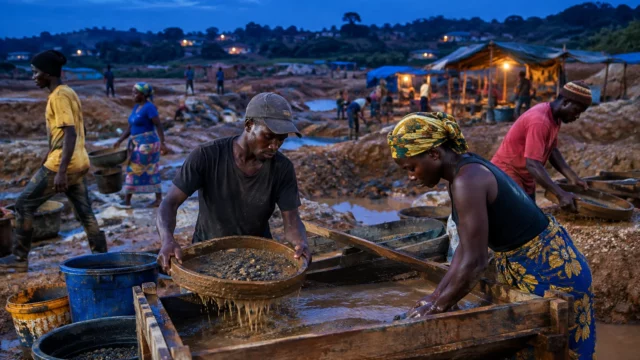
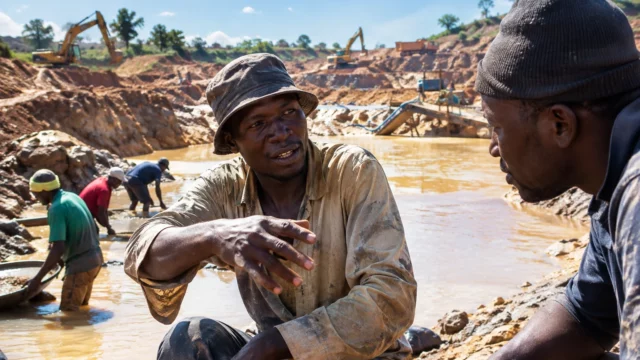
In this part of Upper Guinea, artisanal gold mining provides a livelihood for Guinean workers and people from several neighbouring countries. It is part of a local economy in which mining income matters, but the authorities also denounce the damage caused to farmland and rivers by unregulated practices.
The government banned what it described as illegal or anarchic gold mining in the area from 2 November. It cites, among other reasons, environmental protection and the need to curb unauthorised mining. But the decision directly affects workers, families and businesses whose activities depend on gold-mining sites. Tensions had already risen following the arrest and prosecution of hundreds of people.
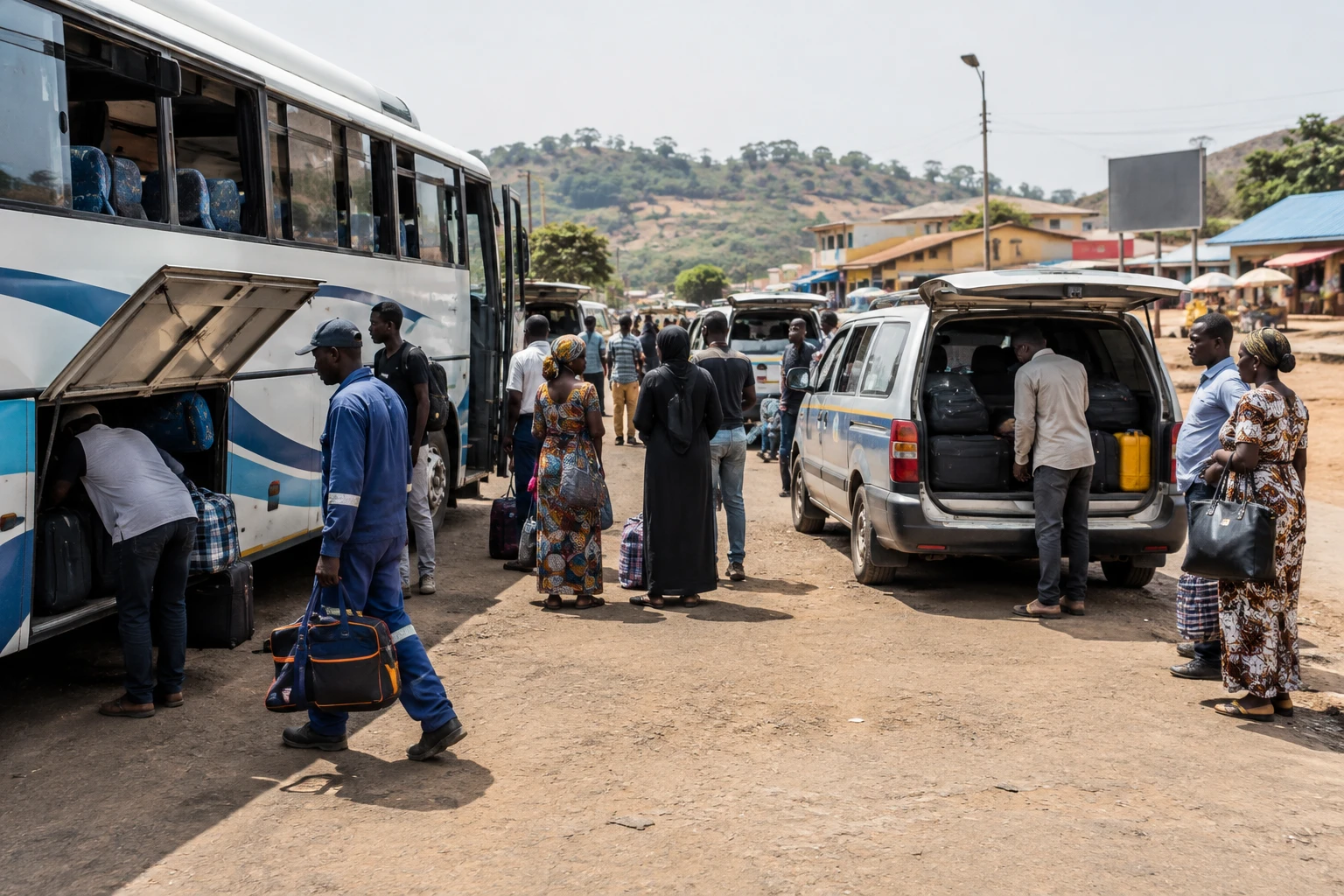
The issue extends beyond Guinea’s borders. The region’s mines attract workers from across West Africa. Enforcement operations have also prompted people to leave for Mali, according to information reported by the Malian authorities and media. A decision taken in Conakry can therefore affect movement and livelihoods in several neighbouring countries.
Gunfire and a death toll still to be attributed
On Wednesday 11 November, a defence and security forces patrol went to Bouré-Balato to enforce the ban. In her account of events, the Minister of Territorial Administration, Djenabou Touré, said protesters had erected barricades on the public highway. She said the situation then escalated into clashes and exchanges of gunfire, without specifying who had opened fire.
The provisional toll announced by the government is ten dead and thirteen injured. Those killed reportedly included five foreign nationals whose identities were yet to be established. The injured include civilians and members of the security forces. These details were reported separately by the Associated Press and the Guinean press; the precise circumstances of the deaths have yet to be established.
Local accounts do not fully tally with the official version. Witnesses interviewed by Deutsche Welle spoke of tensions over the inspection and removal of mining machinery. A local civil society representative put the death toll at more than ten, a figure that has not been independently confirmed. It must therefore remain attributed. The judicial authorities have been asked to investigate the events and establish responsibility.
The minister also reported that vehicles had been set on fire and a weapon taken. These allegations, like the circumstances of the gunfire, must be verified during the investigation. At this stage, no public account makes it possible to determine each actor’s responsibility for the outbreak of violence.
Questions over public order and the judicial response
The International Federation for Human Rights denounced what it considers a disproportionate response in light of the death toll reported by the government. Its secretary-general, Drissa Traoré, called for the use of force to remain proportionate and for the protection of human life to guide operations. The criticism comes as the authorities say they intend to shed light on events through the judicial process.
Meanwhile, courts have begun examining cases linked to banned mining. More than 1,200 people arrested in Upper Guinea have been allocated to several courts in Conakry and Lower Guinea. Prison sentences of 18 months to two years have been announced for some people found guilty, but the prosecutor-general has not specified the number of those convicted. The proceedings also involve minors: a report on the hearings said about 160 young people had been referred to the juvenile court.
Holding trials far from Siguiri raises significant practical concerns. For defendants and their relatives, the distance can make it harder to access legal representation and follow hearings. The large number of cases also raises questions about the time devoted to examining each person’s circumstances. These factors do not prejudge the guilt of those prosecuted; they make transparency about the proceedings and the safeguards afforded to everyone essential.
The authorities must also address a practical economic question: what alternatives are available to people deprived of their livelihoods? The ban may aim to limit pollution and land degradation. However, without clear rules, consistent enforcement and income alternatives, it risks deepening hardship and mistrust in mining communities. Traders and families who depend indirectly on the sites may also be affected by the sudden halt in activity.
A test of trust and regional co-operation
Guinea is a member of the Economic Community of West African States (ECOWAS), a regional organisation whose member countries are linked by trade, movement and shared security concerns. The movement of workers between Guinea and its neighbours gives this crisis a cross-border dimension. It calls for co-ordination on the reception of people, their rights and the conditions for their return, without reducing the situation to a matter of migration control.
For the people of Siguiri, the immediate priorities are safety and the return to a stable daily life. For the state, the challenge is to enforce mining rules without losing local trust. The announced investigation must establish the circumstances of the gunfire and the responsibilities involved. Follow-up care for the injured, identification of the victims, court decisions and the arrangements for monitoring the sites will show whether the response goes beyond repression alone.
The case of Bouré-Balato is a reminder that resource governance is not decided solely by laws adopted in Conakry. It is also shaped at mining sites, with the communities concerned, and through dialogue with neighbouring countries. The next step will be crucial: the investigation must provide verifiable answers, while the authorities must explain how they will reconcile environmental protection, economic activity and people’s safety.