Algeria
 Egypt
 Libya
 Morocco
 Sudan
 Tunisia
 Benin
 Burkina Faso
 Cabo Verde
 Côte d'Ivoire
 Ghana
 Guinea
 Guinea-Bissau
 Liberia
 Mali
 Mauritania
 Niger
 Nigeria
 Sierra Leone
 The Gambia
 Togo
 Cameroon
 Central African Republic
 Chad
 DR Congo
 Equatorial Guinea
 Gabon
 Republic of the Congo
 São Tomé and Príncipe
 Burundi
 Comoros
 Djibouti
 Eritrea
 Ethiopia
 Kenya
 Madagascar
 Malawi
 Mauritius
 Mozambique
 Rwanda
 Seychelles
 Somalia
 South Sudan
 Tanzania
 Uganda
 Angola
 Botswana
 Eswatini
 Lesotho
 Namibia
 South Africa
 Zambia
 Zimbabwe
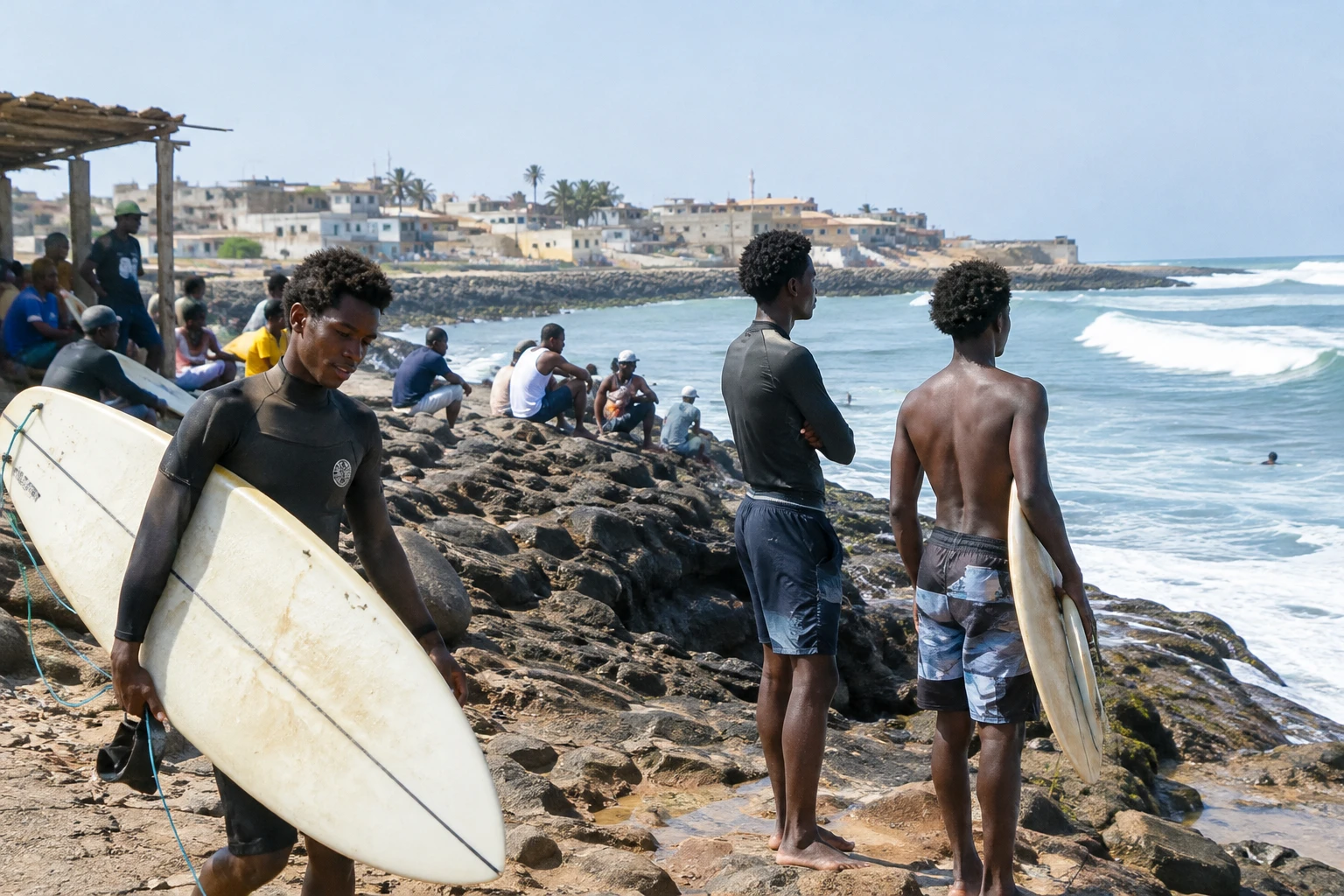
At Ngor, the waves offer young Senegalese surfers familiar ground. But during the Dakar 2026 Youth Olympic Games (YOG), their ability will not be tested in an event for a medal. Surfing is present around the Games, but as part of an engagement programme, separate from the official competitions.
A visible sport, but no YOG podium
The distinction matters. The official Dakar 2026 programme includes 25 competitive sports and ten engagement sports. Surfing belongs to the second category: it can be showcased and introduce people to the sport, but there will be no event awarding YOG medals. The International Olympic Committee therefore lists surfing among the engagement sports for this edition.
On the Dakar coast, a demonstration at Ngor brought together young surfers from several African countries, including South Africa, Angola, Liberia, Mozambique and Ghana. The gathering showcases the continent’s surfing and talent. However, it does not replace a competition in which athletes could face one another under an official ranking.
Ngor has a distinctive place in the history of Senegalese surfing. The wave, off the coast of the island of the same name, is associated with the sport’s earliest images in the country, dating back to 1966, according to René Pierre Laraise, technical director of the Senegalese surfing federation. Since then, the site has become a place for surfing and passing on the sport.
Early ambitions, limited resources
Assane Guèye, 16, discovered surfing by following a friend into the water. He says he wants to make it his profession. Mame Seydi Mbengue, 15, started surfing at the age of seven and is also aiming for a sporting career. Both cite Brazilian champions as role models. Their ambitions, however, face practical needs: boards, equipment, training and funding for travel.
These obstacles affect more than just teenagers. To progress internationally, a young athlete needs to be able to train regularly and take part in competitions. The cost of equipment and travel can limit opportunities to compete against high-level opponents. Sponsors can help, but their support remains a challenge for many Senegalese surfers.
The sport is nevertheless gaining ground. Figures such as Chérif Fall, a nine-time Senegalese champion according to information reported at the demonstration, have helped make surfing more visible to children and their families. Clubs and experienced surfers coach newcomers, particularly in Ngor, Ouakam and Malika.
This growth also calls for a framework. Tidiane Ndour, a former footballer, is concerned that some young people are prioritising long hours at surf spots over school. The challenge is therefore twofold: to support a demanding sport while protecting education. Sustainable development of surfing requires accessible clubs, regular coaching and links between sports training and education.
An issue extending beyond Dakar
Surfing remains less established in Senegal than sports such as football. It is practised mainly at a handful of coastal sites. This geography creates opportunities for communities near the ocean, but it can also leave young people in regions without clubs or suitable equipment at a disadvantage. The issue is not only identifying talent: access to the sport must also be widened, and athletes supported over the long term.
The YOG put these questions in a broader context. Dakar 2026 is the first edition of the Youth Olympic Games to be held on the African continent. The event draws attention to infrastructure, training and African countries’ ability to host major sporting events. For surfing, its place in an engagement programme helps raise the sport’s profile, but does not in itself guarantee a pathway to elite competition.
At regional level, the young surfers invited to Ngor also show that sporting activities cross national borders. Their exchanges could help build training and competition networks in Africa. The challenge is to turn this visibility into tangible opportunities: access to equipment, coaches, regular competitions and travel support.
The question of YOG medals is therefore only part of the issue. Senegalese surfers know the waves along their coast, but international success also depends on available resources and the rules governing access to competitions. For them, the sporting legacy of Dakar 2026 will be measured by what remains after the Games: structures in which to improve, events in which to compete and a recognised place in Senegalese sport.