Algeria
 Egypt
 Libya
 Morocco
 Sudan
 Tunisia
 Benin
 Burkina Faso
 Cabo Verde
 Côte d'Ivoire
 Ghana
 Guinea
 Guinea-Bissau
 Liberia
 Mali
 Mauritania
 Niger
 Nigeria
 Sierra Leone
 The Gambia
 Togo
 Cameroon
 Central African Republic
 Chad
 DR Congo
 Equatorial Guinea
 Gabon
 Republic of the Congo
 São Tomé and Príncipe
 Burundi
 Comoros
 Djibouti
 Eritrea
 Ethiopia
 Kenya
 Madagascar
 Malawi
 Mauritius
 Mozambique
 Rwanda
 Seychelles
 Somalia
 South Sudan
 Tanzania
 Uganda
 Angola
 Botswana
 Eswatini
 Lesotho
 Namibia
 South Africa
 Zambia
 Zimbabwe
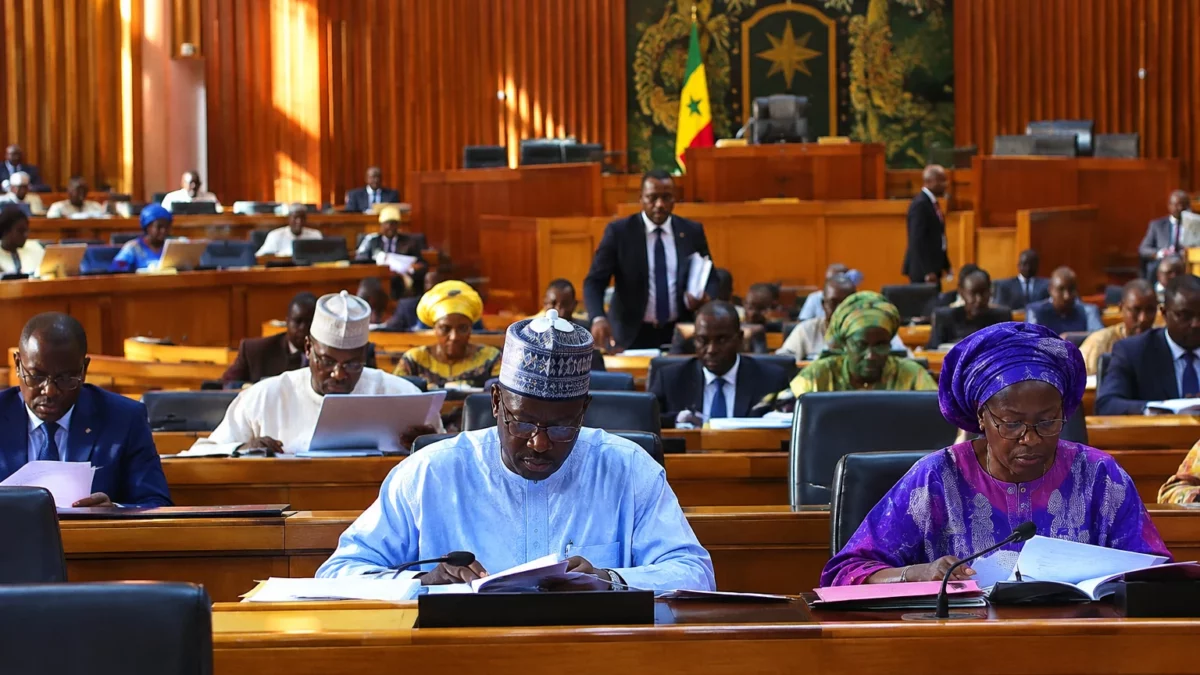
The split between a president and the party that brought him to power goes beyond internal party disputes. In Senegal, it raises an immediate question: how can the country be governed when the head of state and the party that dominates the majority are no longer in the same political camp?
A political break made formal
The national council of PASTEF-Les Patriotes announced on Tuesday 17 November 2026 in Dakar that 32 people had lost their membership. Bassirou Diomaye Faye is on the list. According to a statement reported by several Senegalese and West African media outlets, the decision is based on Article 6 of the party’s statutes. The council said those concerned had been removed from its registers.
The distinction matters: the party presents the measure as recording an automatic loss of membership, rather than as a conventional disciplinary expulsion. It nonetheless formalises a split that had already become visible. In July, the president launched a new political formation, the Patriotes républicains, after months of tension with Ousmane Sonko, PASTEF’s leader.
The decision also affects 31 other figures. Available information does not establish that each held the same political role or followed the same path. They should therefore not be treated as a homogeneous bloc. The party’s text, as reported by the press, primarily defines the scope of the split within its own registers.
From the 2024 tandem to two centres of power
The two men’s trajectory explains the significance of the move. In 2024, after Sonko’s candidacy was invalidated, PASTEF backed Bassirou Diomaye Faye in the presidential election. Elected on 24 March, he took office on 2 April. Sonko, a central figure in the party, became prime minister. Their alliance brought together a significant part of the electorate around a promise of political change and economic sovereignty.
Since then, disagreements have escalated into an open crisis. In May 2026, Faye replaced Sonko as head of government. Sonko was subsequently elected president of the National Assembly. In July, the head of state officially launched his own party. November’s removal therefore did not create the rift: it gave it an internal and public expression.
The economic context makes this rivalry more consequential. Senegal must contend with a difficult debt situation and sensitive budget choices. In such circumstances, a stable majority matters for passing budgets and implementing public policy. But the available evidence does not show that the 17 November decision was taken directly because of the budget crisis. The two issues intersect politically, but their causes should not be conflated.
What the split changes — and what it does not
The removal changes the balance between parties, not the institutions of the state. Bassirou Diomaye Faye remains president of the republic. His institutional status does not depend on his membership of PASTEF. Nor is a party decision, on its own, enough to determine the composition of the government or the balance of forces in the National Assembly.
In practice, the question is one of support. Does the head of state have a sufficiently organised political base to defend his agenda? Can PASTEF continue to mobilise its elected representatives, local leaders and activists around Sonko? The answers will weigh on parliamentary negotiations, appointments and the implementation of public commitments. These steps, more than the statement alone, will show the extent of the realignment.
The effects may also differ depending on the places and groups concerned. In Dakar, political leaders and institutions are in the foreground. In the regions, local elected representatives and party networks will have to clarify their alliances. For households and businesses, the issue is not party membership itself: it is whether the authorities can maintain clear decisions on public spending, services and economic activity.
PASTEF’s interpretation is that it is applying its statutes. The president’s camp, meanwhile, frames its approach as the building of a distinct political force. Neither account is enough to establish the individual motivations of the 32 people concerned or the two leaders’ future intentions. Public statements, any challenges to the decision and the choices made by elected representatives will need to be followed.
A test for ECOWAS
The significance extends beyond Senegalese domestic politics. Senegal belongs to ECOWAS, the Economic Community of West African States, which brings countries in the region together around economic and political co-operation. Since July 2026, Bassirou Diomaye Faye has held its rotating chairmanship, a role entrusted by heads of state and government.
This regional responsibility does not depend on his membership card in a national party. It nevertheless adds another dimension to the political period: ECOWAS partners will watch Dakar’s ability to maintain continuity in its regional commitments as its majority is reshaped. The situation in Senegal also serves as a reminder that a change of power led by a broad political movement does not guarantee lasting unity among its leaders once they are in office.
The next stage will play out in the institutions and on the political ground: the functioning of the majority, the reactions of those concerned and the two camps’ ability to keep dialogue open. For now, the established fact is precise. PASTEF has announced the removal of 32 members, including the president. The political consequences will depend on the alliances and decisions that follow.