Algeria
 Egypt
 Libya
 Morocco
 Sudan
 Tunisia
 Benin
 Burkina Faso
 Cabo Verde
 Côte d'Ivoire
 Ghana
 Guinea
 Guinea-Bissau
 Liberia
 Mali
 Mauritania
 Niger
 Nigeria
 Sierra Leone
 The Gambia
 Togo
 Cameroon
 Central African Republic
 Chad
 DR Congo
 Equatorial Guinea
 Gabon
 Republic of the Congo
 São Tomé and Príncipe
 Burundi
 Comoros
 Djibouti
 Eritrea
 Ethiopia
 Kenya
 Madagascar
 Malawi
 Mauritius
 Mozambique
 Rwanda
 Seychelles
 Somalia
 South Sudan
 Tanzania
 Uganda
 Angola
 Botswana
 Eswatini
 Lesotho
 Namibia
 South Africa
 Zambia
 Zimbabwe
A test of confidence on the regional market
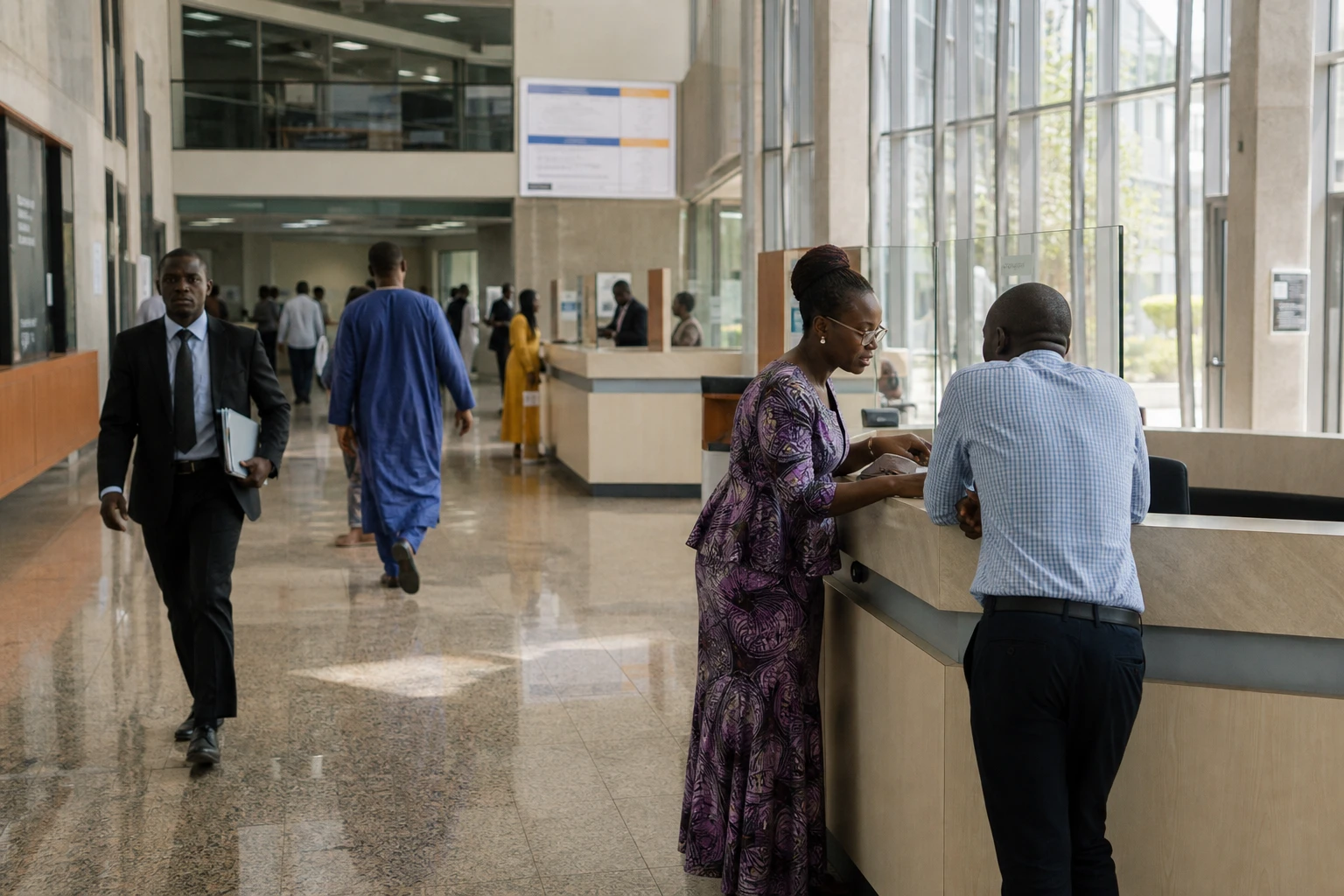
In Dakar, state financing is not decided only in ministries. It is also reflected in WAEMU trading rooms, where banks, insurers and liquidity managers make rapid decisions. On 11 September 2026, Senegal found buyers for a new fundraising operation without triggering a sharp rise in yields.
The signal matters. A few days after announcing plans for external debt treatment, the Treasury raised CFA francs 101bn on the regional market, against CFA francs 100bn initially sought. Bids reached CFA francs 109bn, showing that demand had not disappeared despite the new context.
In the WAEMU, this type of operation remains central. The public securities market allows states to raise funds in local currency from financial institutions based in the Union, with the BCEAO providing a common monetary framework. For a country such as Senegal, which finances part of its deficit through this channel, the question is not only how to borrow. It must also preserve regular access to the market.
What the figures say — and what they do not
The 11 September 2026 operation took place on more favourable terms than might have been feared. The average yield on five-year bonds stood at 7.89%, compared with 8.24% at the previous auction on 28 August 2026. One-year Treasury bills recorded an average yield of 7.87%, and three-year bonds 7.75%. In other words, the regional market did not immediately raise its price simply because Dakar is preparing discussions with its external creditors.
This relative calm does not mean there is no risk. It mainly indicates that WAEMU investors are, for now, distinguishing the local market from the external debt issue. Senegal has also suggested that commitments denominated in CFA francs would be excluded from the proposed treatment. This clarification mechanically limits fears of a direct contagion effect on regional holders.
The detail matters for the zone’s banks. They hold a significant share of regional sovereign securities. If the market believes that a state can continue to repay its CFA franc-denominated obligations, it retains greater appetite for its auctions. By contrast, any ambiguity over external debt can increase the risk premium on future maturities. It is a fragile balance.
Senegal had, moreover, increased the amount sought compared with its previous operation. Demand did not surge, but it remained sufficient to absorb the supply. This shows one simple thing: the regional market continues to perform its financing role, even when pressure on the external front intensifies.
The real issue lies abroad
The heart of the matter is not the CFA franc fundraising. It is external debt and how it is handled. On 1 September 2026, Senegal and the International Monetary Fund announced a staff-level agreement for a 36-month programme worth about $2.2bn, intended to support economic and financial reforms from 2026 to 2029. In this context, the authorities also announced their intention to seek debt treatment to restore sustainability.
Dakar has chosen the term “reprofiling”. In practice, this can mean extending maturities, reducing costs or changing the repayment schedule. Markets, however, often see it as a form of restructuring whenever the original terms change. That is where the discussion becomes sensitive, because it involves private creditors, eurobond holders and official partners.
The issue emerged after the disclosure in 2024 that public debt was higher than previously reported. The discovery weakened confidence and brought the previous IMF programme to a halt. Since then, Senegal’s executive has sought to restore its fiscal trajectory without undermining economic activity, while the country remains exposed to high financing needs and a heavy debt burden.
On 11 September, a group of bondholders also called for “fair and sustainable” treatment based on credible economic assumptions. This is a reminder that the balance of power is not limited to Dakar and official lenders. Private creditors also want to influence the final shape of the agreement.
For Senegal, the stakes go beyond a single auction
For the Senegalese state, the immediate issue is fiscal. As long as the regional market remains open and affordable, the Treasury can smooth its short-term financing needs. But genuine sustainability will depend on external debt treatment, the credibility of the macroeconomic framework and the ability to mobilise more domestic revenue. The IMF noted growth of 6.7% in 2025, driven by the first full year of oil production, while also pointing out that growth excluding hydrocarbons remained weaker.
For households and businesses, the stakes are even more tangible. Debt spread over a longer period can ease pressure on public cash flow. It can also help avoid a sharp rise in levies or sudden cuts to certain spending. But if adjustment is delayed, the pressure often shifts towards taxes, subsidies, credit and public investment. That is where the impact is felt in the real economy, in Dakar and across the regions.
At the regional level, Senegal’s case also tests the financial resilience of the WAEMU. If a member state can still raise CFA francs 101bn without major disruption after announcing plans for external debt treatment, that is reassuring for the resilience of the common market. But it does not resolve the underlying issue. The next points to watch are the course of external negotiations, the response of rating agencies and the government’s ability to present a credible trajectory before financing costs rise further.