Algeria
 Egypt
 Libya
 Morocco
 Sudan
 Tunisia
 Benin
 Burkina Faso
 Cabo Verde
 Côte d'Ivoire
 Ghana
 Guinea
 Guinea-Bissau
 Liberia
 Mauritania
 Niger
 Nigeria
 Senegal
 Sierra Leone
 The Gambia
 Togo
 Cameroon
 Central African Republic
 Chad
 DR Congo
 Equatorial Guinea
 Gabon
 Republic of the Congo
 São Tomé and Príncipe
 Burundi
 Comoros
 Djibouti
 Eritrea
 Ethiopia
 Kenya
 Madagascar
 Malawi
 Mauritius
 Mozambique
 Rwanda
 Seychelles
 Somalia
 South Sudan
 Tanzania
 Uganda
 Angola
 Botswana
 Eswatini
 Lesotho
 Namibia
 South Africa
 Zambia
 Zimbabwe
A vital route for Dakar, Bamako and the Sahel’s trade
On paper, a new motorway changes more than the landscape. It can also change the cost of a sack of rice, the speed of a container and a haulier’s profit margin. That is precisely what is at stake on the Dakar-Bamako corridor, one of West Africa’s major trade arteries, where better roads in the west are no longer enough if bottlenecks shift eastwards.
Senegal inaugurated the Mbour-Fatick-Kaolack toll motorway in Thiadiaye on 22 August 2026, and it is now open to traffic. The project is intended to ease traffic between Dakar, the centre of the country and production areas, while strengthening the logistics route serving trade with Mali, a landlocked country and a major customer for Senegal.
The issue therefore goes beyond domestic mobility. It affects the competitiveness of the Port of Dakar, the transport of goods to Bamako and Senegal’s place in West African trade, even as the regional framework has changed since Mali’s effective withdrawal from ECOWAS, the Economic Community of West African States, on 29 January 2025.
A useful but still partial improvement
The new Mbour-Fatick-Kaolack section was built with an announced investment of $738,727,239, financed 81.45% by Exim Bank China and 18.55% by the Senegalese state. It stretches for 100 kilometres, with a further 15 kilometres of connecting roads. The infrastructure also includes several engineering structures, including 14 overpasses, seven underpasses and 58 agricultural crossings.
Meanwhile, Senegal’s National Agency for Statistics and Demography confirmed that Senegalese shipments to Mali rose from CFAF 739.0 billion in 2023 to CFAF 802.8 billion in 2024, an increase of 8.6%. The same statistical note states that ECOWAS countries received 90.2% of Senegal’s exports to Africa in 2024. Mali therefore remains a decisive market for Dakar, well beyond the bilateral relationship alone.
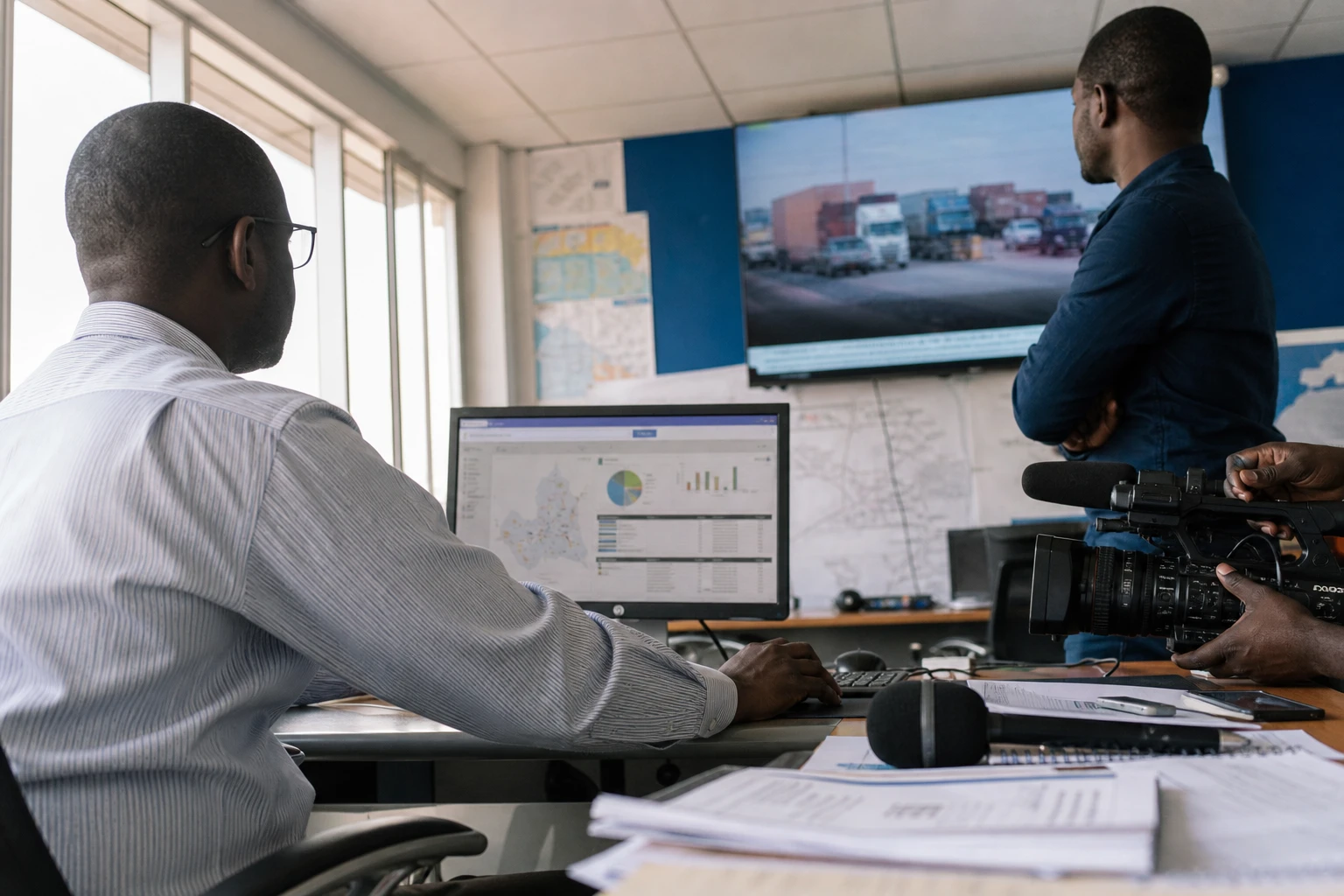
This trade dependence gives the Dakar-Bamako corridor strategic importance. The African Press Agency, citing the World Bank, reports that about 60% of Mali’s foreign trade uses this route, which would normally carry nearly 1,000 heavy goods vehicles a day. Although these estimates vary by period and route section, they make one point clear: when the corridor slows, Mali’s economy feels the impact quickly, as does Senegal’s.
The Mbour-Fatick-Kaolack motorway mainly improves the first half of the journey. It can ease congestion on the RN1, cut journey times and make travel between Dakar and the centre of the country safer. But it does not address the condition of the sections further east, delays at checkpoints or the risks along the rest of the journey to Kidira, then Diboli, Kayes and Bamako. Significant needs remain on both sides of the border.
The World Bank continued to stress the need to modernise the Bamako-Dakar corridor in 2025, particularly the Diéma-Sandaré section in Mali, which it described as essential for connectivity and the resilience of the road network. In other words, Senegal’s investment is just one link in a longer chain that still needs to be strengthened on the Malian side if it is to deliver its full benefits.
Security, logistics costs and a new geography of trade
The main constraint today is less about the map than the level of risk. Several hauliers have begun avoiding areas considered more exposed, favouring routes through Tambacounda, Kédougou, Saraya and Moussala before entering Mali. This adjustment shows the sector’s ability to adapt, but it lengthens journeys and puts greater pressure on Senegal’s secondary roads.
This diversion of traffic comes at a direct cost. Accounts reported by the specialist press point to a sharp rise in transport costs for some convoys, with bills increasing from about CFAF 1.4 million to CFAF 3.6 million, or even CFAF 4 million. These figures should be treated as approximate amounts reported by operators, but they clearly reflect the same reality: insecurity makes freight more expensive, and higher freight costs push up prices.
In practice, the extra cost is passed along the entire supply chain. It cuts hauliers’ margins, burdens importers and ultimately affects Malian consumers, who depend heavily on goods arriving by road. For Senegalese operators, by contrast, the Port of Dakar remains a major asset, provided the land connection to Bamako remains reliable enough. This is where part of the region’s logistics contest is being decided.
Rail is often cited as an alternative, but the Dakar-Bamako international line is still not fully operational. Its restoration regularly features in cooperation plans, precisely because it could distribute traffic between road and rail, reduce reliance on lorries and limit the impact of security crises. For now, this remains a prospect, not an immediate solution.
The message across West Africa is clear. Corridors are no longer just trade routes: they are instruments of economic sovereignty. Mali’s withdrawal from ECOWAS has reshaped the political framework, but it has not erased the material interdependence between Dakar and Bamako. Goods continue to move when the road allows them to. That is why Senegal and Mali share the same priority: making the corridor faster, safer and more predictable.