Algeria
 Egypt
 Libya
 Morocco
 Sudan
 Tunisia
 Benin
 Burkina Faso
 Cabo Verde
 Côte d'Ivoire
 Ghana
 Guinea
 Guinea-Bissau
 Liberia
 Mauritania
 Niger
 Nigeria
 Senegal
 Sierra Leone
 The Gambia
 Togo
 Cameroon
 Central African Republic
 Chad
 DR Congo
 Equatorial Guinea
 Gabon
 Republic of the Congo
 São Tomé and Príncipe
 Burundi
 Comoros
 Djibouti
 Eritrea
 Ethiopia
 Kenya
 Madagascar
 Malawi
 Mauritius
 Mozambique
 Rwanda
 Seychelles
 Somalia
 South Sudan
 Tanzania
 Uganda
 Angola
 Botswana
 Eswatini
 Lesotho
 Namibia
 South Africa
 Zambia
 Zimbabwe
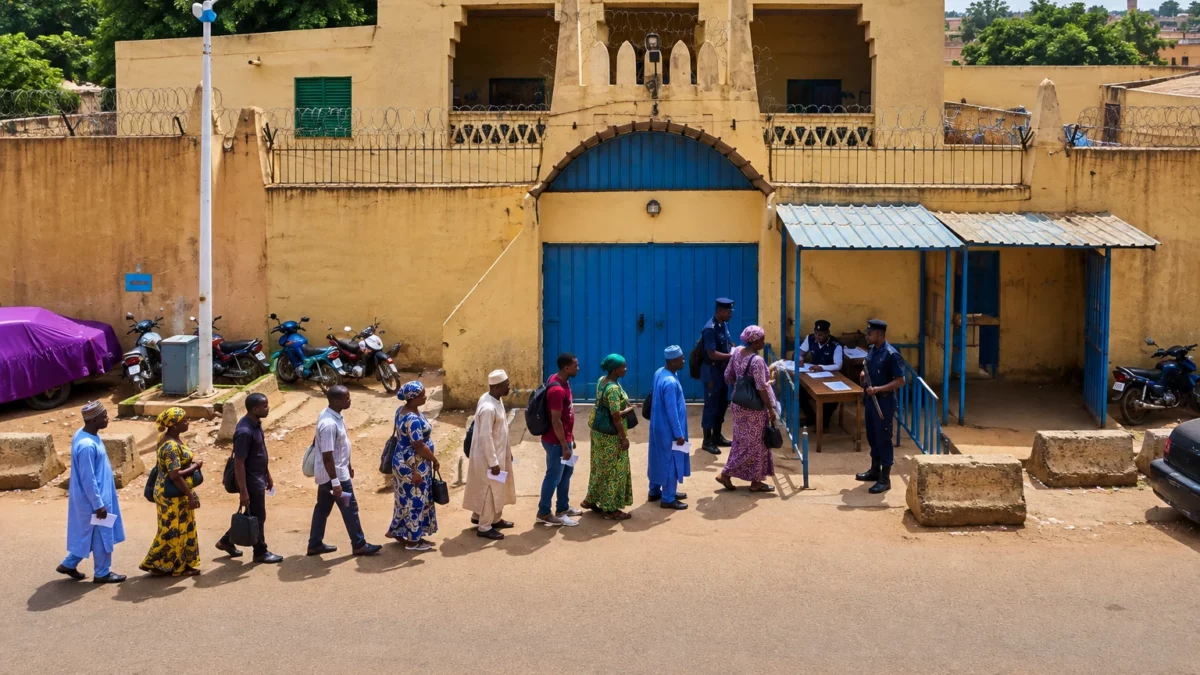
An expert report rules out his voice in the recording that triggered the prosecution. A judge then orders the case closed and his release. Yet Clément Dembélé remains in detention in Bamako. This gap between judicial decisions and the reality of imprisonment raises a central question: what is a court ruling worth if it has no effect?
A case triggered by a disputed recording
The Malian anti-corruption activist and academic was arrested on 17 November 2023. The authorities accused him of threatening the president of the Transition, General Assimi Goïta, in an audio message circulated on social media. Dembélé denied being its author. An independent expert report, commissioned by a judge and completed in March 2024, concluded that the voice was not his. The civil party and the public prosecutor contested this conclusion, particularly the method used.
On 24 April 2024, the investigating judge ordered his provisional release under judicial supervision. The prosecutor’s office specialising in cybercrime appealed. On 23 July 2024, the indictment chamber of the Bamako Court of Appeal then ruled that he should remain in detention. The case thus followed two opposing paths: the investigation accepted the findings of the expert report, while appeals prolonged his imprisonment.
A court order with no effect on his detention
On 17 April 2025, an investigating judge found that the charges were not sufficiently substantiated and ordered the case closed without further action. The judge noted, among other things, that attempts to authenticate the recording had failed and that the available expert report attributed the voice to another person. The public prosecutor and the civil party had, however, contested the report. The order did not lead to Dembélé’s release.
In his report covering part of 2025, Eduardo Gonzalez, the UN independent expert on human rights in Mali, confirmed that Dembélé remained in detention despite the decision. Amnesty International also reported that the activist was still being held at Bamako Central Prison. In June 2026, a further step before the Supreme Court failed to unblock his case. As of 17 November 2026, three years after his arrest, he is still in prison, according to available information.
The length of detention alone is not enough to establish a person’s guilt or innocence. In this case, however, continued imprisonment after an order to close the case raises a separate problem: the enforcement of court decisions and access to an effective remedy. In a statement cited by the United Nations, Gonzalez recalled that Dembélé’s rights are guaranteed by Mali’s Constitution and by the country’s international commitments.
Cybercrime at the heart of the debate
The National Cybercrime Unit is a specialised court responsible for offences committed using digital technologies. Its role addresses practical issues, including the authentication of online content and the prosecution of threats. But proceedings based on a recording must also establish its origin, reliability and the identity of the speaker. In this case, disagreement over the expert report and a succession of appeals turned a technical question into an institutional test.
The implications extend beyond one activist’s case. Dembélé heads the Platform Against Corruption and Unemployment and has spoken out on matters of public interest, including power cuts. Human rights organisations say his imprisonment is part of a broader context in which political figures, journalists and civil society voices are prosecuted or detained after making critical statements. The Malian authorities regularly reject international criticism of their human rights record; the case must therefore be assessed on the basis of verifiable judicial acts, rather than the statements of either side alone.
National and regional implications
For families and relatives, prolonged detention means daily uncertainty. For citizens, the issue is also one of trust in institutions: a court decision that does not change a defendant’s situation fuels doubts about equality before the law. And for journalists, activists and organisations, the case sharpens the boundary between the legitimate fight against online threats and the protection of freedom of expression.
Mali’s political context has changed since the arrest. The country is governed by transitional authorities, and organisations in Mali and internationally have expressed concern about civic space. Mali, Burkina Faso and Niger have also left ECOWAS, the West African regional organisation, which has a Court of Justice among its institutions. The withdrawal removes a regional avenue of redress for citizens, although Mali’s international human rights obligations remain.
The immediate question is now whether the decisions taken in the case will be implemented and whether an actually effective remedy is possible. At regional level, the case is a reminder that the rule of law is also measured by institutions’ ability to enforce their own decisions. Three years after the arrest, the gap between the judge’s order and Clément Dembélé’s continued detention remains the defining fact.
Documentary sources: communication from UN experts on the Dembélé case ; 2026 report by the UN independent expert on Mali ; Amnesty International briefing on Clément Dembélé ; report on the step before the Supreme Court in June 2026 ; context on civil liberties and Mali’s withdrawal from ECOWAS.