Algeria
 Egypt
 Libya
 Morocco
 Sudan
 Tunisia
 Benin
 Burkina Faso
 Cabo Verde
 Côte d'Ivoire
 Ghana
 Guinea
 Guinea-Bissau
 Liberia
 Mauritania
 Niger
 Nigeria
 Senegal
 Sierra Leone
 The Gambia
 Togo
 Cameroon
 Central African Republic
 Chad
 DR Congo
 Equatorial Guinea
 Gabon
 Republic of the Congo
 São Tomé and Príncipe
 Burundi
 Comoros
 Djibouti
 Eritrea
 Ethiopia
 Kenya
 Madagascar
 Malawi
 Mauritius
 Mozambique
 Rwanda
 Seychelles
 Somalia
 South Sudan
 Tanzania
 Uganda
 Angola
 Botswana
 Eswatini
 Lesotho
 Namibia
 South Africa
 Zambia
 Zimbabwe
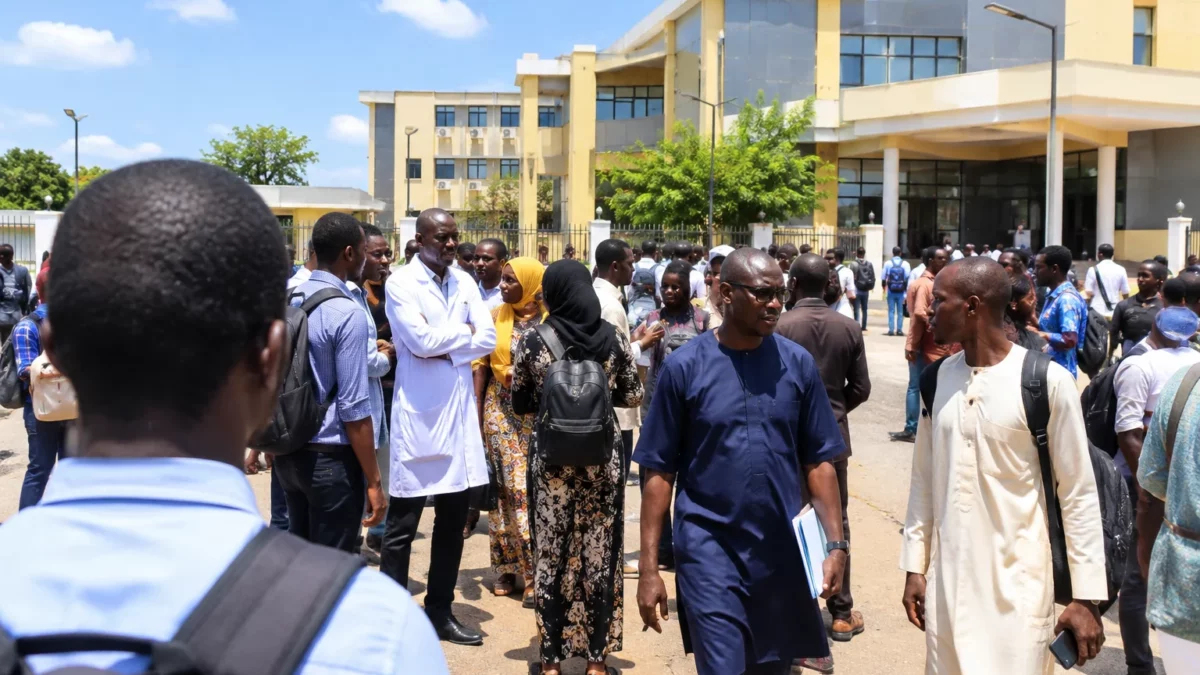
An allowance written into regulations in 2017, but with its amount and payment date still to be clarified: this unfulfilled promise is now at the heart of the functioning of Mali’s public universities. In Bamako and other affected cities, the prolonged strike also leaves students facing an immediate question: when will classes and assessments resume?
A longstanding demand
The dispute concerns the research allowance owed to academic staff and researchers. A 2017 Malian decree on their status provides for several allowances and benefits. However, the texts consulted do not in themselves establish the amount actually being sought or the arrangements for paying arrears. The union is calling for these details to be set and for sums owed since 2017 to be paid.
The strike began on 26 October 2026. On 18 November, members meeting in a general assembly at Bamako’s Faculty of Sciences and Technology voted to continue the strike. The National Union of Higher Education and Scientific Research (CEN-SNESUP) says no concrete proposal has been put to it. Two Malian media outlets reported the vote and the union’s three central demands: set the amount of the allowance, specify when it will take effect and pay the arrears being claimed.
The mobilisation is therefore about more than a pay dispute. It puts the implementation of a regulatory commitment to the test, as well as the transitional government’s ability to restore dialogue with a profession involved in training the country’s professionals and producing knowledge.
Talks without an announced agreement
Union leaders say they have met representatives of the ministries of higher education and labour. They also say they were received by State Security. As of the 18 November vote, these efforts had not resulted in a publicly announced compromise. The Ministry of Higher Education has not commented on the situation in the information available.
The union’s secretary-general, Oumar Coulibaly, has called on the transitional president to resolve the issue. According to accounts of the mobilisation, he linked the demand to the “year of education and culture” proclaimed by the authorities for 2026. The contrast is political: making education a priority also requires preserving the ordinary activities of institutions and implementing adopted regulations.
The union reports that those attending the assembly began collecting funds to support the movement. The figure of 108,000 CFA francs cited in this connection remains information attributed to the union. On its own, it is not an indicator of the strike’s national scale.
Students and institutions on the frontline
When classes are suspended, the consequences extend beyond the stand-off between the state and staff. Students may see their teaching, exams, thesis defences and research work delayed. University calendars may then be disrupted, with differing effects across disciplines and institutions. Families must also contend with uncertainty over when studies will resume and how long courses will take.
Academic staff are seeking the implementation of an allowance linked to their research work. A lasting solution will therefore need to specify the calculation rules, beneficiaries, timetable and treatment of arrears. Without these details, a general announcement may not be enough to end the strike. Conversely, a late resumption would make it harder to reorganise classes and assessments.
The dispute comes amid an already strained relationship, marked by disagreements between unions and the authorities over pay and working conditions. In October 2026, a five-day strike in higher education had already been reported. The current mobilisation thus extends sector-wide tensions rather than emerging without precedent. But the available information does not make it possible to establish precisely the state of earlier negotiations or the financial measures being considered by the government.
An issue beyond Mali’s campuses
Mali is a member of ECOWAS, a West African regional organisation, and also participates in the Confederation of Sahel States with Burkina Faso and Niger. For students and academics, these regional frameworks give wider significance to questions of education, research and the recognition of qualifications. However, they do not directly resolve the pay dispute: decisions on the allowance rest with the Malian authorities.
Nationally, the challenge is to bring public statements into line with the obligations set out in regulations, without reducing the dispute to a simple stand-off. The authorities must clarify what they can fund and on what timetable; the union, for its part, has made the suspension of the strike conditional on concrete answers. Between these positions, students remain the most exposed to delays.
The next step will therefore depend less on statements than on a verifiable proposal: the amount of the allowance, its effective date and arrangements for paying arrears. As of 18 November, no such agreement had been announced. Until these points are resolved, the resumption of university activities in Mali will remain uncertain.
The 2017 decree is available in the Official Journal of the Republic of Mali. Malian reports on the general assembly were published by Mali 24 and Malijet. The start of the strike and its demands were also reported by the African Press Agency (APA).