Algeria
 Egypt
 Libya
 Morocco
 Sudan
 Tunisia
 Benin
 Burkina Faso
 Cabo Verde
 Côte d'Ivoire
 Ghana
 Guinea
 Guinea-Bissau
 Liberia
 Mali
 Mauritania
 Niger
 Nigeria
 Sierra Leone
 The Gambia
 Togo
 Cameroon
 Central African Republic
 Chad
 DR Congo
 Equatorial Guinea
 Gabon
 Republic of the Congo
 São Tomé and Príncipe
 Burundi
 Comoros
 Djibouti
 Eritrea
 Ethiopia
 Kenya
 Madagascar
 Malawi
 Mauritius
 Mozambique
 Rwanda
 Seychelles
 Somalia
 South Sudan
 Tanzania
 Uganda
 Angola
 Botswana
 Eswatini
 Lesotho
 Namibia
 South Africa
 Zambia
 Zimbabwe
In Senegal, the split between Bassirou Diomaye Faye and Ousmane Sonko is no longer playing out only in public statements. It is now embedded in the institutions: one leads the presidency, the other presides over the National Assembly, while the country seeks a common position on debt and public policy.
An alliance forged on the campaign trail, tested in power
Their partnership came to the fore during the March 2024 presidential election. Bassirou Diomaye Faye, Pastef’s substitute candidate after Ousmane Sonko was ruled ineligible, won the election. Once sworn in, he appointed Sonko prime minister. The duo then embodied a promise of political transformation and economic sovereignty.
But an electoral alliance does not settle the question of how responsibilities are shared. The president appoints the prime minister and leads state policy under the constitutional framework; Sonko, Pastef’s founder and central figure, wielded considerable political weight. Tensions between institutional authority and party legitimacy intensified as disagreements mounted.
On 22 May 2026, the president ended Sonko’s term in office. The announcement, made in Dakar by the secretary-general of the presidency and reported by Senegalese Radio and Television Broadcasting, led to the government’s resignation. The Senegalese Press Agency confirmed the date and the decision. The APS report on Sonko’s departure from the prime minister’s office was consistent with that of public television.
The president then appointed Ahmadou Alhaminou Mohamed Lo as prime minister. The new government was formed without Pastef’s participation, after the party announced its withdrawal. Sonko, meanwhile, became president of the National Assembly. The split has therefore become institutional: it pits two camps against each other, each with a real political lever at its disposal.
Debt, a fault line and an everyday concern
The disagreement goes beyond the individuals involved. How to negotiate with the International Monetary Fund (IMF), a multilateral financial institution, has become one of the most sensitive issues. In September, the president backed an agreement intended to ease financial constraints. Sonko publicly called for details of the commitments and quid pro quos, raising the question of economic sovereignty.
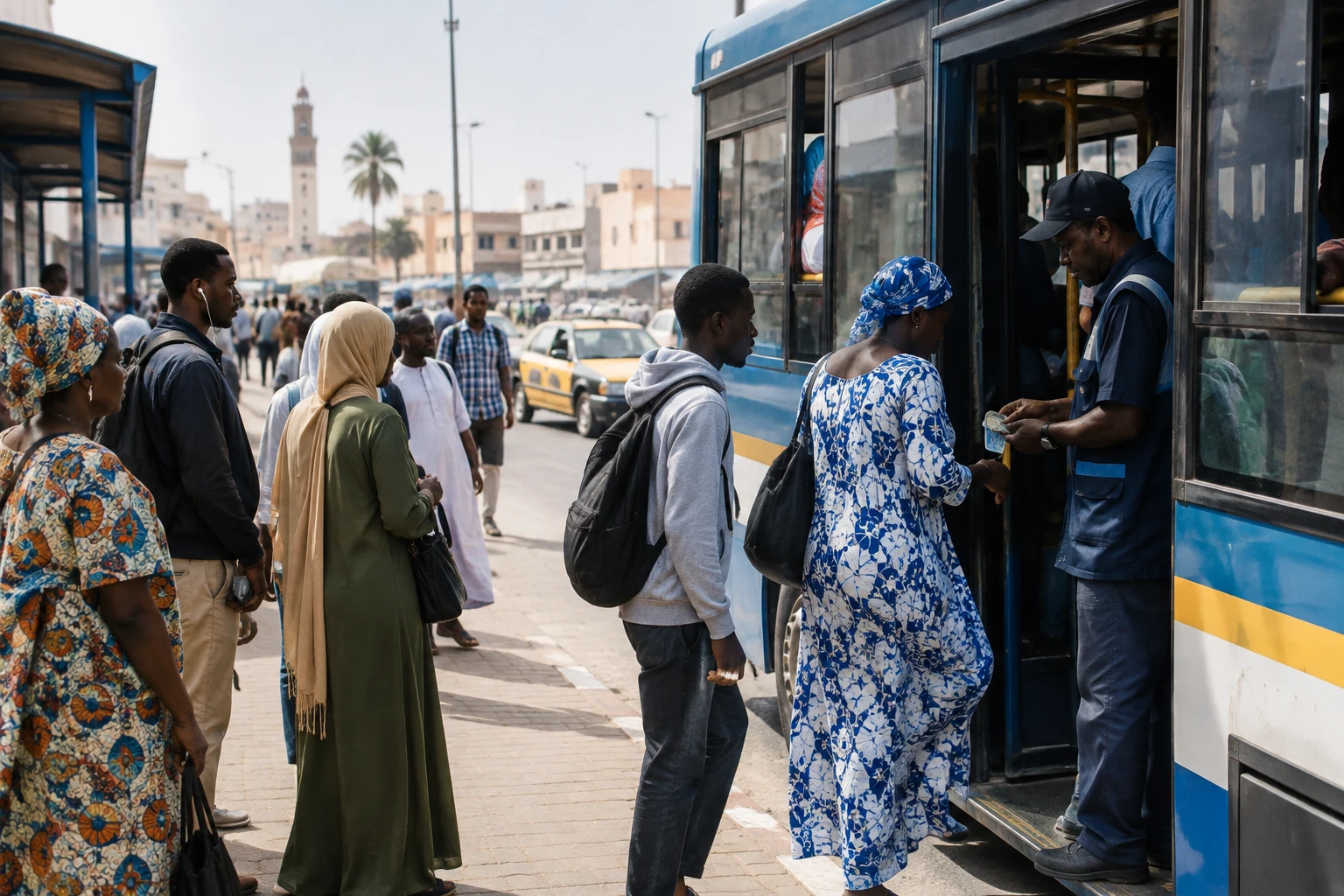
Debates focus in particular on public finance management and changes to energy subsidies. Targeting some forms of support can reduce state spending, but it also changes the costs borne by households and businesses. People in Dakar do not experience these changes in the same way as rural households, where incomes and access to services differ. Informal-sector workers, who are often less protected by social safety nets, are also affected.
The government presents the financial discussions as a way to restore balance and preserve economic activity. Sonko’s camp is concerned about the conditions attached to the agreement and whether they are compatible with the political project championed since 2024. These positions do not, on their own, sum up Senegal’s economic debate: economists and political leaders offer differing interpretations of the cost of debt and the room for manoeuvre available.
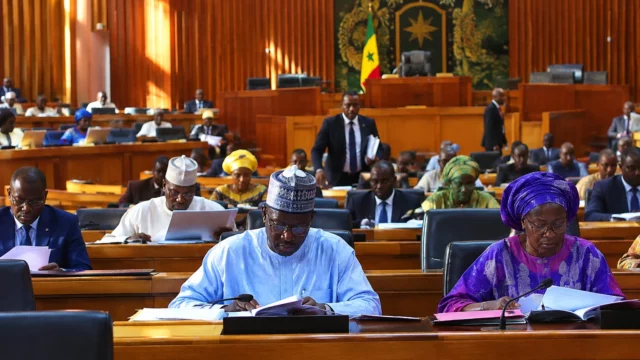
The rift is also visible in Parliament. In July, after the Constitutional Council ruled that a constitutional amendment was non-compliant, MPs revived several legislative initiatives and requests for parliamentary inquiry commissions. Pastef retains a substantial parliamentary majority. Politics is therefore not confined to presidential authority: the National Assembly can influence legislation, oversight of public policy and the government’s ability to make progress. RTS details the parliamentary steps following the constitutional ruling.
Two camps, with their records to prove
In July, Bassirou Diomaye Faye launched his own political party, making his separation from Pastef official. Some party officials joined his movement, while Sonko retained the leadership of the party and the presidency of the National Assembly. This realignment shows that the split is about more than a personal feud: it also concerns the organisation of the majority and control of its agenda.
The president, for his part, publicly confirmed a “breakdown of trust”. The phrase sheds light on his decision but does not resolve the substantive disagreements. The question of “shared” power is therefore less an abstract principle than a test of how the system works: how can an elected president, a government separate from the majority party and a Parliament dominated by that party coexist?
For Senegalese people, the most tangible measure remains whether institutions can deliver decisions that have an effect. Public servants are waiting for stable policy direction; businesses are watching budgetary and tax choices; households are focused on prices, support and jobs. A prolonged rivalry may slow public action, but political competition can also make choices more visible and subject to parliamentary debate.
An issue that extends beyond Senegal’s borders
The crisis is reverberating across West Africa, where institutional stability and regional co-operation remain central concerns. In July 2026, Bassirou Diomaye Faye took over as chairperson of ECOWAS, the Economic Community of West African States. The regional mandate is drawing greater attention to the coherence of Senegal’s executive, without determining the outcome of its political conflict. The Senegalese presidency confirmed this regional responsibility.
The next test will be whether the institutions can advance the budget, reforms and responses to debt constraints without turning every disagreement into a deadlock. For both Faye and Sonko, the question is no longer simply who retains the political upper hand. They will also have to show who can turn their choices into measurable results, within a respected constitutional framework and with costs clearly explained to Senegalese people.