Algeria
 Egypt
 Libya
 Morocco
 Sudan
 Tunisia
 Benin
 Burkina Faso
 Cabo Verde
 Côte d'Ivoire
 Ghana
 Guinea
 Guinea-Bissau
 Liberia
 Mali
 Mauritania
 Niger
 Nigeria
 Sierra Leone
 The Gambia
 Togo
 Cameroon
 Central African Republic
 Chad
 DR Congo
 Equatorial Guinea
 Gabon
 Republic of the Congo
 São Tomé and Príncipe
 Burundi
 Comoros
 Djibouti
 Eritrea
 Ethiopia
 Kenya
 Madagascar
 Malawi
 Mauritius
 Mozambique
 Rwanda
 Seychelles
 Somalia
 South Sudan
 Tanzania
 Uganda
 Angola
 Botswana
 Eswatini
 Lesotho
 Namibia
 South Africa
 Zambia
 Zimbabwe
Senegal seeks data before drilling further
Off Dakar and the Saloum, the question is no longer simply whether there is oil. It is also who will pay to prove it, and how quickly the country can expand its hydrocarbons map without spreading its resources too thinly. Senegal is proceeding cautiously: it is entrusting technical studies to a private partner while retaining control of public strategy.
This move is part of a broader sequence. Dakar wants to revive exploration following the start of production at Sangomar and the announced opening of 109 of the country’s 113 oil and gas blocks. The signal is clear: the state is not shutting the door on major oil companies, but wants to select its partners and better oversee the value created.
Memorandum of understanding, not yet a production licence
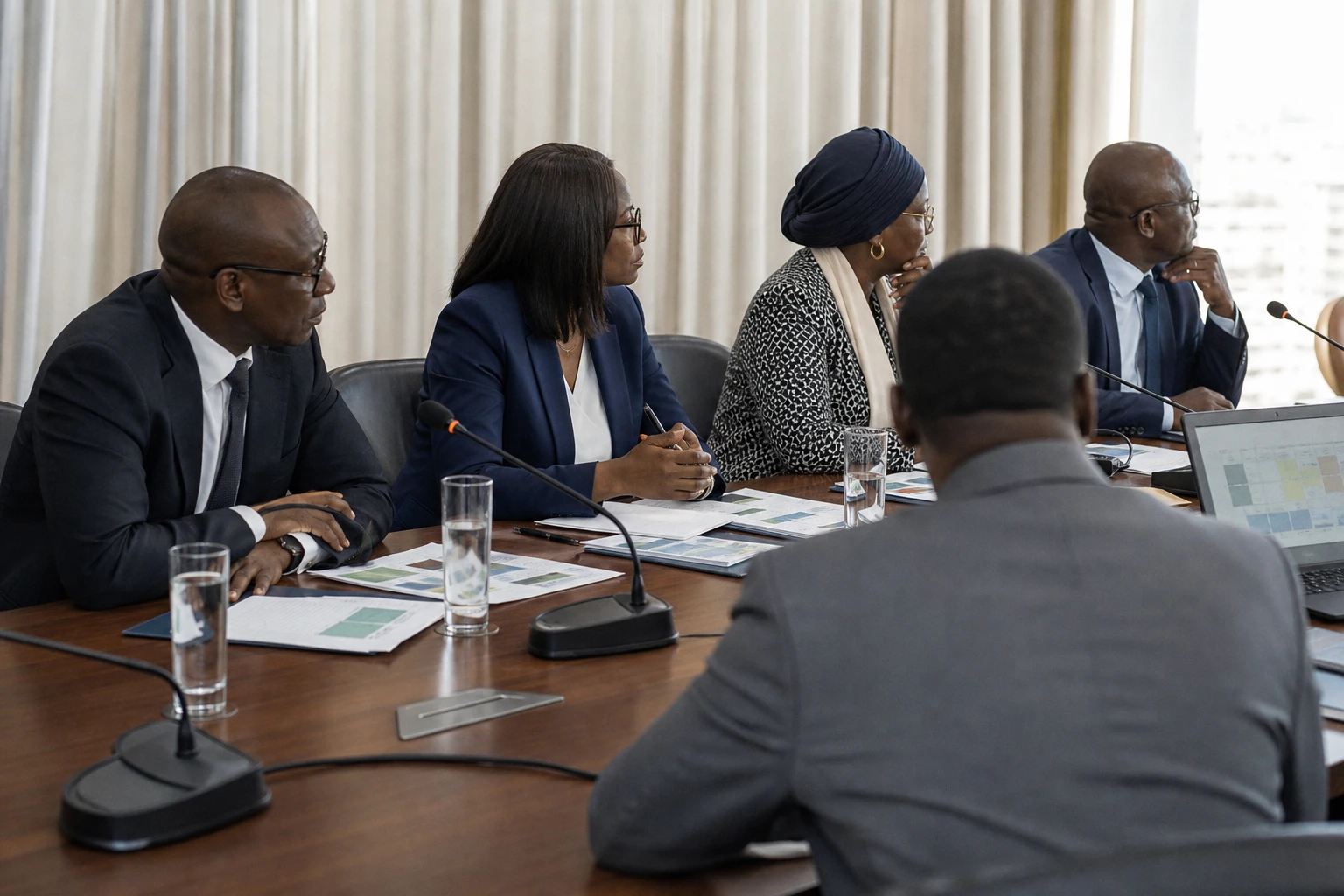
On 15 September 2026, Senegal’s ministry responsible for energy and oil and Italian group Eni signed a memorandum of understanding to conduct preliminary studies on five offshore blocks. The agreement covers blocks SN01M, SN02M, SN03M, SN07M and SN40M. It provides for 2D and 3D seismic surveys, as well as analysis of existing well data. Eni is funding all the work at its own expense.
To be clear, this text does not amount to a production licence. It opens an assessment phase, which will help measure the possible presence of recoverable hydrocarbons and the quality of geological structures. Senegal’s ministry also emphasises PETROSEN, the national oil company, and its central role in building expertise in the sedimentary basin.
This approach is consistent with the organisation of Senegal’s sector. The ministry notes that the country has a sedimentary basin divided into blocks, and that its national strategy is based on exploration, public oversight and support from private operators. The petroleum code also governs the conclusion and approval of agreements.
Sangomar, a benchmark that shifts the balance
The latest step offshore does not start from scratch. The Sangomar field has already shown that an oil project can enter commercial production in Senegal. Official documents published by the ministry and PETROSEN indicate that by June 2025 cumulative production at Sangomar was approaching 34.95 million barrels, of which about 34.37 million had been marketed, across 36 cargoes. Annual projections published earlier that year had put production at about 30.53 million barrels, before being revised upwards as the field performed.
Available estimates for 2025 point in the same direction. An official budget document refers to expected production of 30.53 million barrels, while a report carried by Senegalese public media puts the figure at about 36.1 million barrels for the year. The gap chiefly shows one thing: the field has exceeded initial assumptions and has become a concrete benchmark for the state.
Against this backdrop, Eni’s interest is significant. The Italian group is already familiar with the broader dynamics of upstream oil in Africa, with an active presence in several countries across the continent. For Dakar, attracting a player of this size, capable of funding the initial campaigns at its own expense, lowers the state’s entry costs and speeds up geological assessment of the target areas. It saves time, but is also a test of credibility for Senegal’s new energy diplomacy.
What this means for Senegal’s economy
On paper, the operation could strengthen Senegal’s position in the value chain. If favourable indications emerge, the state will have more room to negotiate contracts, steer PETROSEN towards larger stakes and, in time, prepare to capture a greater share of revenues. The government has made its position clear: attract leading partners while strengthening the national company so that it can play a greater role in managing resources.
But the benefits are not automatic. Offshore studies are expensive. They require data, time, specialised vessels and a detailed reading of the seabed. By entrusting this initial screening to a private operator, Senegal limits its immediate spending, but remains dependent on the sector’s economic appeal. If the results disappoint, the country will have gained mainly information. If they are promising, it will then need to secure good contracts, monitor timelines and ensure that the exploration drive does not turn into a promise with no impact on coastal communities or public finances.
The political dimension is just as important. Senegal’s government has launched a broader review of its hydrocarbons portfolio, with 109 blocks set to be put on the market. This approach reflects a desire to regain control in a country where debate over oil contracts has become more sensitive since production began. It also puts PETROSEN at the centre of the process, which could strengthen technical sovereignty but requires greater human, financial and legal resources.
A West African issue, beyond Senegal alone
The issue extends beyond Senegal. In West Africa, the Atlantic coast is taking on a new energy geography, encompassing offshore oil, natural gas and growing electricity needs. Senegal shares this strategic space with Mauritania, The Gambia and Guinea-Bissau, in an area where maritime boundaries, industrial interests and public expectations intersect. Senegalese waters are not just a reserve of hydrocarbons; they are also a space for fishing, transport and economic sovereignty.
The developments in Senegal will therefore be closely watched across the region. In ECOWAS, where states are seeking to diversify revenue and secure supplies, Senegal is trying an intermediate approach: opening up further while strengthening public oversight. The next milestone will be less symbolic than technical: it will depend on the results of Eni’s studies, decisions on the new blocks and Dakar’s ability to turn signatures into real assets for the national economy.