Algeria
 Egypt
 Libya
 Morocco
 Sudan
 Tunisia
 Benin
 Burkina Faso
 Cabo Verde
 Côte d'Ivoire
 Ghana
 Guinea
 Guinea-Bissau
 Liberia
 Mali
 Mauritania
 Niger
 Nigeria
 Sierra Leone
 The Gambia
 Togo
 Cameroon
 Central African Republic
 Chad
 DR Congo
 Equatorial Guinea
 Gabon
 Republic of the Congo
 São Tomé and Príncipe
 Burundi
 Comoros
 Djibouti
 Eritrea
 Ethiopia
 Kenya
 Madagascar
 Malawi
 Mauritius
 Mozambique
 Rwanda
 Seychelles
 Somalia
 South Sudan
 Tanzania
 Uganda
 Angola
 Botswana
 Eswatini
 Lesotho
 Namibia
 South Africa
 Zambia
 Zimbabwe
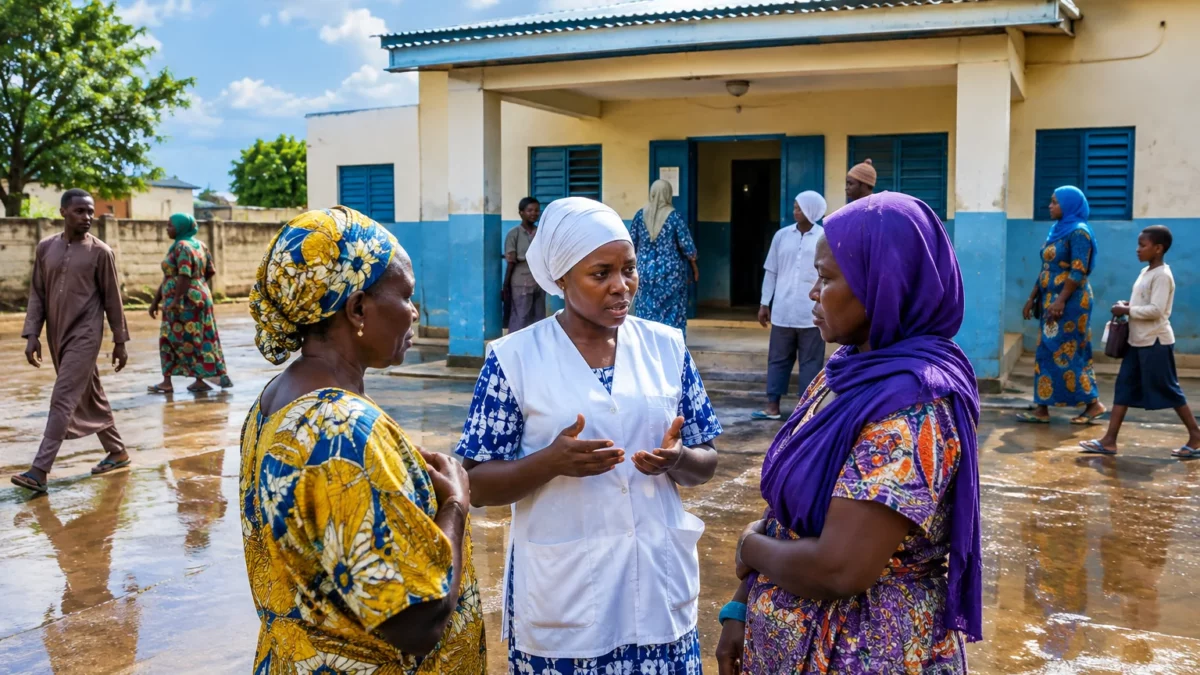
In the village of Sadatou, in eastern Senegal, a baby girl died two days after her birth. The tragedy is a reminder of a reality that is difficult to tackle: banning female genital mutilation is not enough to prevent clandestine acts, sometimes carried out within families themselves.
Investigation launched after baby’s death in Sadatou
The baby girl was born on 11 November at the health post in Sadatou, in the Tambacounda region. She died two days later following suspected female genital mutilation that is believed to have caused a haemorrhage. The precise circumstances are subject to the investigation.
Senegalese media report that two women, including the child’s grandmother, were arrested and then brought before the public prosecutor. Several local publications have also reported these details. Individual responsibility will have to be established by the courts. At this stage, the reported facts do not amount to a conviction.
The National Federation of Organisations for the Promotion of the Abandonment of Female Genital Mutilation (FENOPAME) issued a public response on 16 November. It called for the legal proceedings to take their course and urged parents, community leaders, authorities and health professionals to remain especially vigilant.
Senegalese feminist organisations also condemned the child’s death and called on the authorities to strengthen prevention. Their statements express outrage and offer an activist interpretation of the tragedy; they are no substitute for medical findings or the conclusions of the judicial investigation.
An old law, a practice that persists
Since Law No. 99-05 of 29 January 1999, female genital mutilation has been punishable under Senegal’s Criminal Code. Article 299 bis provides for a prison sentence and stipulates that, if the act results in death, life imprisonment may be imposed. The law therefore provides for a severe penalty; its existence alone does not guarantee that acts committed in private will be detected.
The case in Sadatou highlights the gap between the law and the practical implementation of prevention. When an act takes place within a close family circle, relatives may be the first to know — or not to know. Health services, local alert mechanisms and trust in the authorities then become essential, although no conclusion about a possible institutional failure can be drawn from this case alone.
The Tambacounda region shares a border with Mali and Mauritania. In border areas, travel and family ties can extend beyond administrative boundaries. This makes cooperation between communities and local services useful. This reality does not mean that the practice is specific to border populations: the data show significant differences between regions and groups, in Senegal and elsewhere.
Measuring progress without obscuring disparities
Available figures point to the need to distinguish between generations and indicators. According to the 2023 Continuous Demographic and Health Survey, about 41.4% of women aged 15 to 49 interviewed in the Tambacounda region had undergone female genital mutilation. This figure concerns adult women; it does not directly measure the number of girls currently at risk, nor changes from one year to the next.
A figure of 19.2% attributed to 2023 is also circulating in local statements about the region. It does not correspond to the regional prevalence among women aged 15 to 49 published in the ANSD survey data. Without details of the population observed and the calculation method, it would be misleading to present these two figures as a directly comparable decline. National surveys remain essential for assessing trends.
National data also show that the practice is not evenly distributed. Prevention approaches must therefore be adapted to local realities and developed with the communities concerned. Senegalese organisations working to end female genital mutilation, health professionals, women’s associations and religious leaders can help share information and identify risks without stigmatising entire populations.
Beyond Senegal, the challenge of prevention
Senegal is a member of ECOWAS, the Economic Community of West African States. The issue of female genital mutilation extends beyond national borders: prevention strategies can benefit from bringing together stakeholders in neighbouring countries, particularly in areas where family ties and daily activities connect communities across borders. Such cooperation complements the primary responsibility of Senegalese authorities to enforce their own law.
For families, the immediate priority is girls’ safety and rapid access to care in the event of complications. For the authorities, the task is to enforce the law while strengthening prevention and reporting mechanisms. For community organisations, the challenge is to build lasting support networks and make it possible to abandon the practice without isolating those who advocate for change.
The judicial proceedings in the Sadatou case will need to establish the circumstances of the death and any responsibility. Over the longer term, changes in health data, the ability of local mechanisms to prevent clandestine acts and coordination in border areas will help show whether commitments are translating into tangible protection.