Algeria
 Egypt
 Libya
 Morocco
 Sudan
 Tunisia
 Benin
 Burkina Faso
 Cabo Verde
 Côte d'Ivoire
 Ghana
 Guinea
 Guinea-Bissau
 Liberia
 Mali
 Mauritania
 Niger
 Nigeria
 Sierra Leone
 The Gambia
 Togo
 Cameroon
 Central African Republic
 Chad
 DR Congo
 Equatorial Guinea
 Gabon
 Republic of the Congo
 São Tomé and Príncipe
 Burundi
 Comoros
 Djibouti
 Eritrea
 Ethiopia
 Kenya
 Madagascar
 Malawi
 Mauritius
 Mozambique
 Rwanda
 Seychelles
 Somalia
 South Sudan
 Tanzania
 Uganda
 Angola
 Botswana
 Eswatini
 Lesotho
 Namibia
 South Africa
 Zambia
 Zimbabwe
For Senegal, the debt question is not being decided only in negotiation rooms. It is also measured in Dakar, in the state’s ability to pay its suppliers, fund public services and safeguard social spending. In September 2026, the authorities launched a new debt treatment process, while the International Monetary Fund (IMF) announced a staff-level agreement on a $2.2bn programme.
A financial agreement, but no money yet
On 1 September, IMF staff and the Senegalese government agreed on the broad outlines of a 36-month programme. The proposed package amounts to around $2.2bn. It remains subject to approval by the Fund’s executive board, corrective measures and financing assurances from partners. The announcement therefore does not mean that the money is immediately available.
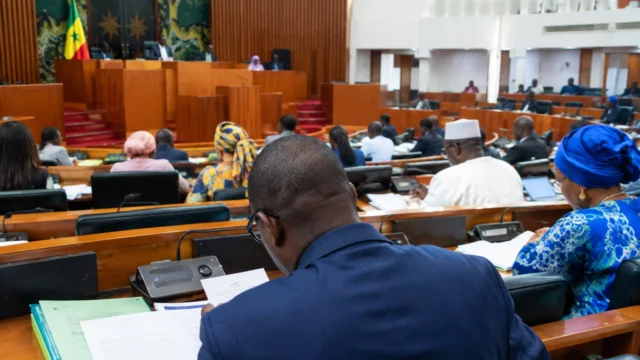
That same day, Dakar announced the Senegal Debt Treatment Plan. The government presents the initiative as a way to restore the debt profile on a sustainable basis and create room for public investment. Prime Minister Ousmane Sonko spoke of “reprofiling rather than restructuring” before MPs on 8 September. The terms matter politically, but their practical implications will depend on the agreements reached with creditors.
World Bank President Ajay Banga, for his part, said he wanted to discuss with the authorities how to accelerate the handling of the case under the G20 Common Framework, the group bringing together the world’s major economies. The stated aim is to draw on previous experience to shorten negotiations. This is an ambition, not a guaranteed timetable or an agreement already reached with creditors.
Public accounts reassessed
This sequence comes amid a crisis of confidence sparked by the revision of budget figures. In February 2025, Senegal’s Court of Auditors published an audit of public finances for the 2019-2023 period. The IMF subsequently identified significant debts and deficits that had not been reported in previous accounts. In August 2025, the Fund said the reconciliation exercise had raised the estimated central government debt for the end of 2023 from 74.4% to 111% of gross domestic product.
The disclosure of these unreported liabilities had led to the suspension of the previous IMF programme. Resuming discussions required checks and transparency measures. The newly announced programme includes plans to strengthen debt management, track government payment arrears and oversee state-owned enterprises. These commitments are intended to reduce the risk of official accounts once again diverging from financial reality.
The Senegalese government emphasises the sovereignty of its choices and insists on protecting citizens. The IMF, for its part, makes its support conditional on restoring debt sustainability and implementing budgetary reforms. The two sides will have to clarify how to distribute the burden among tax revenues, public spending, repayment schedules and social protection. At this stage, the staff-level agreement does not yet make it possible to assess all its effects.
Creditors and households face trade-offs
The G20 Common Framework aims to coordinate public and private creditors when a country requests debt treatment. It is intended to prevent fragmented negotiations, but previous cases, notably those of Zambia and Ghana, have shown how long coordination can take. Creditors do not have the same interests or contracts. Senegal is seeking a faster process, but the announced approach does not prejudge its outcome.
The stakes go beyond financial ratios. Rescheduling repayments can free up resources in the short term. But the terms chosen can also affect future access to credit and borrowing costs. Senegal borrows in particular on the regional market of the West African Economic and Monetary Union (WAEMU), where member states share the CFA franc and a common financial market. Banks and investors in the region are therefore closely watching the proposed treatment.
For Senegalese people, the impact will depend on the budgetary choices that accompany the agreement. An increase in taxes, cuts to certain spending or changes to subsidies would not affect all households in the same way. Formal businesses, self-employed workers and those in the informal economy have different capacities to adapt. Similarly, public services and investment are not distributed evenly between Dakar and the regions. The IMF says it plans to strengthen social safety nets, notably through targeted transfers; their implementation and coverage will remain to be verified.
A test for Senegal and the region
Senegal is a member of ECOWAS, the West African regional integration organisation, and WAEMU. Its situation therefore also concerns regional financial stability. A significant share of financing needs is met within a market where banks and investors hold securities issued by several states. Confidence in Dakar can thus influence borrowing conditions beyond Senegal’s borders, even though each country retains its own budgetary trajectory.
The case also puts the G20 Common Framework to the test. If creditors can reach agreement more quickly, Senegal could provide a useful precedent for other African countries facing complex negotiations. But speed alone will not be enough: the treatment must be transparent, consistent with debt sustainability and attentive to the impact on the population. The next steps to watch are formal approval of the programme by the IMF board, clarification of the terms of Senegal’s plan and concrete agreements with creditors.
Details of the IMF’s staff-level agreement with Senegal set out the conditions still to be met. The government has also published its presentation of the programme and the Debt Treatment Plan. Finally, the Senegalese Press Agency reports the distinction drawn by the prime minister between reprofiling and restructuring.