Algeria
 Egypt
 Libya
 Morocco
 Sudan
 Tunisia
 Benin
 Burkina Faso
 Cabo Verde
 Côte d'Ivoire
 Ghana
 Guinea
 Guinea-Bissau
 Liberia
 Mali
 Mauritania
 Niger
 Nigeria
 Sierra Leone
 The Gambia
 Togo
 Cameroon
 Central African Republic
 Chad
 DR Congo
 Equatorial Guinea
 Gabon
 Republic of the Congo
 São Tomé and Príncipe
 Burundi
 Comoros
 Djibouti
 Eritrea
 Ethiopia
 Kenya
 Madagascar
 Malawi
 Mauritius
 Mozambique
 Rwanda
 Seychelles
 Somalia
 South Sudan
 Tanzania
 Uganda
 Angola
 Botswana
 Eswatini
 Lesotho
 Namibia
 South Africa
 Zambia
 Zimbabwe
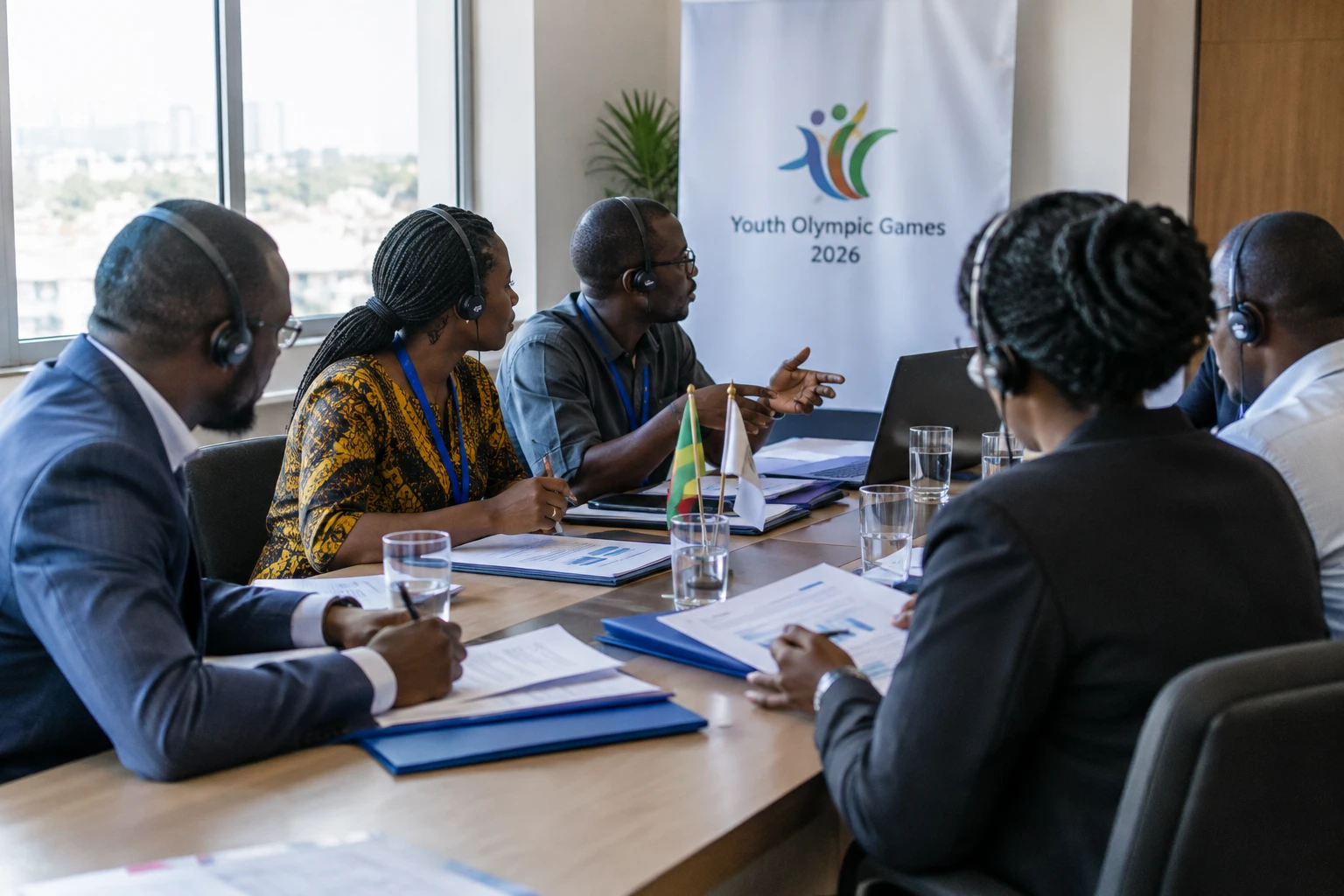
With just weeks to go before an unprecedented event on the continent, Senegal is sending a strong signal: its delegation of young athletes will be far larger than those it has fielded at previous Olympic Games. But beyond the numbers, the challenge will be to prepare athletes to compete at home across a wide range of disciplines.
Dakar to host Africa’s first Olympic event
The Youth Olympic Games (YOG), a competition for young athletes, will be held from 31 October to 13 November 2026. Dakar will be the first African city to host the event. Competitions will also take place in Diamniadio and Saly, south of the capital. Around 2,700 athletes from around the world are expected.
The programme includes 25 competition sports and ten engagement disciplines, designed to introduce young people to sporting activities. This format gives the event a significance beyond the results: it also puts venues, transport, hospitality and public access at the heart of the challenge. The schedule and the allocation of disciplines have been set out by the organisers and Olympic bodies.
This African first comes as countries across the continent seek to develop sports training and increase their presence in international competitions. For Senegal, hosting the Games offers a showcase, but also a practical test of coordination between the state, the organising committee, federations and the Senegalese National Olympic and Sports Committee (CNOSS).
136 athletes selected in 23 disciplines
On 8 October in Dakar, the CNOSS announced the selection of 136 Senegalese athletes to compete in 23 disciplines at the YOG. The International Olympic Committee (IOC) had authorised the host country to enter up to 139 athletes. The announcement did not explain why the three remaining places were unused, so it would be premature to infer any particular reason.
The contingent contrasts with Senegal’s previous participation in the Olympic Games, which had never exceeded nine athletes, according to the Senegalese Press Agency. The comparison gives a sense of the scale of the selection, even though the YOG and the Olympic Games do not have the same format or exactly the same participation criteria.
“Team Senegal” will compete in individual and team events: athletics, swimming, fencing, judo, taekwondo, boxing, wushu, badminton, triathlon, table tennis, sailing, equestrian and rowing are among the disciplines in the national programme. Team and beach sports include, among others, rugby sevens, futsal, beach handball, 3×3 basketball, baseball5 and beach volleyball.
Team sizes vary by discipline. Rugby sevens has 24 players, comprising 12 girls and 12 boys. Futsal and beach handball each have 20 athletes, with ten girls and ten boys. By contrast, rowing and equestrian each have just one Senegalese representative in the selection. These differences reflect the competition formats and the quotas allocated to teams.
From selection to preparation
Publishing the names does not resolve the question of preparation. According to the announcement reported by the APS, several Senegalese teams have held training camps in China, while the wrestlers are continuing a training camp in Besançon, France. The trips are intended to provide the teams with suitable working conditions ahead of the start of competition.
Preparation, however, is also taking place in Senegal. Federations will need to coordinate training camps with medical care, recovery, studies and support for young athletes who are still in education. A large delegation can broaden the prospects for results and experience. It also requires rigorous support, particularly in disciplines with few representatives, where every absence can have a significant impact.
Competing at home can reduce travel-related demands for athletes and allow their families to follow the events. But the crowds nearby and media attention can also increase pressure. Expectations will vary by discipline: a full team does not face the same demands as a lone athlete in rowing or equestrian.
A test for Senegalese sport and the organisers
The significance of Dakar 2026 goes beyond the national delegation’s position in the standings. The Games will test the country’s ability to host participants, operate venues and provide transport links between Dakar, Diamniadio and Saly. Their lasting impact will also depend on how the facilities are used after the competition and how accessible they are to clubs and young athletes.
Across West Africa, the event could strengthen exchanges between federations and raise the profile of young athletes’ pathways on the continent. ECOWAS, a regional cooperation organisation bringing together West African countries, is not organising the Games; their regional significance lies instead in the delegations expected, sporting networks and international attention generated by this first African edition.
The Senegalese selection is therefore a milestone, not an advance assessment of sporting results. The next steps will be to finalise preparations, welcome the delegations and then hold the competitions from 31 October to 13 November. Success will be measured by performances, but also by Dakar 2026’s ability to leave lasting facilities and opportunities for young people in Senegal and the region.
The list of 136 athletes and details of its announcement were reported by the Senegalese Press Agency. The Games’ schedule and programme are also documented by Olympic bodies and national committees, including information on the dates of the Dakar 2026 YOG and the programme and quotas approved by the IOC.