Algeria
 Egypt
 Libya
 Morocco
 Sudan
 Tunisia
 Benin
 Burkina Faso
 Cabo Verde
 Côte d'Ivoire
 Ghana
 Guinea
 Guinea-Bissau
 Liberia
 Mali
 Mauritania
 Niger
 Nigeria
 Sierra Leone
 The Gambia
 Togo
 Cameroon
 Central African Republic
 Chad
 DR Congo
 Equatorial Guinea
 Gabon
 Republic of the Congo
 São Tomé and Príncipe
 Burundi
 Comoros
 Djibouti
 Eritrea
 Ethiopia
 Kenya
 Madagascar
 Malawi
 Mauritius
 Mozambique
 Rwanda
 Seychelles
 Somalia
 South Sudan
 Tanzania
 Uganda
 Angola
 Botswana
 Eswatini
 Lesotho
 Namibia
 South Africa
 Zambia
 Zimbabwe
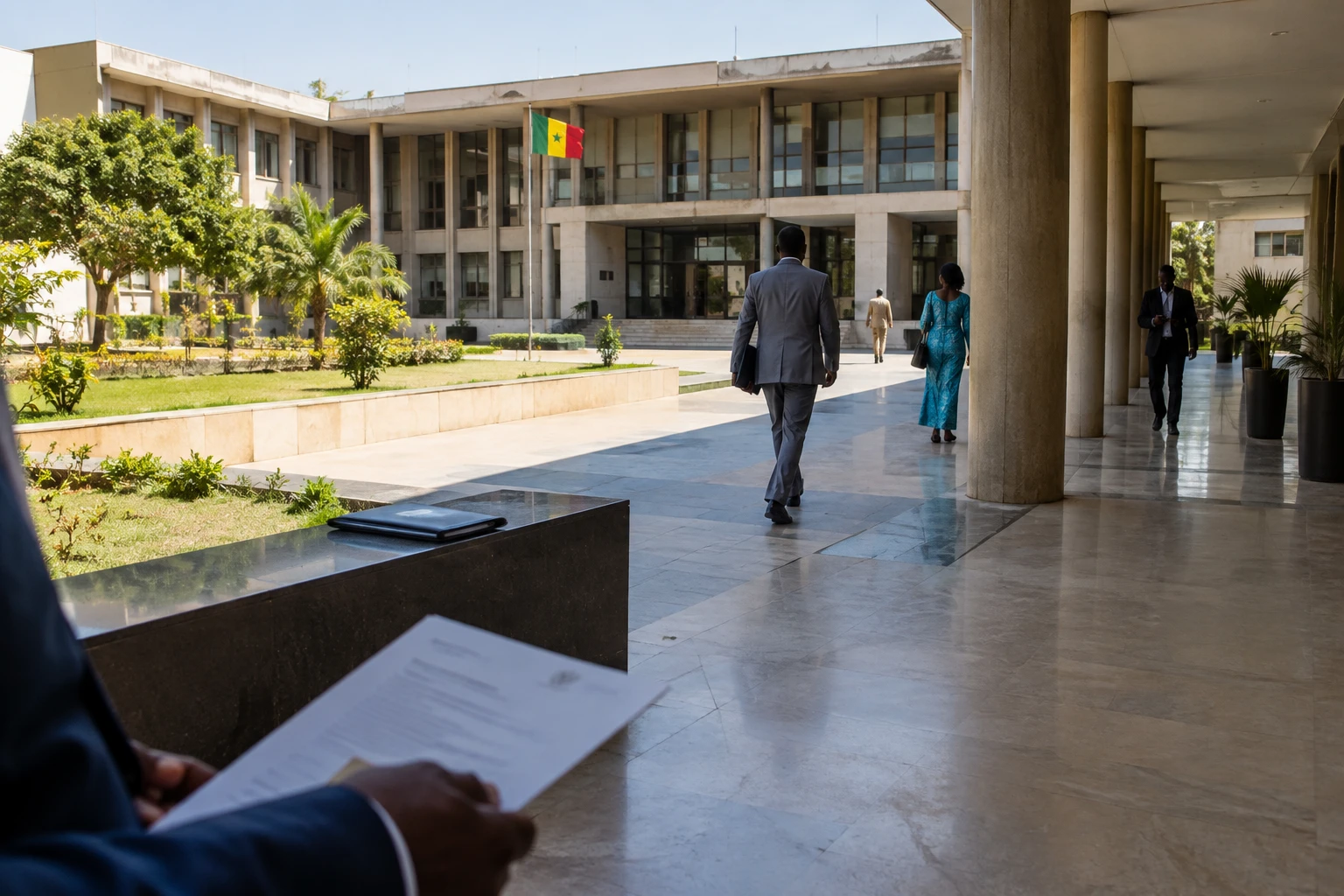
When a revised budget remains blocked in Parliament, the stakes go beyond the state’s accounts. In Senegal, they also concern public services, energy costs and the government’s room for manoeuvre in financing its commitments.
A budget dispute set against a wider crisis
A supplementary finance bill (LFR) allows the budget to be adjusted during the year when revenue or spending diverges from forecasts. Its rejection comes as Dakar seeks to restore the credibility of its public accounts and preserve its financing capacity.
The draft presented in 2026 forecasts a deficit of 1,735.2 billion CFA francs, or 7.6% of gross domestic product. It also revises revenue downwards, while spending is set to increase. These figures appear in Senegal’s budget documents. They illustrate the trade-offs dividing the executive and MPs. The 2026 supplementary finance bill data have been published by the Directorate General of the Budget.
The debate also comes in the wake of the disclosure of significant discrepancies in previous declarations of public debt. Since then, budget transparency has weighed on relations between the Senegalese state and its financial partners. For public officials and taxpayers alike, the question is which spending will be maintained, deferred or financed through new borrowing.
Vote sidelines bill without a general debate
On Tuesday 3 November, the National Assembly adopted a preliminary motion that led to the rejection of the draft LFR. The tally reported by the African Press Agency recorded 109 votes in favour of the motion, 20 against and three abstentions. This was not, therefore, 109 MPs voting against the budget itself: their vote allowed the bill to be set aside before the general debate.
The result follows two rejections of the bill in committee, on 30 October and during the preliminary parliamentary review. The distinction matters: the vote in plenary brings this legislative stage to a close, but does not resolve disagreements over the figures or spending choices. The African Press Agency’s account of the vote details the tally and the finance ministry’s position.
Objections raised by MPs concern, in particular, the credibility of forecasts, the size of the deficit, reliance on borrowing and social spending. The proposed trade-offs over energy subsidies are also contentious: reducing them may ease the state’s bill, but could affect households and businesses if prices rise.
IMF funding expected, but still conditional
The deadlock comes as Senegal seeks a 36-month, $2.2 billion programme from the International Monetary Fund. On 1 September, IMF staff announced a preliminary agreement with the authorities. It remains subject to approval by the Fund’s executive board, as well as corrective measures and financing assurances.
A preliminary agreement is therefore not the same as a confirmed disbursement. Parliament’s rejection makes it harder to demonstrate that the budget can be implemented within a framework accepted by the authorities and their partners. It does not, however, in itself allow the conclusion that the programme has been cancelled. The IMF statement on the preliminary agreement sets out the conditions that remain to be met.
The choice facing Dakar is a difficult one. Reducing the deficit can help stabilise public finances, but cuts and price adjustments have a direct impact on daily life. Conversely, maintaining spending without sufficient resources can increase borrowing needs and delay access to external financing. The impact would not be the same for everyone: lower-income households spend a significant share of their income on essential goods, while formal and informal businesses are exposed to energy and credit costs.
A test for the majority and institutions
The rejection also reveals political tensions at the top of the state. The alliance that brought Bassirou Diomaye Faye to the presidency and the PASTEF party to the Assembly weakened after Ousmane Sonko left the premiership in May 2026. A parliamentary majority can thus block a government initiative even when both centres of power emerged from the same electoral movement.
What happens next will depend on institutional and budgetary responses. The finance ministry has warned that prolonged uncertainty could complicate the mobilisation of the resources needed in 2026. The government may seek a new parliamentary route or revise its bill. The possibility of dissolving the Assembly, raised in public debate, remains a political hypothesis rather than a decision announced in the information verified here.
At regional level, partners in the West African Economic and Monetary Union monitor the budget balances of its members, which share the CFA franc and a common monetary policy. Senegal must therefore reconcile its domestic choices with market confidence and the Union’s stability requirements. In the coming days, the decisive issue will be less the balance of power in the Assembly than the ability to present a credible, clear and sustainable budget framework for the population.