Algeria
 Egypt
 Libya
 Morocco
 Sudan
 Tunisia
 Benin
 Burkina Faso
 Cabo Verde
 Côte d'Ivoire
 Ghana
 Guinea
 Guinea-Bissau
 Liberia
 Mali
 Mauritania
 Niger
 Nigeria
 Sierra Leone
 The Gambia
 Togo
 Cameroon
 Central African Republic
 Chad
 DR Congo
 Equatorial Guinea
 Gabon
 Republic of the Congo
 São Tomé and Príncipe
 Burundi
 Comoros
 Djibouti
 Eritrea
 Ethiopia
 Kenya
 Madagascar
 Malawi
 Mauritius
 Mozambique
 Rwanda
 Seychelles
 Somalia
 South Sudan
 Tanzania
 Uganda
 Angola
 Botswana
 Eswatini
 Lesotho
 Namibia
 South Africa
 Zambia
 Zimbabwe
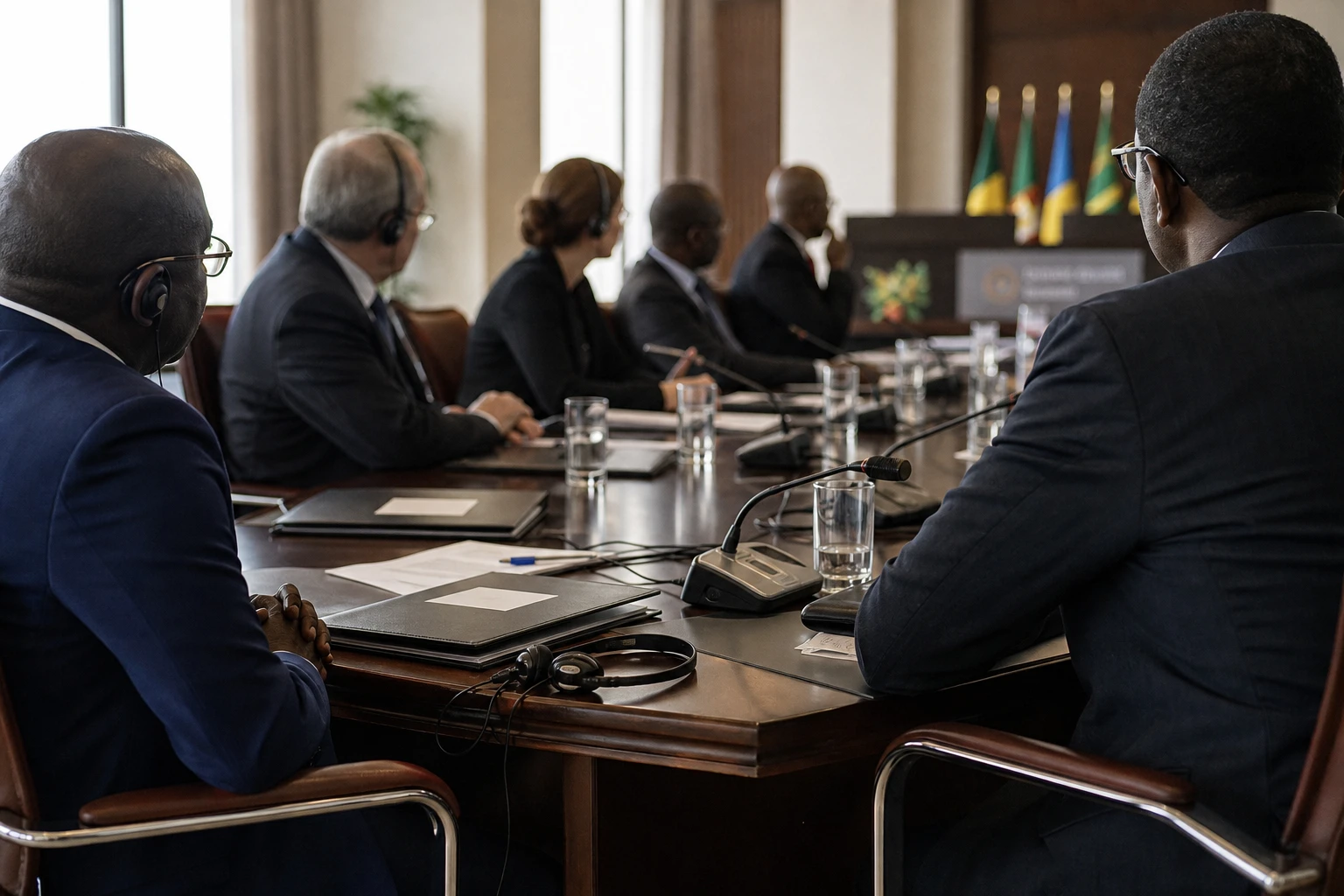
In New York, Senegal held discussions with a dual purpose. On the one hand, Bassirou Diomaye Faye and Emmanuel Macron reviewed the future of their bilateral relationship. On the other, the election of the next United Nations secretary-general brought Macky Sall back into high-level diplomatic discussions.
A meeting focused on partnership and multilateralism
Senegalese President Bassirou Diomaye Faye met his French counterpart, Emmanuel Macron, on Tuesday 22 September 2026 at the United Nations headquarters in New York. The meeting took place after the opening of the 81st session of the UN General Assembly.
In a statement reported by the Senegalese Press Agency, Senegal’s presidency said the two leaders reviewed the partnership between Dakar and Paris. They also discussed ways to deepen it.
The talks covered several international issues. Bassirou Diomaye Faye and Emmanuel Macron shared their assessments of peace and security challenges. They also reaffirmed their commitment to the United Nations Charter and the peaceful settlement of disputes.
The Senegalese presidency added that the succession of António Guterres as UN secretary-general was on the agenda. The current secretary-general’s term is due to end at the close of 2026.
Macky Sall’s candidacy at the heart of diplomatic discussions
Former Senegalese president Macky Sall is among the declared candidates to lead the international organisation. His candidacy was officially put forward in March 2026 by Burundi, which was then chairing the African Union.
The bid initially created an awkward situation in Dakar. The candidate had external backing, but the Senegalese government did not immediately endorse his move. This reservation also reflected the political break between the former government and the camp that took power with Bassirou Diomaye Faye in April 2024.
Dakar’s position changed over the summer. After meeting Macky Sall on 17 July 2026, President Faye decided to give his candidacy Senegal’s official backing. The decision was subsequently announced by Senegal’s Ministry of African Integration and Foreign Affairs, as reported by Senegalese Radio and Television and other national media.
The issue in New York was therefore no surprise. It is part of a process that began several weeks earlier. The rapprochement between Bassirou Diomaye Faye and Macky Sall had already been noted when the former head of state returned to Dakar, and in diplomatic contacts ahead of the General Assembly session.
However, the information available does not allow it to be stated that Macky Sall took part in the meeting between the Senegalese and French presidents. Senegal’s presidency confirmed that his candidacy had been discussed, but did not publish details of the positions expressed by either leader.
A diplomatic choice with political consequences for Dakar
Bassirou Diomaye Faye’s support serves an initial purpose. It allows Senegal to speak with one voice in a contest in which backing from a candidate’s home country carries considerable weight. An African candidacy to lead the UN cannot be separated from the balance of power among the continent’s states.
That support does not, however, guarantee the outcome. The secretary-general is recommended by the Security Council before being appointed by the General Assembly. The Council’s five permanent members have veto power. The negotiations therefore extend well beyond Senegal and Africa.
For Macky Sall, the issue is also one of international credibility. Senegal’s president from 2012 to 2024, he is highlighting his experience in government, his tenure as chair of the African Union and his responsibilities in several multilateral initiatives. His campaign will nevertheless have to persuade states with different priorities, at a time when the UN is facing multiple crises and acute tensions between powers.
For President Faye, the issue has a domestic dimension. Support for his predecessor can be presented as a matter of state policy, distinct from the political disagreements that have built up since the previous regime ended. It also leaves the government open to criticism from those who believe Macky Sall’s candidacy should be judged in light of his record as Senegal’s leader.
The decision comes as the new authorities seek to redefine the country’s foreign relations. Dakar is maintaining its ties with France, while saying it wants to rebalance its partnerships and strengthen the sovereignty of its decision-making. The New York meeting illustrates this approach: dialogue with Paris continues, without setting aside debates over the substance and terms of co-operation.
An issue extending beyond Dakar-Paris relations
The issue also concerns the Economic Community of West African States, or ECOWAS, a regional organisation tasked in particular with economic co-operation and political stability in West Africa. Senegal remains an important member, as the region continues to be shaped by military transitions in the Sahel and tensions between several West African capitals.
In this context, Macky Sall’s candidacy could become a test of African states’ ability to build a common position. Senegal’s support alone is not enough to secure backing from the African Union. Reservations expressed in spring 2026 about possible continental support showed that African consensus could not be taken for granted.
The next stage will play out in consultations among UN member states. The positions of the Security Council’s permanent members, those of the African group and the support secured by other candidates will be decisive. Senegal will therefore have to defend its preference while preserving relations with partners who do not share it.
In New York, the meeting between Bassirou Diomaye Faye and Emmanuel Macron thus brought together three levels of decision-making: relations between Senegal and France, Senegal’s political trajectory and the contest to lead the UN. In the coming weeks, developments in African support and discussions at the Security Council will show the real significance of this diplomatic rapprochement.