Algeria
 Egypt
 Libya
 Morocco
 Sudan
 Tunisia
 Benin
 Burkina Faso
 Cabo Verde
 Côte d'Ivoire
 Ghana
 Guinea
 Guinea-Bissau
 Liberia
 Mali
 Mauritania
 Niger
 Nigeria
 Sierra Leone
 The Gambia
 Togo
 Cameroon
 Central African Republic
 Chad
 DR Congo
 Equatorial Guinea
 Gabon
 Republic of the Congo
 São Tomé and Príncipe
 Burundi
 Comoros
 Djibouti
 Eritrea
 Ethiopia
 Kenya
 Madagascar
 Malawi
 Mauritius
 Mozambique
 Rwanda
 Seychelles
 Somalia
 South Sudan
 Tanzania
 Uganda
 Angola
 Botswana
 Eswatini
 Lesotho
 Namibia
 South Africa
 Zambia
 Zimbabwe
Budget reform under the weight of debt
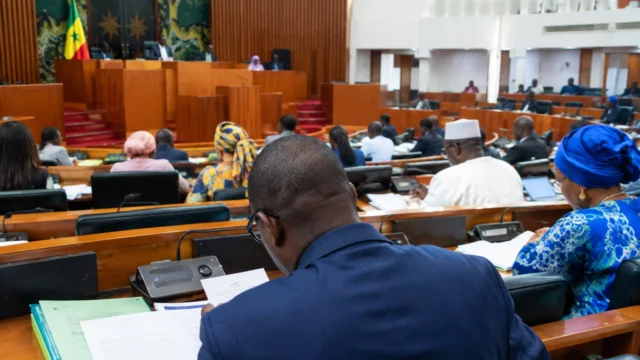
In Dakar, the question is no longer only how to finance public action. It is also how to restore confidence. Following revelations about debt and under-reported deficits, Senegal is still seeking a foothold to put its finances in order without derailing its growth trajectory or blocking priority spending. The new support announced by the African Development Bank comes at a delicate moment.
The African Development Bank Group has approved support of CFAF 20 billion, or about $35.15 million, to strengthen Senegal’s public financial management. The institution says the money is intended to improve domestic revenue mobilisation, support structural reforms and increase budget transparency. In the information made public, the AfDB did not specify whether this was a loan or a grant.
The amount remains modest given the scale of the needs. The AfDB now estimates Senegal’s financing needs at CFAF 6,075 billion in 2026, or 26.2% of GDP, of which 71% is related to debt service. The same document puts the public debt-to-GDP ratio at 132% at the end of 2024. The Senegalese authorities’ 2026-2028 debt strategy, meanwhile, relies on concessional financing and tighter budget discipline.
What has changed since the Court of Auditors’ report
The turning point came with the Court of Auditors’ report, published in early 2025. It confirmed that deficits and debt had been under-reported between 2019 and 2023. The IMF subsequently said central government debt had been revised from 74.4% to 99.7% of GDP at the end of 2023, before further updates put total public debt at even higher levels.
Since then, the International Monetary Fund has frozen its programme with Senegal and has maintained discussions with the authorities to define a new support framework. At its press briefing on 9 July 2026, the IMF confirmed that talks remained focused on the country’s financing needs and reform priorities. On 22 June 2026, the institution had already reported that the budget deficit had narrowed significantly in 2025, but that debt-related vulnerabilities remained high.
In this context, the AfDB financing is above all a signal. It says African lenders want to remain engaged, but expect concrete results on three fronts: better tax collection, reliable public figures and spending control. It is also a political message to Dakar: restoring budget credibility requires visible reforms, not just new financing.
The Senegalese government has already stated in its budget documents that the revelation of the debt had led to a sovereign rating downgrade and the suspension of the IMF programme. The finance ministry also recalled in late June 2026 that some public statements on debt did not reflect the state’s official position. In other words, the issue remains politically sensitive in Dakar.
Raising more revenue without stifling the economy
The core problem is well known: increasing revenue without slowing economic activity. The Central Bank of West African States says the WAEMU tax-to-GDP ratio was expected to reach 15.1% in 2025 and 15.8% in 2026. Senegal remains above this average, with a rate close to 18%, according to figures cited in the specialist economic press and reiterated in regional debate. This confirms an important reality: the country is already one of the zone’s strongest tax contributors, but there is still room for improvement, particularly by broadening the tax base and tackling revenue losses.
For the authorities, the challenge is twofold. On the one hand, they need to reassure creditors, technical partners and investors. On the other, they must protect useful spending: salaries, social transfers, public services and local investment. In a country where social needs remain high and the state also wants to fund the launch of major projects, a sharp adjustment would be costly politically and economically.
The AfDB’s support can therefore be seen as help with the process rather than financial relief. It funds the machinery of recovery: tax administration, accounting transparency and budget governance. It is not the money that will resolve the crisis of confidence. What matters is the quality of the correction it can support.
A Senegalese issue with implications beyond national borders
The Senegalese case extends beyond Dakar. In WAEMU, several states continue to face constraints related to debt, revenue mobilisation and dependence on regional markets. Senegal carries significant weight in this group. In 2025, it raised CFAF 2,224.6 billion on the regional market, or 19% of issuance, becoming the second-largest issuer after Côte d’Ivoire, according to the AfDB. This means its budget trajectory matters for the financial stability of the whole of West Africa.
The issue is also continental. Across Africa, the AfDB is promoting an idea that has become central: development cannot rely solely on external donors. It will require more domestic resources, more effective tax administrations and more transparent public finances. Senegal is a test case in a region where ECOWAS, WAEMU and technical partners are closely monitoring the risks of fiscal contagion and tension in debt markets.
The next step will be decisive. It will play out in discussions with the IMF, in the publication of debt statistics and in the Senegalese state’s ability to turn demands for transparency into measurable results. If this process succeeds, the country will be able to regain control. If it stalls, financing costs will remain high, for the Treasury as well as the real economy.