
 Algeria
 Egypt
 Libya
 Morocco
 Sudan
 Tunisia
 Benin
 Burkina Faso
 Cabo Verde
 Côte d'Ivoire
 Ghana
 Guinea
 Guinea-Bissau
 Liberia
 Mali
 Mauritania
 Niger
 Nigeria
 Senegal
 Sierra Leone
 The Gambia
 Togo
 Cameroon
 Central African Republic
 Chad
 Equatorial Guinea
 Gabon
 Republic of the Congo
 São Tomé and Príncipe
 Burundi
 Comoros
 Djibouti
 Eritrea
 Ethiopia
 Kenya
 Madagascar
 Malawi
 Mauritius
 Mozambique
 Rwanda
 Seychelles
 Somalia
 South Sudan
 Tanzania
 Uganda
 Angola
 Botswana
 Eswatini
 Lesotho
 Namibia
 South Africa
 Zambia
 Zimbabwe
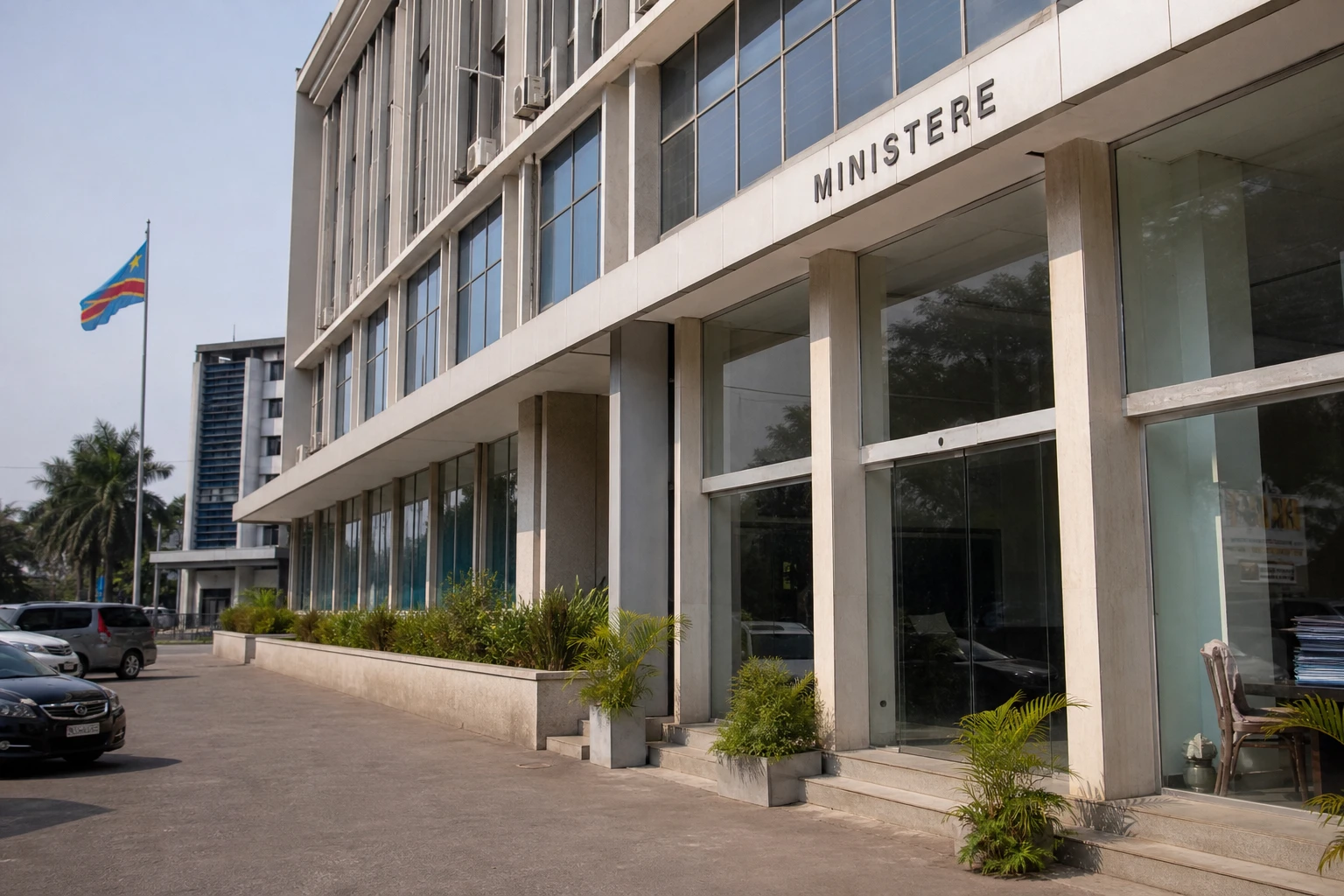
In Muanda, oil is no longer just a question of production. It has become a test of public transparency.
In Kongo-Central, on the Atlantic coast of the Democratic Republic of the Congo, oil production is no longer measured only in barrels and revenue. It is also visible in the air and soil, and now in the balance of power between the state, the company and neighbouring communities. The Perenco case, involving the country’s sole oil producer, therefore goes beyond a simple industrial dispute. It concerns public health, trust in the administration and Kinshasa’s ability to enforce rules in a strategic sector.
Muanda occupies a distinctive place in the Congolese landscape. It is where Perenco’s onshore and offshore facilities are concentrated, in an area where oil operations sit alongside residential neighbourhoods, local roads, waterways and fishing grounds. The issue is regional, too. Kongo-Central looks towards the Atlantic corridor and neighbouring Angola, as well as the energy balance of Central Africa, where states are seeking to reconcile sovereignty, revenue and environmental transition without sacrificing local populations.
Congolese state audit confirms damage to air and soil
On Wednesday, 29 July 2026, the Congolese Ministry of Hydrocarbons released preliminary findings from an environmental audit launched in December 2024 into Perenco’s facilities in Muanda. According to these initial results, pollution is attributable to the group’s onshore and offshore operations. The audit identifies adverse effects on soil and air quality, notably due to gas flaring near residential areas. The authorities have not specified the exact pollutants detected or their health effects.
The most sensitive issue remains unresolved: water. Samples from underground aquifers are still being analysed. In other words, the Congolese state has acknowledged environmental damage, but has yet to say whether contamination has reached drinking water or underground networks used by local residents. No timetable has been announced for the final report. This caution matters. It avoids drawing medical or hydrological conclusions before the expert assessments are complete, while recognising that a problem already exists.
The government said it would seek to establish responsibility and could, where appropriate, impose clean-up measures or sanctions. In early December 2025, the Ministry of Hydrocarbons had already published information showing that the Perenco audit was among the priorities of its mission in Muanda, alongside the modernisation of oil infrastructure. This sequence shows that the case did not arise from a single activist warning. It has become a state affair.
NGO warnings came before official acknowledgement
Two days before the preliminary findings were disclosed, Human Rights Watch published a detailed investigation into health risks linked to Perenco’s operations in the DRC. In January 2026, its researchers interviewed 45 residents, oil-sector employees, healthcare workers, public officials and specialists in Muanda and Kinshasa. The organisation also said it had drawn on satellite images, videos and geolocated photographs.
According to the investigation, Human Rights Watch identified five flaring sites between January 2025 and March 2026, including one less than 80 metres from homes. The NGO also cited the incineration of waste and oil leaks from wells or pipelines, with flows into soil and riverbeds. Residents interviewed reported breathing difficulties, chest pain, nausea and headaches. These accounts are not enough to establish a direct medical link, but they reinforce the need to publish complete environmental and health data.
Protests have also taken place on the ground. On 6 and 7 May 2026, residents of Kitombe blocked access to Perenco facilities to demand compensation and denounce the consequences of oil production. The mobilisation highlights a reality often invisible from Kinshasa: in producing areas, the debate over hydrocarbons plays out as much in administrative meetings as in the daily lives of local residents, who are demanding answers on jobs, compensation and safety.
French justice enters a Congolese case
The Muanda case is no longer confined to the DRC. In France, Sherpa and Friends of the Earth have brought a civil action against Perenco SA before the Paris Judicial Court, seeking recognition of civil liability for ecological harm in the Democratic Republic of the Congo. The Court of Cassation had already ruled that French courts could have jurisdiction over a defendant based in Paris. This legal dimension gives the case unprecedented reach: it opens the way to cross-border redress for environmental damage caused abroad.
In addition, an investigation by the National Financial Prosecutor’s Office, reported in the specialist press, included searches at Perenco’s Paris headquarters and the homes of several executives in June 2026, as part of proceedings opened in 2023. No conviction has been handed down at this stage. But the combination of a state audit in the DRC and judicial investigations in France changes the scale of the case. It forces the company to defend itself on two fronts: environmental and criminal or financial, depending on the outcome of the investigation.
Perenco, for its part, says it has invested in pollution prevention, infrastructure maintenance and reducing flaring. The group says it has eliminated 220 flaring points and is co-operating with the authorities to cut the practice further. In response to criticism, it also argues that some causes of environmental degradation stem from local practices, vandalism or fuel trafficking. These arguments do not close the case. Rather, they show that the dispute also concerns the attribution of responsibility, a central issue when environmental impacts overlap with informal practices and ageing infrastructure.
What the Perenco case reveals about the DRC and Central Africa
For the DRC, the stakes are twofold. On the one hand, the country is seeking to secure revenue from a small but strategic sector. On the other, it must prove that exploiting a national resource does not come at the expense of Muanda’s population. This tension is not unique to the DRC. It runs through parts of Central Africa, where producer states must balance extractive revenues, environmental demands and social pressure. In this context, the Congolese case could set a precedent: it shows that a state-commissioned audit can become a tool for accountability, provided it is published in full and followed by concrete action.
The continental significance is clear. As several African states seek greater control over their strategic resources, the Muanda case poses a simple question: how can environmental standards be enforced in areas where the local economy already depends heavily on extractive industries? The answer will probably require three steps: publication of the audit’s final report, clarification of responsibility and possible compensation for damage. Until these steps are taken, Muanda will remain an important case far beyond Kongo-Central.



