
 Algeria
 Egypt
 Libya
 Morocco
 Sudan
 Tunisia
 Benin
 Burkina Faso
 Cabo Verde
 Côte d'Ivoire
 Ghana
 Guinea
 Guinea-Bissau
 Liberia
 Mali
 Mauritania
 Niger
 Nigeria
 Senegal
 Sierra Leone
 The Gambia
 Togo
 Cameroon
 Central African Republic
 Chad
 DR Congo
 Equatorial Guinea
 Gabon
 Republic of the Congo
 São Tomé and Príncipe
 Burundi
 Comoros
 Djibouti
 Eritrea
 Ethiopia
 Kenya
 Madagascar
 Malawi
 Mauritius
 Mozambique
 Rwanda
 Seychelles
 Somalia
 South Sudan
 Tanzania
 Uganda
 Angola
 Botswana
 Eswatini
 Lesotho
 Namibia
 Zambia
 Zimbabwe
An issue that goes beyond South Africa’s borders
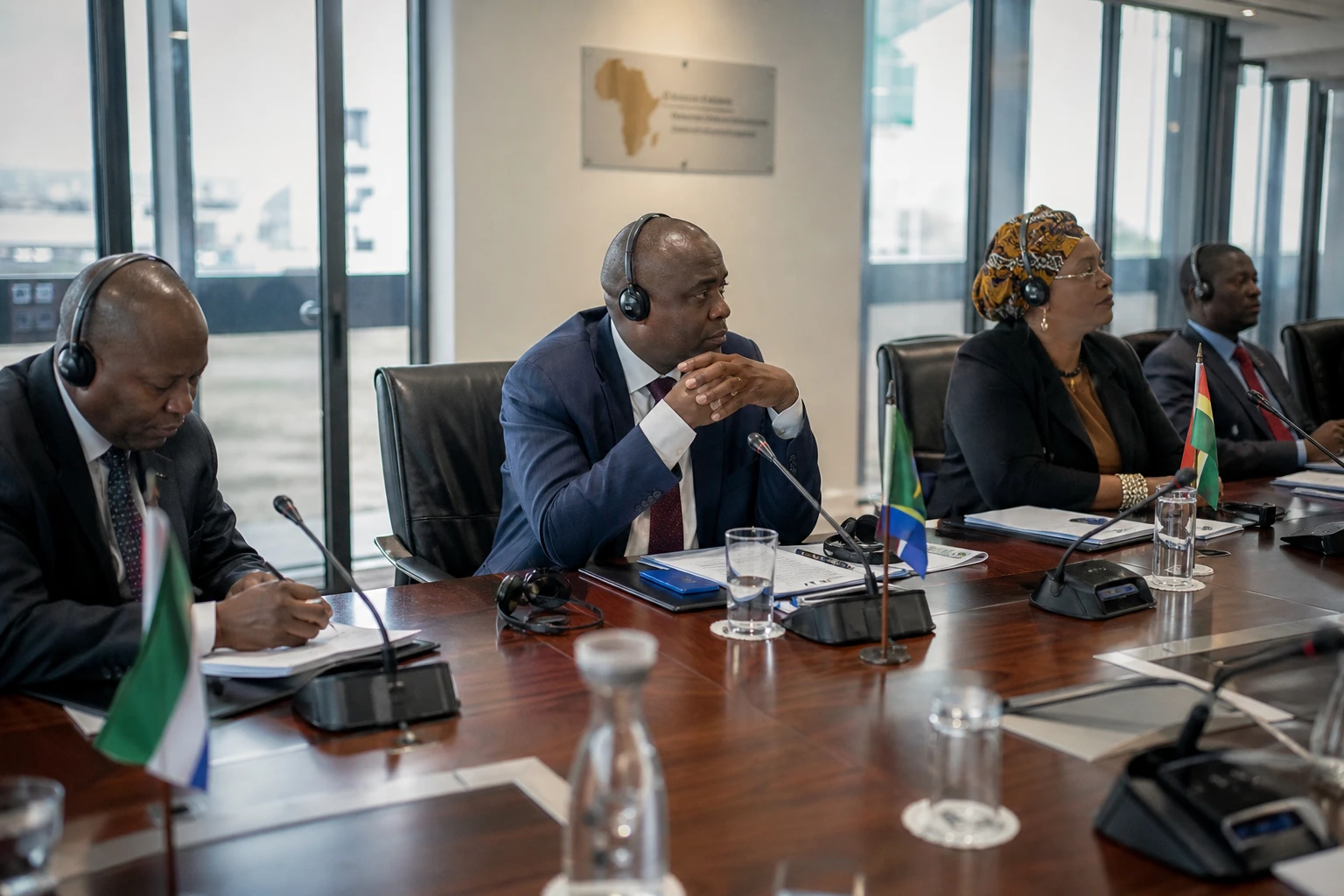
In Johannesburg, the Pan-African Parliament put xenophobia back at the centre of the continental debate. The issue is sensitive, but above all it is political: when foreigners are targeted in South Africa, the very idea of African mobility, regional solidarity and integration is put at risk. In a country that remains one of the continent’s leading economic powers, these tensions have immediate effects on low-income neighbourhoods, small businesses, transport and trust between neighbours.
The institutional context also matters. The Pan-African Parliament, the African Union’s legislative body, sits in Midrand, South Africa, and is holding its first ordinary session of the seventh legislature from 17 July to 1 August 2026. This parliamentary session comes as the AU has just convened an extraordinary health summit in Accra, the Ghanaian capital already at the centre of another diplomatic exchange concerning violence against African nationals in South Africa.
A resolution adopted without any apparent split
Meeting in South Africa, African lawmakers adopted a resolution that strongly condemns all acts of xenophobic violence. The text also provides for a parliamentary inquiry and the establishment of a pan-African dialogue. Finally, it encourages the organisation of an annual forum on social cohesion, conceived as a space for intercultural and youth dialogue, with South Africa as host.
The political momentum was broad. According to information made public by the Pan-African Parliament, the initiative stemmed from motions put forward by groups from West and East Africa, and then received wide support from the members present. The message was clear: no nationality can be used as a pretext for violence, hatred or humiliation. This wording reflects a straightforward reality. Attacks on foreigners are not merely a matter of public order. They strike at the very foundations of the pan-African project.
The vote also follows a series of earlier statements by South African institutions. In late June, South Africa’s parliament itself held a symposium on migration and social cohesion at the University of the Witwatersrand. Participants called for legal and orderly migration systems, better regional co-operation and protection for migrants from exploitation. The debate did not begin this week. It has been intensifying for several months.
Pretoria, Accra and Midrand: three fronts in the same issue
In southern Africa, the issue extends beyond South Africa alone. The Southern African Development Community, or SADC, is founded on the movement of people, workers and services between member states. When fear of foreigners spreads through South African cities, part of the regional architecture is weakened. Tensions also affect neighbouring countries, some of whose nationals depend on informal trade, precarious employment or family remittances across borders.
In Pretoria, the government says it takes these concerns seriously while rejecting the label of xenophobia. In an official response to Ghana’s request to open a debate at the African Union, South Africa’s Department of International Relations recalled the country’s commitment to pan-Africanism, Ubuntu and African solidarity. This diplomatic language does not resolve everything. But it shows that the issue is now being addressed at continental level, rather than treated solely as a series of local incidents.
At the same time, Ghana has brought the issue to the AU stage. The Ghanaian presidency said the chairperson of the African Union Commission had recognised the need to address the violence at the next summit, following discussions with John Dramani Mahama in Accra. Although the request to put the issue on the summit agenda did not receive an immediate favourable response, the fact that it reached this level demonstrates the political pressure created by attacks on African nationals in South Africa.
What the resolution changes in practice
On the ground, a parliamentary resolution will not make tensions disappear overnight. It can, however, shape the agenda of committees, parliamentary oversight and discussions between states. The Pan-African Parliament is specifically calling for its committees to work more closely together to keep the fight against xenophobia a priority. This could lead to hearings, joint recommendations and increased political pressure on national governments.
For leaders, the issue is institutional. For residents of the neighbourhoods concerned, it is far more concrete. Foreign small-business owners live with uncertainty. Mixed families are worried. Local communities also fear that tensions may turn into wider violence, destruction of property or reprisals. This is where public discourse matters. In a context of high unemployment, competition for informal work and distrust of the state, foreigners often become easy scapegoats. The resolution is an attempt to break this cycle.
South Africa, whose capital is Pretoria, remains a key player in the continent’s economy and diplomacy. It is also a society riven by deep social frustrations. Until these tensions are addressed through visible public policies, xenophobia will remain a political temptation, especially in low-income urban areas where unemployment, pressure on services and commercial competition overlap. The Pan-African Parliament has reminded the continent that another narrative is possible: one in which coexistence is organised rather than fear.
A signal to watch in the coming weeks
The next steps will play out in the corridors of African institutions as much as in South African cities. Midrand is hosting the first ordinary session of the Pan-African Parliament’s new legislature until 1 August 2026, while the AU still has to consider the political aftermath of the Accra summit. If the announced parliamentary inquiry moves forward, it could inform new recommendations on migration, social cohesion and the protection of African nationals in host countries.
This issue therefore carries a significance that goes beyond a national controversy. It raises questions about the continent’s ability to put into practice the principles it proclaims: free movement, dignity, regional integration and solidarity among Africans. In southern Africa, as across the rest of the continent, the response will be measured not only by statements. It will be seen in the safety of markets, the protection of migrants and the credibility of institutions capable of mediating these tensions.



