Algeria
 Egypt
 Libya
 Morocco
 Sudan
 Tunisia
 Benin
 Burkina Faso
 Cabo Verde
 Côte d'Ivoire
 Ghana
 Guinea
 Guinea-Bissau
 Liberia
 Mali
 Mauritania
 Niger
 Nigeria
 Senegal
 Sierra Leone
 The Gambia
 Togo
 Cameroon
 Central African Republic
 Chad
 DR Congo
 Equatorial Guinea
 Gabon
 Republic of the Congo
 São Tomé and Príncipe
 Burundi
 Comoros
 Djibouti
 Eritrea
 Ethiopia
 Kenya
 Madagascar
 Malawi
 Mauritius
 Mozambique
 Rwanda
 Seychelles
 Somalia
 South Sudan
 Tanzania
 Uganda
 Angola
 Botswana
 Eswatini
 Lesotho
 Namibia
 Zambia
 Zimbabwe
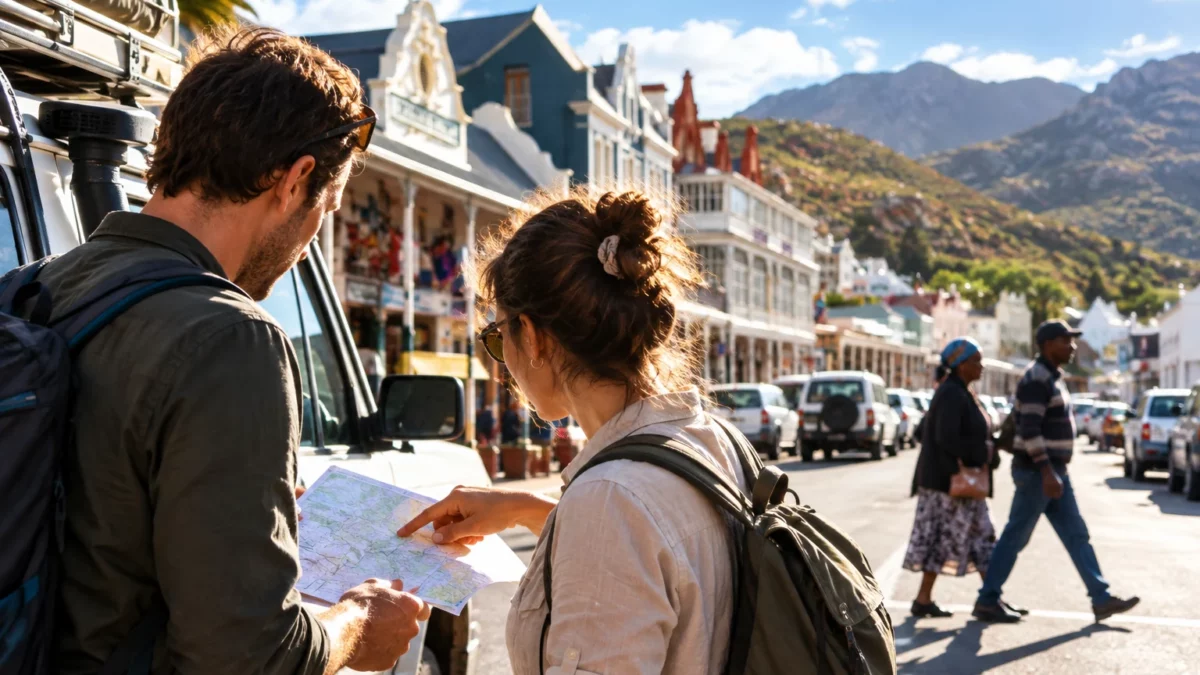
On Route 62, the journey matters as much as the destination. Between the vineyards of the Western Cape and the landscapes of the Klein Karoo, small towns are more than simple stopping points: they also depend on passing travellers, local businesses and the agricultural activities that shape the region.
This tourist route crosses part of the south of South Africa, between the provinces of the Western Cape and the Eastern Cape. Its precise itinerary depends on the stops chosen: Route 62 links Cape Town to Oudtshoorn, among other places, and continues east towards the Garden Route region and Gqeberha, formerly Port Elizabeth. Distances quoted therefore vary according to the route selected. South Africa’s Department of Tourism describes a route that winds between the two provinces and passes through the Klein Karoo. The South African Department of Tourism’s overview and a tourism page from the municipality of Swellendam rank it among the country’s major tourist routes.
A historic route away from the main highways
Before major high-speed roads were developed, inland routes connected agricultural towns with coastal markets. Today’s Route 62 brings together several historic stretches and roads; it is not a continuous motorway, but a tourist itinerary that follows roads through local communities. The N2, a major national route in the south of the country, offers a different journey, generally providing a more direct route east.
This distinction changes the pace of the trip. On Route 62, motorists pass through towns such as Montagu, Barrydale and Calitzdorp. They can stop at a winery, buy farm produce or talk to local residents. By contrast, travellers in a hurry often opt for the main highways. The two options meet different needs: saving time or making the journey part of the stay.
The detour can also spread tourist spending beyond the major urban centres. Accommodation, restaurants, wine estates, guides and local shops could all benefit from stops along the way. But these benefits are not automatic: they depend on how long visitors spend in the towns, which businesses they choose and whether small enterprises can capture a share of the spending.
Local produce and activities vary from stop to stop
In the Western Cape, agriculture and wine-making shape part of the economic landscape. Around Montagu, wineries welcome visitors and work with producers in the region. Further east, Calitzdorp is particularly associated with port-style fortified wines. This diversity reflects the soils, valleys and local conditions; it is a reminder that South African wine regions are not limited to the best-known appellations around Cape Town.
The route is about more than wine tastings. The hot springs at Avalon Springs, near Montagu, offer a chance to relax. Near Oudtshoorn, the Cango Caves showcase underground limestone formations. The town is also linked to ostrich farming and the history of the feather trade, an activity that shaped its economy in the early 20th century. These attractions are part of a region where tourism, agriculture and heritage exist side by side.
The landscapes also change over the course of the journey. Lush valleys and mountain passes gradually give way to the more arid expanses of the Karoo. This transition is one of the route’s attractions. It encourages visitors to slow down, but also requires them to plan their stops: services and distances between towns are not the same everywhere.
The journey: local experiences and unequal access
The route attracts South African and foreign visitors, as well as fans of road trips. Small towns can use it to showcase their products, heritage and skills. For residents, the stakes are more tangible: the benefits depend on jobs created, purchases made locally and links established with businesses in the region.
However, the experience remains more accessible to people with a vehicle and enough time. It is not a daily transport option on a par with the main highways. Stops and organised excursions can also channel income to some businesses rather than others. The route’s value therefore depends on the opportunities available to local guides, small businesses and communities in the towns it passes through.
Safety, finally, cannot be summed up by one traveller’s account. It varies according to location, time of day and travel conditions. As with any road trip, it is best to check road conditions, plan stops and seek information from local tourism operators. A positive experience reported by one visitor does not guarantee the same conditions at every stop.
A local route in a connected region
Route 62 does not represent South African tourism as a whole. It complements other routes in the south of the country and connects landscapes, economic activities and towns, each with its own history. At a regional level, South Africa is part of the Southern African Development Community, or SADC, which brings neighbouring countries together through economic co-operation. But the appeal of this route lies first and foremost in its local roots: it reveals the distances and contrasts within one part of the country, rather than presenting southern Africa as uniform.
Route 62 is a reminder that tourism is not confined to big cities or famous sights. It is also built around stops, shops and encounters, provided the flow of visitors translates into economic activity for the areas they pass through. For local authorities and businesses, the challenge is to turn this visibility into lasting benefits without reducing towns to a travel backdrop.
Background sources: South African tourist routes and the Route 62 map.