
 Algeria
 Egypt
 Libya
 Morocco
 Sudan
 Tunisia
 Benin
 Burkina Faso
 Cabo Verde
 Côte d'Ivoire
 Ghana
 Guinea
 Guinea-Bissau
 Liberia
 Mali
 Mauritania
 Niger
 Nigeria
 Senegal
 Sierra Leone
 The Gambia
 Togo
 Cameroon
 Central African Republic
 Chad
 DR Congo
 Equatorial Guinea
 Gabon
 Republic of the Congo
 São Tomé and Príncipe
 Burundi
 Comoros
 Djibouti
 Eritrea
 Ethiopia
 Kenya
 Madagascar
 Malawi
 Mauritius
 Mozambique
 Rwanda
 Seychelles
 Somalia
 South Sudan
 Tanzania
 Uganda
 Angola
 Botswana
 Eswatini
 Lesotho
 Namibia
 Zambia
 Zimbabwe
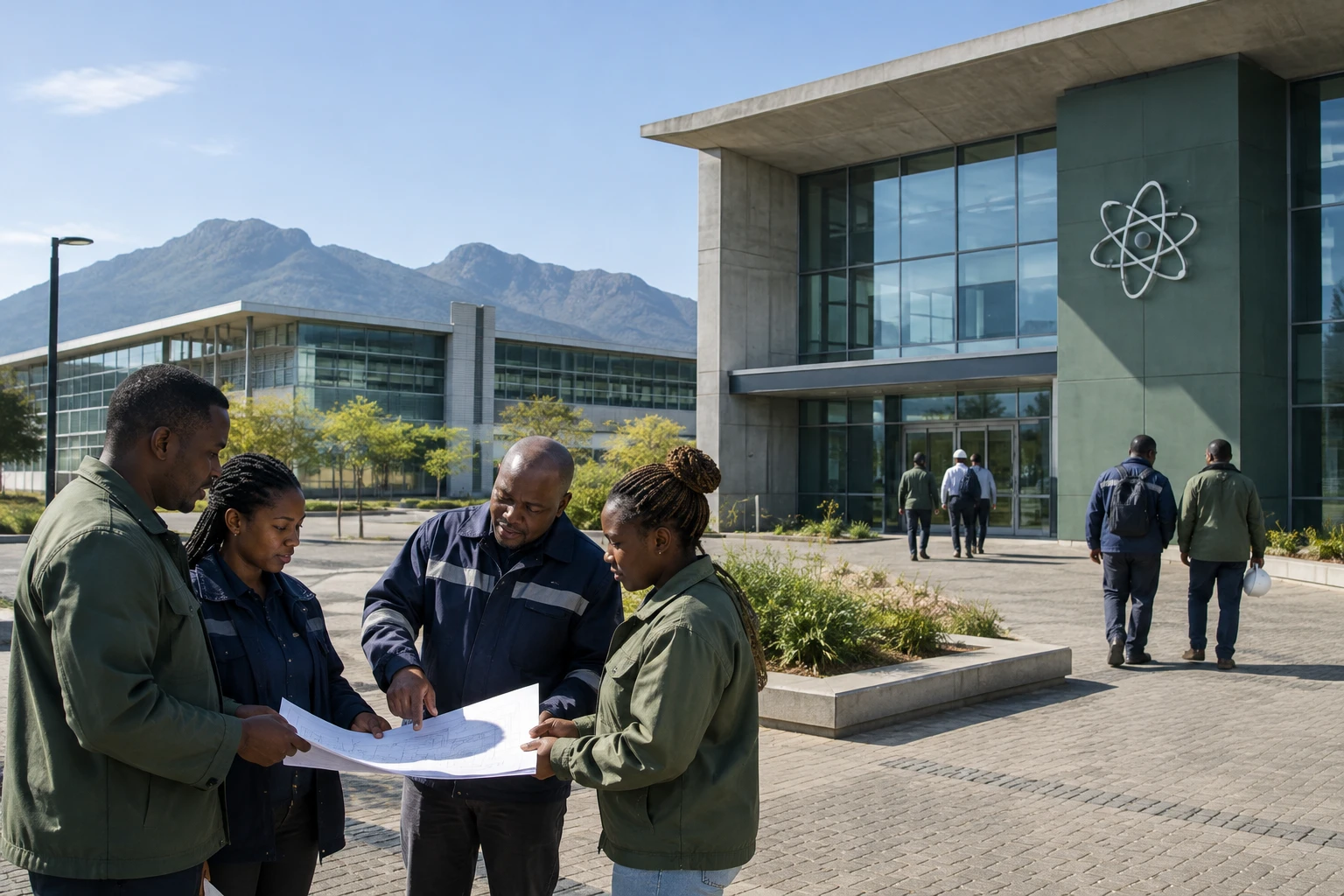
A power station can continue generating electricity for decades without the country automatically having the teams needed to build another one. That is the challenge South Africa must overcome if it is to add nuclear power to its grid while developing local skills and businesses.
From operations to construction
At Koeberg, near Cape Town, Eskom operates Africa’s only two commercial nuclear reactors. This experience has enabled the country to train teams specialising in operating, maintaining and ensuring the safety of a facility in service. But designing, financing and building new reactors calls for different professions: project engineering, civil engineering, equipment manufacturing, quality control and the management of complex construction sites.
This distinction was at the heart of remarks made on 10 November 2026 by Kgosientsho Ramokgopa, South Africa’s Minister of Electricity and Energy, at a conference on nuclear power and clean energy. He acknowledged that the country had not built a nuclear power station for several decades and that Koeberg’s teams did not necessarily have construction experience. South African public broadcaster SAnews also reported this warning.
The energy context explains why Pretoria is considering this option. Coal still supplied about 81% of South African electricity in 2025, according to Ember. Nuclear power is among the options being considered to diversify generation, alongside a major expansion of wind and solar. This direction does not mean that new reactors have already been approved or financed: it opens a planning and consultation phase.
A programme still under review
The 2025 Integrated Resource Plan, the national electricity planning framework, provides for 5,200 megawatts of new nuclear capacity. Eskom has submitted a feasibility study to the government. The minister has announced preparations for a regulatory decision known as a “section 34 determination”, which sets the framework for launching a procurement process. Publication is targeted before June 2027, following public consultations and discussions with the energy regulator and the finance ministry.
The timeline remains long. The national plan puts the possible start of new construction in 2036. In the meantime, technical options, sites, permits, financing and the impact on tariffs will have to be examined. The plan’s documents allocate the 5,200 MW over several years: this figure denotes planned capacity, not generation already available or a project under way.
Koeberg, for its part, is to remain a mainstay of the grid during this preparation. The nuclear regulator has authorised Unit 1 to operate until July 2044. For Unit 2, Eskom says its operating life has been extended until November 2045. These dates extend the operation of the existing facility; by themselves, they do not prove that the country can reproduce the expertise needed for new construction.
Training, technology transfer and local production
Working with international partners can speed up training. It does not, however, guarantee that skills will remain in the country or that South African businesses will secure a substantial share of contracts. The government says it intends to examine industrial benefits and financing arrangements, including their implications for tariffs, Eskom’s balance sheet and public finances.
For workers and businesses, the issue therefore goes beyond the number of technicians recruited. A sustainable programme would require training pathways, recognised certifications, placements on construction sites and a supply chain able to meet nuclear standards. Pretoria already has research and training institutions, including the South African Nuclear Energy Corporation, Necsa. The challenge is to connect these capabilities to concrete contracts and skilled jobs.
The public will be affected by two very practical questions: the reliability of supply and the price of electricity. Nuclear power can provide dispatchable generation, but construction costs and delays may weigh on public finances or bills if contracts allocate risks poorly. Conversely, a policy of training and local manufacturing could support industrial employment. These effects will depend on decisions yet to come, not on the target alone as set out in the plan.
A regional issue too
In Southern Africa, South Africa’s choices are part of energy cooperation within the Southern African Development Community, or SADC. The organisation is seeking to strengthen regional infrastructure and trade. A more diversified electricity supply could contribute to security of supply, but only if investment, the grid and cooperation rules keep pace.
South Africa’s path will also be watched by other African countries considering civilian nuclear power. The questions of skills, financing, safety and industrial technology transfer extend beyond national borders. For Pretoria, the next steps will be decisive: publication of the decision expected before June 2027, public consultation and then a decision on procurement terms. It is at this stage that the ambition of 5,200 MW will have to be weighed against costs, available human capacity and the real place reserved for local businesses.



