Algeria
 Egypt
 Libya
 Morocco
 Sudan
 Tunisia
 Benin
 Burkina Faso
 Cabo Verde
 Côte d'Ivoire
 Ghana
 Guinea
 Guinea-Bissau
 Liberia
 Mali
 Mauritania
 Niger
 Senegal
 Sierra Leone
 The Gambia
 Togo
 Cameroon
 Central African Republic
 Chad
 DR Congo
 Equatorial Guinea
 Gabon
 Republic of the Congo
 São Tomé and Príncipe
 Burundi
 Comoros
 Djibouti
 Eritrea
 Ethiopia
 Kenya
 Madagascar
 Malawi
 Mauritius
 Mozambique
 Rwanda
 Seychelles
 Somalia
 South Sudan
 Tanzania
 Uganda
 Angola
 Botswana
 Eswatini
 Lesotho
 Namibia
 South Africa
 Zambia
 Zimbabwe
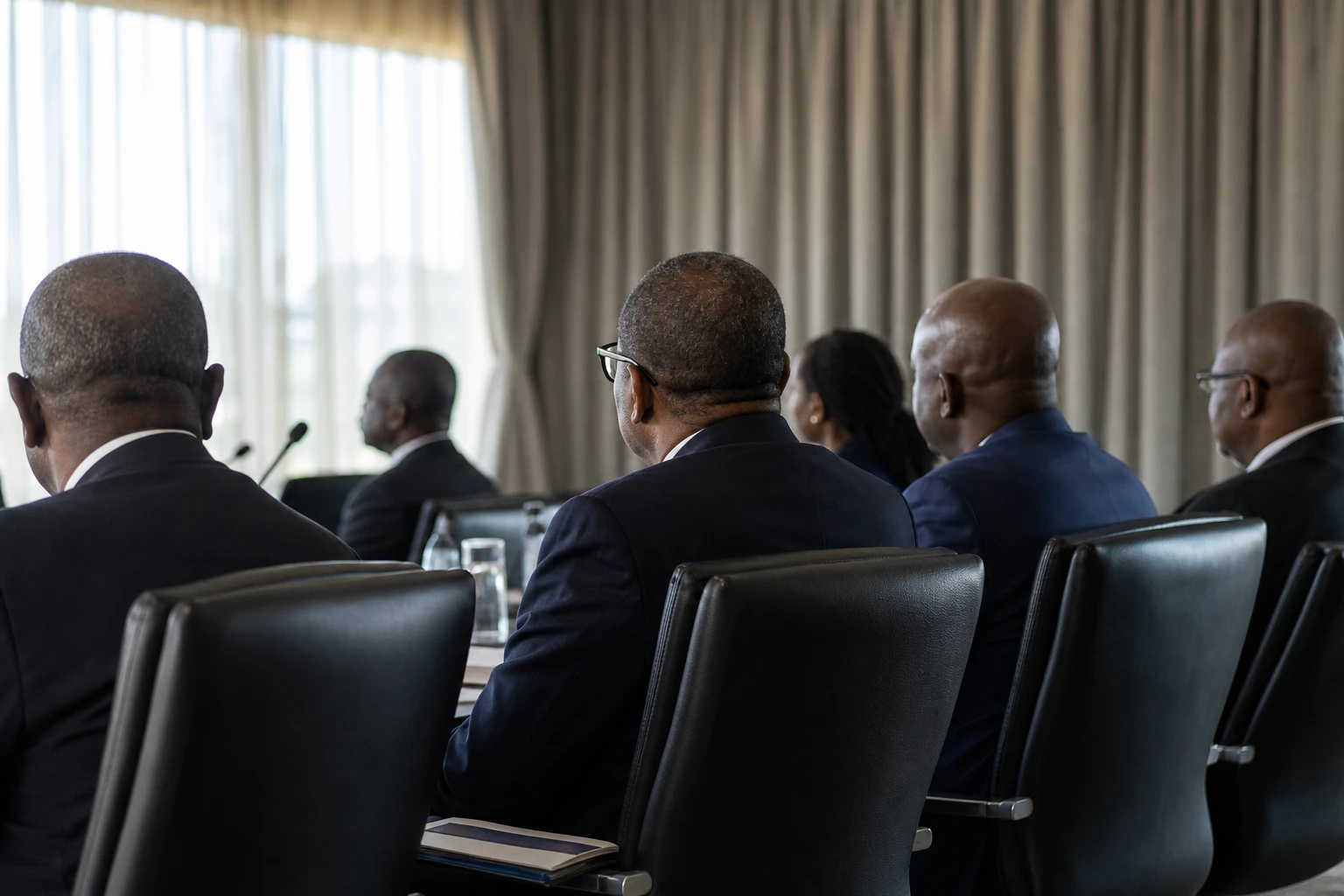
When Nigeria’s oldest bank becomes a test of control
In Abuja, the debate is not just about banking. It touches on a broader question: how far can a shareholder go in turning a dominant stake into unchallenged power? In the case of First HoldCo, the parent company of First Bank of Nigeria, the answer has implications for the governance of a financial giant, the protection of small shareholders and the image of a Nigerian stock market seeking to deepen its reach.
First Bank is not just any company. Founded in the 19th century, it remains one of the country’s most emblematic institutions. Its influence extends beyond the walls of Lagos, where its operational centre is based. It reaches clients in the formal economy as well as informal operators, SMEs, local authorities and a large diaspora that closely follows the strength of Nigeria’s financial system. In West Africa, the case is also being watched by ECOWAS, as Nigeria’s banking stability affects the entire sub-region.
A race for capital that goes beyond a simple stock-market bet
The heart of the matter is clear. Femi Otedola, chairman of First HoldCo’s board, has said he is targeting more than 51% of the capital. This is not simply a move up the shareholder rankings. Above 50%, an investor controls major decisions, influences appointments and can impose a strategic direction without relying on fragile alliances.
Available figures already point to a profound shift. The group has published details of its shareholding structure showing the businessman as its largest significant shareholder, with his direct and indirect stake rising sharply over the course of 2025. At the same time, the company confirmed a reshuffle around a block of shares from former long-standing holdings, whose resale fuelled speculation over the identity of the ultimate beneficiary.
On 16 July 2025, a large block of shares changed hands on the market. Several Nigerian financial media outlets described a negotiated transaction, and the company then clarified that Otedola had not been identified as the buyer of the block. Later, in its financial documents, First HoldCo said that some holdings had been sold or placed with entities linked to the controlling shareholders, a sign that the battle for a majority is being fought not only on trading screens but also through the structure of shareholdings.
Operationally, the bank also reported improved performance in 2025. Its half-year banking revenue rose sharply, with results driven by its core business. This recovery gives the group breathing space. It also makes the asset more expensive to buy. In other words, the stronger the bank’s recovery, the higher the cost of gaining control.
The 2021 precedent remains fresh in everyone’s mind
The case cannot be understood without looking back at the governance crisis that began in 2021. That year, the Central Bank of Nigeria dissolved the boards of First Bank of Nigeria Limited and FBN Holdings, citing governance failures and management tensions. The intervention left a lasting impression. It was a reminder that in Nigeria, a bank’s strength depends not only on its balance sheet but also on the discipline of its oversight bodies.
Since then, the group’s governance has returned to the fore. Femi Otedola’s appointment as chairman of First HoldCo’s board, followed by a reshuffle of the management teams, signalled a desire to stabilise the shareholding structure around a clear direction. But memories of the conflict remain vivid. The events of 2021 and 2025 showed that a systemically important bank can become, within weeks, a battleground between former power blocs, the regulator and new masters of its capital.
In this sequence of events, former chairman Oba Otudeko played a central role. His gradual withdrawal paved the way for a reshuffle. Financial proceedings involving him also emerged in 2025, before some cases were dropped. Taken together, these developments explain why every major transaction at First HoldCo immediately prompts political, legal and economic interpretations.
What Nigeria’s 30% threshold rule says
Nigerian law regulates this kind of increase in a stake. As a general rule, a shareholder who crosses the 30% threshold in a listed company must make a takeover offer for the remaining shares, unless an exemption is granted under the regulations or by Nigeria’s Securities and Exchange Commission. The rule protects minority shareholders. It prevents control from being taken without giving them a fair exit route.
In practical terms, this changes everything. A takeover above 51% cannot happen discreetly. It requires substantial financing, regulatory transparency and a mandatory approach to the market. This is where the case becomes strategically important for Nigerian capitalism. It tests the country’s ability to balance powerful investors, market rules and the protection of small shareholders.
The implications extend beyond the banking sector. In Nigeria, the major banks serve as a barometer for the entire economy. They channel commercial credit, finance imports, process business payments and support some of the activity of the federated states. When First HoldCo changes hands or its centre of gravity shifts, an entire ecosystem reassesses risk, governance and the stability of its counterparties.
A signal for the West African market
The First HoldCo case also sends a regional message. Across ECOWAS, Nigerian financial groups remain among the most prominent players, thanks to their size, cross-border presence and ability to raise capital. Their governance therefore matters well beyond Abuja and Lagos. It matters to investors across the sub-region, regulators and depositors.
What happens next will depend on two variables. The first is regulatory: the SEC will have to closely monitor any offer that takes the group or its chairman over the decisive threshold. The second is financial: every rise in the share price increases the cost of a full takeover. If the ambition to secure a majority is confirmed, Nigeria will have a textbook case of the concentration of capital in a historic bank, just as its market seeks to prove it can attract major investors without undermining minority shareholders’ confidence.
For some, this is the promise of clearer leadership after years of shareholder conflict. For others, it is the risk of too much power being concentrated in a sector where caution should remain the rule. Between these two readings, First HoldCo is emerging as a full-scale test of Nigerian banking capitalism.