Algeria
 Egypt
 Libya
 Morocco
 Sudan
 Tunisia
 Benin
 Burkina Faso
 Cabo Verde
 Côte d'Ivoire
 Ghana
 Guinea
 Guinea-Bissau
 Liberia
 Mali
 Mauritania
 Niger
 Senegal
 Sierra Leone
 The Gambia
 Togo
 Cameroon
 Central African Republic
 Chad
 DR Congo
 Equatorial Guinea
 Gabon
 Republic of the Congo
 São Tomé and Príncipe
 Burundi
 Comoros
 Djibouti
 Eritrea
 Ethiopia
 Kenya
 Madagascar
 Malawi
 Mauritius
 Mozambique
 Rwanda
 Seychelles
 Somalia
 South Sudan
 Tanzania
 Uganda
 Angola
 Botswana
 Eswatini
 Lesotho
 Namibia
 South Africa
 Zambia
 Zimbabwe
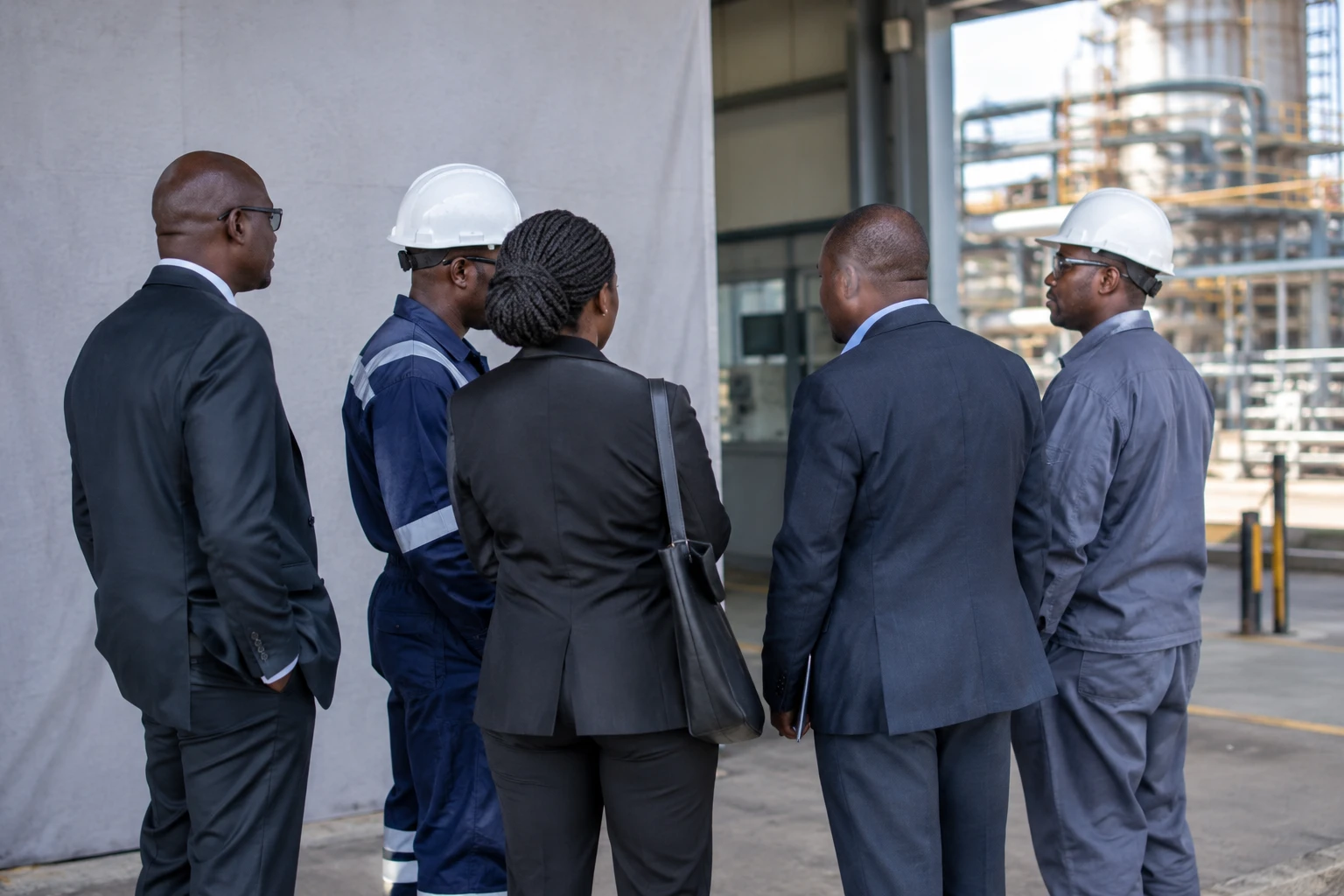
In Nigeria, producing more urea alone does not guarantee that farmers will be able to find it at an affordable price. Gas must reach plants regularly, fertiliser must be able to leave ports, and export sales must not divert supplies from the domestic market. The planned expansion at Eleme highlights these issues.
A new line at a complex already expanding
The Eleme industrial site is in Rivers State, in southern Nigeria, near Port Harcourt. It belongs to the Indorama group, whose Nigerian operations are among the leading urea production hubs in West Africa. The country also has local producers, including Dangote Fertiliser and Notore. This industrial base makes Nigeria an important supplier of nitrogen fertilisers to the region.
The sector’s recent trajectory has been rapid. According to Nigerian fertiliser statistics compiled by the International Fertilizer Development Center (IFDC), urea production reached 4.18 million tonnes in 2024, up 14% year on year. Domestic consumption stood at 1.86 million tonnes that year. These figures show both the country’s ability to produce beyond its immediate needs and the importance of tracking the volumes available to Nigerian farmers.
On 4 November 2026, South Korean company Daewoo Engineering & Construction announced that it had received a letter of award to build a fourth production line at the Eleme complex. The notification marks a step in the project, but should not be confused with the plant coming into operation. The announced value is about 350 billion won. Daewoo says the facilities will be able to produce 2,300 tonnes of ammonia and 4,000 tonnes of granular urea a day.
The project would add to the three lines already operating at the site. The African Development Bank estimates that the complex’s annual installed urea capacity would rise from about 4.2 million to 5.6 million tonnes, an increase of one-third. This is projected capacity, not output already achieved. Actual availability will depend in particular on the completion of construction, gas supplies and the operation of the facilities.
Gas and the port, crucial links
An ammonia and urea plant consumes large quantities of natural gas, which is used as a raw material. To supply the new line, the plan includes a pipeline of about 65 kilometres between Awara, in Imo State, and the complex. It is to connect to an existing pipeline of about 11 kilometres, linked to ANOH’s gas-processing facility. The full network would thus extend for nearly 76 kilometres.
This infrastructure is also a point to watch. Without reliable supplies, high nameplate capacity does not automatically translate into steady production. The IFDC has previously noted that gas interruptions limited urea production in Nigeria in 2022 and 2023. The new investment will therefore need to be assessed as much on the continuity of the gas network as on the industrial line itself.
The project also includes work at Onne port, where MM FZE, an Indorama subsidiary specialising in port operations, is based. The plans presented include an additional urea warehouse, unloading and conveying equipment, and an enlarged quay. These improvements are intended to handle the additional volumes and transport them to export markets.
This export focus could generate revenue and strengthen Nigeria’s position in fertiliser trade. It nevertheless raises a practical question for farmers: what share of production will be sold domestically, when and at what price? Commercial producers, distributors and exporters do not face the same costs as family farmers, particularly those relying on local sales channels and seasonal availability. The information published on the project does not specify the future split between the domestic market and exports.
Financing still to be distinguished from funds already committed
In a document published in September 2026, Dutch development bank FMO describes a proposed contribution of $150 million in long-term debt. It would form part of a $1.25 billion syndicated financing led by the International Finance Corporation (IFC). At this stage, FMO describes its participation as planned, rather than definitively disbursed or granted. The financing package concerns the fourth line and its associated infrastructure.
This project should be distinguished from another $1.25 billion financing package announced in 2024 for Indorama in Nigeria. That one was intended for the third production line and an export terminal. The identical amounts may cause confusion, but the projects and their timelines are not the same. For the fourth line, the available information still describes proposed financing and preparatory steps.
Beyond capacity, local impacts will depend on the jobs created, working conditions, and the management of industrial and environmental risks. The African Development Bank and the IFC publish project information, including details of associated infrastructure. These transparency measures make it possible to track commitments, but do not replace oversight of their implementation or dialogue with neighbouring communities.
A Nigerian issue with West African implications
For Abuja, the federal capital, the expansion is part of a broader challenge: turning gas resources and industrial investment into available agricultural inputs without neglecting local producers’ access. For the authorities in Rivers State and people living near Eleme and Onne, the benefits will also depend on jobs, infrastructure and safety measures around the complex and the pipeline.
At regional level, ECOWAS — the economic integration organisation for West African countries — sees Nigeria’s capacity as a potential source of supply for neighbouring markets. But increased production does not automatically mean lower prices or more regular access across the region. Transport costs, trade rules, seasonal availability and the allocation of exports will also matter.
The next steps to watch are the possible conclusion of the final contract, the effective structuring of financing, construction of the gas pipeline and port facilities, and then the commissioning timetable. Progress on these fronts — and the share of production available to the Nigerian market — will determine the expansion’s real significance for agriculture and regional trade.
Sources consulted: African Development Bank project document on Indorama’s fourth line ; Yonhap South Korean news agency report on the 4 November letter of award ; FMO document on proposed financing ; IFDC data on urea production and consumption in Nigeria ; IFC announcement on the separate financing for the third line.