Algeria
 Egypt
 Libya
 Morocco
 Sudan
 Tunisia
 Benin
 Burkina Faso
 Cabo Verde
 Côte d'Ivoire
 Ghana
 Guinea
 Guinea-Bissau
 Liberia
 Mali
 Mauritania
 Niger
 Senegal
 Sierra Leone
 The Gambia
 Togo
 Cameroon
 Central African Republic
 Chad
 DR Congo
 Equatorial Guinea
 Gabon
 Republic of the Congo
 São Tomé and Príncipe
 Burundi
 Comoros
 Djibouti
 Eritrea
 Ethiopia
 Kenya
 Madagascar
 Malawi
 Mauritius
 Mozambique
 Rwanda
 Seychelles
 Somalia
 South Sudan
 Tanzania
 Uganda
 Angola
 Botswana
 Eswatini
 Lesotho
 Namibia
 South Africa
 Zambia
 Zimbabwe
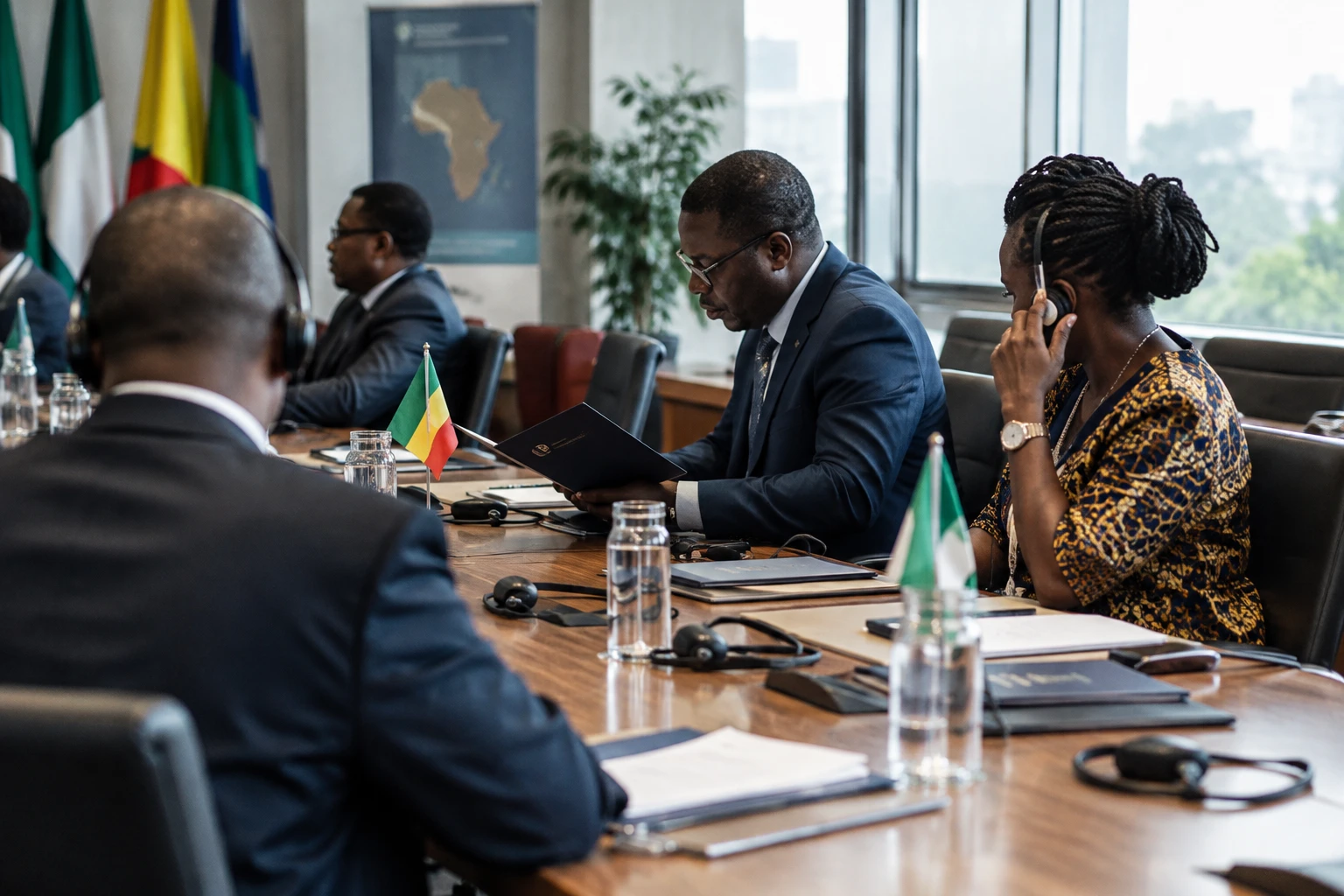
In Lagos and Abuja, the cost of a journey still depends largely on petrol prices. Since the federal fuel subsidy was scrapped in 2023, Nigerian transport operators have been seeking ways to contain their costs. Compressed natural gas (CNG) and electric buses are presented as two options, but their rollout now depends on a practical challenge: financing accessible vehicles, stations and charging networks.
Transport costs at the heart of Nigeria’s transition
The subsidy reform has upended transport costs and put pressure on households, businesses and minibus and taxi operators. These transport providers generally receive their revenues in naira, while some vehicles, parts and equipment are bought abroad. This mismatch makes it harder to access credit, especially for small businesses and independent drivers.
The federal government wants to mobilise private capital and climate finance to develop alternatives. On the sidelines of COP31, held in Antalya from 9 to 20 November 2026, the Presidential Initiative on CNG and Electric Vehicles (PI-CNG&EV) and the Nigerian Midstream and Downstream Petroleum Regulatory Authority sought investment in infrastructure, equipment and local production. The conference is an international climate event, but financial pledges will still need to translate into funded, operational projects.
The issue is also part of Nigeria’s energy strategy. The country is a major gas producer, but domestic use remains an economic priority. For ECOWAS, the Economic Community of West African States, Nigeria’s experience could inform regional debates on energy access and mobility. It is not, however, a model that can be directly replicated: networks, incomes and priorities differ from country to country.
CNG is gaining ground, but the network must keep pace
The federal programme is advancing in stages. Data published by PI-CNG&EV report more than 140,000 vehicles converted and more than $2.5 billion in investment secured or mobilised. The same initiative lists 105 refuelling stations across 24 states and the Federal Capital Territory. A market analysis published by S&P Global had already described growth in conversions and specialist centres in February 2026. The periods and indicators are not identical, but these figures confirm that the programme has moved beyond the pilot stage.
The figure of 140,000 conversions remains the one cited by the body responsible for the programme. It should be read in light of its scope and reference date: PI-CNG&EV also presents results as of January 2026, while its updated public data change as deployment progresses. The stated goal is to convert one million commercial vehicles by 2027. Achieving it will require much more than distributing kits: users must be able to find fuel, maintain their vehicles and access safe conversions.
The government plans to expand the network of stations and support gas infrastructure projects. But supply is a weak point. Where pipelines do not serve stations, CNG can be delivered by truck, at the cost of additional logistical expenses. These constraints do not affect all areas in the same way: major urban routes may attract investment more easily, while secondary cities and less densely populated areas risk receiving less coverage.
For drivers, the economic case will therefore depend on the actual cost of conversion, the price of CNG and the availability of refuelling. A lower fuel bill does not, by itself, guarantee lower fares for passengers. Whether savings are passed on also depends on competition, maintenance costs and the decisions of operators and local authorities.
Electric vehicles: a different sector, different needs
Electric mobility is advancing in parallel, notably through public buses and battery-swapping projects for tricycles. It requires different forms of financing: vehicles, batteries, charging points, electricity supply and maintenance workshops. Cities with structured public transport networks may be able to concentrate initial deployments, but access to charging and reliable electricity remain crucial to expanding services.
CNG and electricity do not serve the same uses or face the same constraints. The former can draw on gas availability and the conversion of existing vehicles. The latter requires a supply and charging chain to be built. In both cases, local manufacturing or assembly could reduce some costs and develop skills, provided orders are predictable and safety standards are enforced.
Turning finance into verifiable results
The gap between revenues in naira and loans denominated in foreign currencies exposes transport operators to exchange-rate risk. Public guarantees, concessional loans, vehicle leasing and blended finance — combining public and private capital — could help spread the risks. Bringing small projects together into larger programmes can also make them easier for financiers to assess. But access to these resources will depend on robust proposals, clear governance and verifiable information on results.
The climate impact must also be measured carefully. CNG remains a fossil fuel and is not emissions-free. Methane leaks during production and transport can reduce its climate advantage. Emissions across the entire supply chain must also be compared, and it must be verified which fuel is actually being replaced. Transparency around permits, technical inspections and emissions matters as much as the number of vehicles converted.
Nigeria’s next challenge is to show that lower-carbon mobility can also become more affordable and reliable, beyond the initial corridors. Across West Africa, the results will show how a major energy market balances transport, investment and climate goals. The number of stations and vehicles will be useful to track, but access for small businesses, the geographical distribution of services and changes in fares will say more about the transition’s practical effects.