Algeria
 Egypt
 Libya
 Sudan
 Tunisia
 Benin
 Burkina Faso
 Cabo Verde
 Côte d'Ivoire
 Ghana
 Guinea
 Guinea-Bissau
 Liberia
 Mali
 Mauritania
 Niger
 Nigeria
 Senegal
 Sierra Leone
 The Gambia
 Togo
 Cameroon
 Central African Republic
 Chad
 DR Congo
 Equatorial Guinea
 Gabon
 Republic of the Congo
 São Tomé and Príncipe
 Burundi
 Comoros
 Djibouti
 Eritrea
 Ethiopia
 Kenya
 Madagascar
 Malawi
 Mauritius
 Mozambique
 Rwanda
 Seychelles
 Somalia
 South Sudan
 Tanzania
 Uganda
 Angola
 Botswana
 Eswatini
 Lesotho
 Namibia
 South Africa
 Zambia
 Zimbabwe
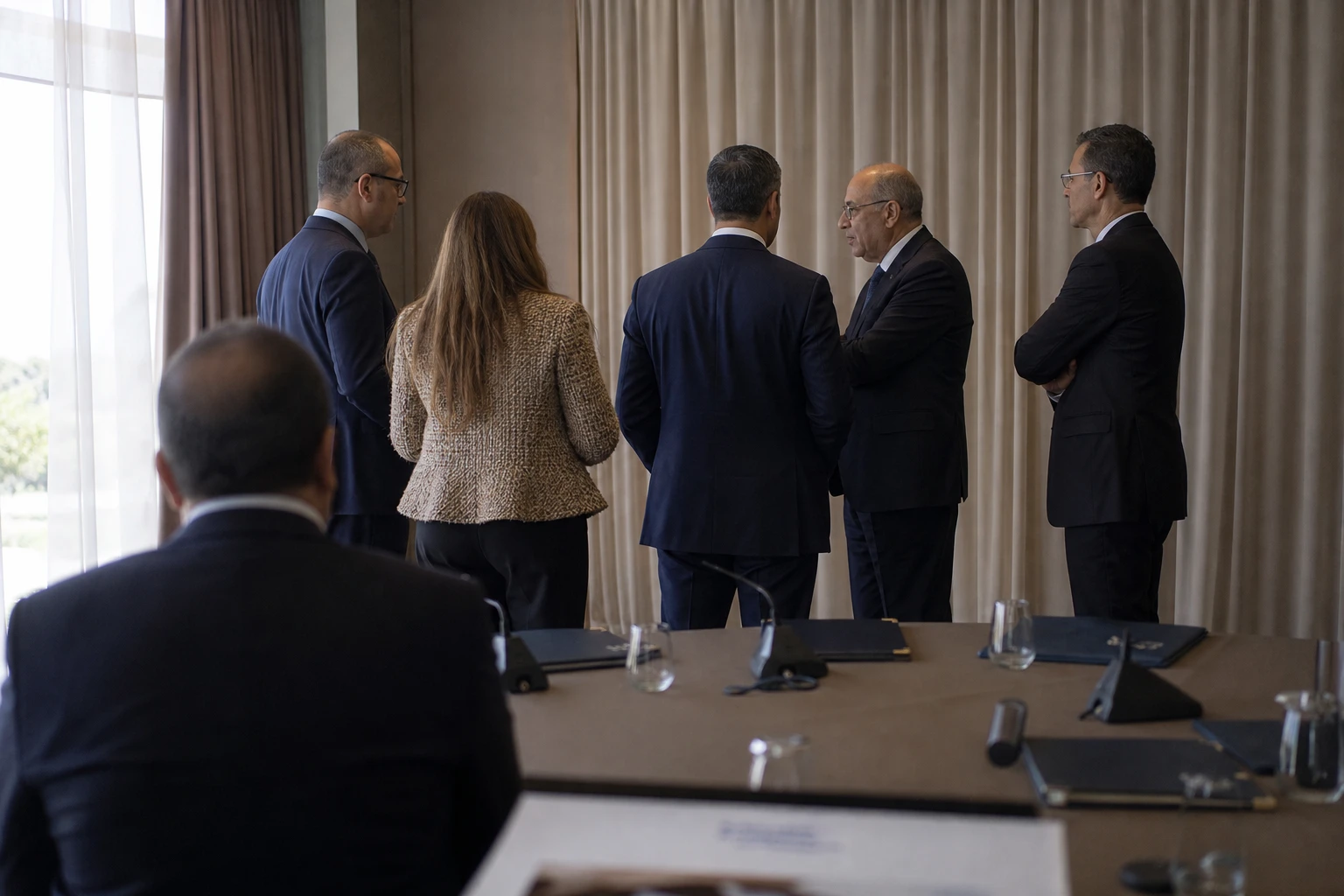
Moroccan phosphate returns to centre stage
Phosphate is more than a mining resource. For Morocco, it is an industrial, diplomatic and logistical lever linking mines inland to ports and then to agricultural markets across several continents. The challenge in this chain is no longer simply extraction. It is also about processing, delivery and securing lasting markets. The developments in the United States illustrate this logic precisely.
The Kingdom of Morocco remains the world’s leading holder of phosphate reserves, with about 68% of identified reserves, according to the USGS, a position that the OCP Group itself highlights in its corporate documents. This gives the Moroccan group a distinctive place in the global phosphate fertiliser market, where the issue is no longer just the abundance of rock, but the capacity to turn it into reliable agricultural inputs.
A $450 million plant in industrial Louisiana
On 26 August 2026, CHS and OCP North America announced their intention to form a joint venture to build a phosphate fertiliser plant in Waggaman, Jefferson Parish, near New Orleans, at Cornerstone Energy Park. The project is valued at $450 million and is expected to produce more than one million tonnes of phosphate fertiliser a year. The two partners say they are aiming to build the first new plant of its kind in the United States since 1984.
The industrial model is clear. OCP would supply phosphoric acid, an intermediate product derived from phosphate processing, while CHS and OCP North America would distribute the finished fertilisers through their respective networks. The project is, however, contingent on several steps: regulatory approvals, technical validation and securing financing. The US Department of Agriculture’s website confirms that the FIELDS programme was designed to increase domestic fertiliser production capacity and support new or expanded projects in the sector.
The partners also cite employment figures: about 60 permanent positions and 500 jobs during construction. If confirmed, construction could take up to 24 months. For Louisiana’s local authorities, the message is twofold: attract investment and strengthen an area already shaped by heavy industry and river logistics. For US agricultural co-operatives, the goal is more direct: reduce exposure to supply disruptions and transport costs.
A gradual return to the US market
The partnership comes after several years of trade tensions. Since 2021, Moroccan phosphate fertilisers have been subject to countervailing and anti-dumping duties following a case brought in the United States. The White House then, on 29 June 2026, declared an emergency and authorised the temporary suspension of certain duties on phosphate fertiliser imports from Morocco, for a maximum of eight months or until the declared emergency ends.
The decision addressed a very concrete concern: the availability of fertiliser for US farms. The presidential text explains that phosphates are essential for maize, soya and wheat crops, and that supply-chain disruptions can affect food security. At the same time, US authorities established the FIELDS programme, worth up to $500 million, to support domestic production capacity. The CHS-OCP alliance therefore takes shape at a time when Washington wants both to secure its supplies and to bring part of the value chain back home.
On 17 August 2026, OCP North America announced the arrival in New Orleans of a vessel carrying about 54,000 metric tonnes of triple superphosphate, or TSP, from Morocco. Moroccan business media also reported the resumption of shipments, noting that it came after more than five years of restricted access to the US market. This signal matters as much as the volume itself: it confirms that OCP’s return to the United States is taking place not only through trade, but also through industrial investment.
What this means for Rabat, agriculture and Africa
For Morocco, the stakes go beyond simply selling fertiliser. Establishing a US presence allows OCP to move closer to a major agricultural market, ease some logistical constraints and mitigate tariff risks. It also shows that a Moroccan group can invest at the heart of a strategic market without being limited to the role of raw-material supplier. This is important for Rabat, as the country has for several years been seeking to move up the value chain in its industries.
For US farmers, the promise is a closer, more regular supply that could be less exposed to maritime shocks. For CHS, a farmer-owned co-operative, the project serves its members and secures input supplies. For OCP, it is also a way to consolidate a long-term relationship in a market that remains strategic despite the tariff upheavals of recent years.
At the continental level, the project is a reminder that an African player can influence a key segment of global food security. It also shows that fertiliser issues are not limited to supply crises originating elsewhere. They concern productive sovereignty, agricultural costs and countries’ ability to process their resources at home or abroad in line with their industrial interests. For North Africa and the rest of the continent, the OCP case also illustrates a broader reality: the phosphate contest is now as much industrial as geopolitical.