Algeria
 Egypt
 Libya
 Morocco
 Sudan
 Tunisia
 Benin
 Burkina Faso
 Cabo Verde
 Côte d'Ivoire
 Ghana
 Guinea
 Guinea-Bissau
 Liberia
 Mali
 Mauritania
 Niger
 Nigeria
 Senegal
 Sierra Leone
 The Gambia
 Togo
 Cameroon
 Central African Republic
 Chad
 DR Congo
 Equatorial Guinea
 Gabon
 Republic of the Congo
 São Tomé and Príncipe
 Burundi
 Comoros
 Djibouti
 Eritrea
 Ethiopia
 Kenya
 Madagascar
 Malawi
 Mauritius
 Mozambique
 Rwanda
 Seychelles
 Somalia
 South Sudan
 Tanzania
 Uganda
 Angola
 Botswana
 Eswatini
 Lesotho
 Namibia
 South Africa
 Zambia
 Zimbabwe
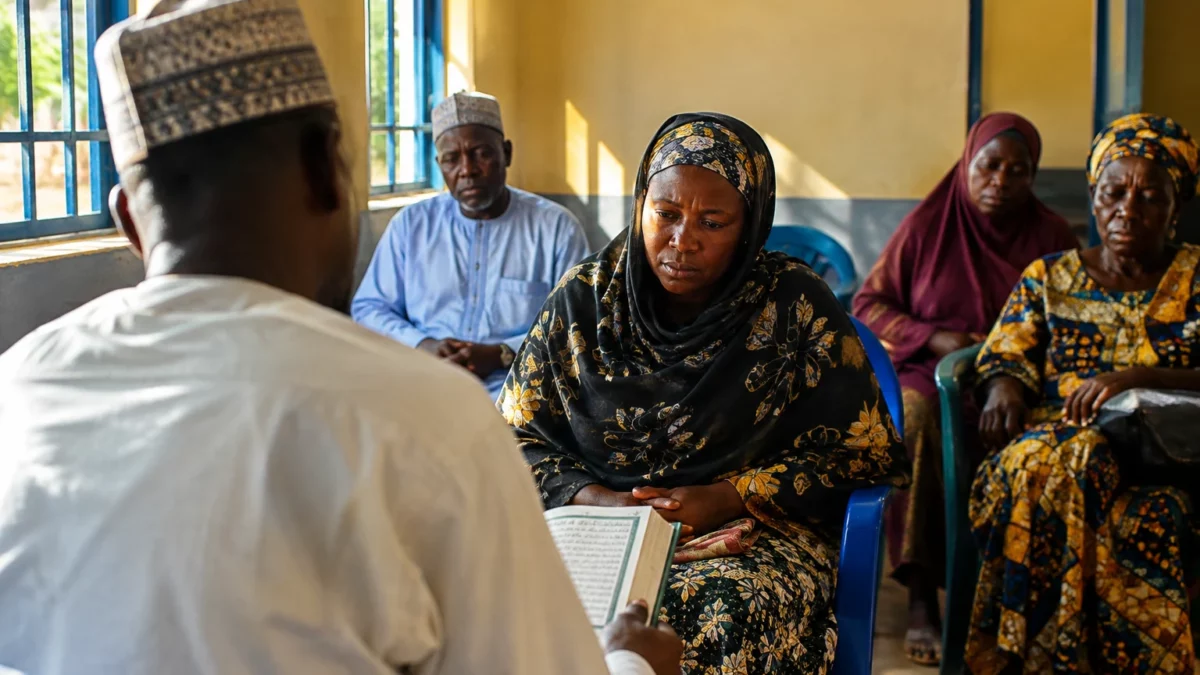
When someone suffers from headaches, anxiety or sleepless nights, they may seek help from family, a healthcare worker or a religious leader. In northern Nigeria, some turn to ruqya, a Muslim practice involving Quranic recitation. The challenge is to respect this spiritual approach without confusing perceived relief with a medical diagnosis.
A faith-rooted practice in northern Nigeria
Mansur Ismail receives people in Makarfi Local Government Area, in Kaduna State. He says he learnt the practice by watching his father, who helped people in distress. According to him, patients come from several parts of Nigeria and sometimes from neighbouring countries.
Ruqya, also spelt ruqya, involves reciting verses from the Quran and supplications to seek protection or healing. Some practitioners also recite over water, which is then used during the session. In Ismail’s interpretation, jinn or witchcraft may explain some conditions. These causes are matters of religious belief and are not explanations established by medicine.
Northern Nigeria is predominantly Muslim and has a long tradition of Islamic teaching. The term “almajiri” refers, among other things, to a pupil enrolled in a traditional system of Quranic education. Ismail’s account is rooted in this religious and community environment, where faith leaders may be among the first people approached when someone is suffering.
A religious practice, not a clinical diagnosis
In Ismail’s account, people who come to him describe headaches, anxiety or distressing dreams, among other problems. One patient, Rayya Ashiru, says she came for headaches, panic attacks and nightmares. She later reported an improvement, while stressing that she continued to take her medication. Her account describes her experience; it cannot establish what part was due to each form of care.
This distinction matters. A symptom can have different causes, which may be physical, psychological or related to living conditions. Belief in a jinn does not, by itself, confirm or rule out an illness. Similarly, improvement after a session does not prove that a spirit has left the body.
From a religious perspective, Sheikh Mustapha Umar, cited in the material provided, considers Quranic recitation permissible if it is not accompanied by acts contrary to Islam. This position accords with the views of several Muslim authorities who say that ruqya based on religious texts is permitted under certain conditions. Practices and interpretations may, however, vary between schools and scholars.
Access to medical care remains essential
Ismail says he refers people to a hospital when their condition is beyond his expertise, mentioning in particular the need for an infusion or a blood transfusion. This referral principle is important: spiritual practice replaces neither clinical assessment nor emergency care. Persistent symptoms, injuries, loss of consciousness or severe psychological distress require assessment by health professionals.
Nigeria’s mental health policy itself calls for working with faith leaders and traditional healers. It recognises their potential role in referring people for care, while also calling for greater awareness of mental health conditions and a reduction in the risk of ill-treatment. Research on Nigeria also describes the role of religious and traditional practitioners in people’s care pathways, particularly when biomedical services are difficult to access or stigma deters people from seeking help.
This reality calls for a public health approach that neither ridicules beliefs nor abandons medical standards. Trusted links between communities, religious practitioners and health facilities can encourage earlier referrals. But this requires clear boundaries: prescribed medication should not be stopped without medical advice; dangerous physical restraint should not be used; and emergency care should not be delayed in favour of a supernatural explanation.
Patient safety and vigilance over restraint
Ismail says his team may restrain some patients during a session for fear that they will hurt themselves. He attributes sudden movements to the action of a jinn. This is his interpretation and cannot be verified solely on the practitioner’s testimony. Someone who is agitated may also be distressed, disoriented or facing a health problem that requires care.
Restraint carries risks, particularly if it restricts breathing, lasts a long time or is imposed without assessment. Research on mental healthcare in Nigeria has raised concerns about physical restraint in some care settings. It is therefore necessary to distinguish a temporary, proportionate and supervised protective measure from coercive practices that expose someone to injury or prevent them from accessing care.
Respect for a patient’s dignity also requires their consent, an understandable explanation of the session and the option to stop it. These safeguards do not conflict with faith. They protect people, whatever their beliefs, and strengthen trust between families, religious authorities and healthcare workers.
A shared challenge, with locally developed solutions
The case of Makarfi points to a broader question in Nigeria: how can the spiritual resources in which people place their trust be brought together with health services able to address physical and psychological conditions? This question cannot be resolved by setting religion against medicine. It calls for practical links that reflect local realities and respect patients’ rights.
For families, access to a familiar practitioner may seem more immediate than a specialist appointment. For healthcare workers, recognising this reality can help open a dialogue, provided supernatural causes are not endorsed as medical facts. For religious leaders, quickly referring someone when symptoms worsen can protect both their health and the community’s trust.
What happens next will therefore depend less on abstract debates about ruqya than on the ability of local actors to work together: explain warning signs, make care accessible and establish safe referral pathways. In this context, prayer can accompany care. It should not prevent access to a diagnosis or delay necessary treatment.