Algeria
 Egypt
 Libya
 Morocco
 Sudan
 Tunisia
 Benin
 Burkina Faso
 Cabo Verde
 Côte d'Ivoire
 Ghana
 Guinea
 Guinea-Bissau
 Liberia
 Mali
 Mauritania
 Nigeria
 Senegal
 Sierra Leone
 The Gambia
 Togo
 Cameroon
 Central African Republic
 Chad
 DR Congo
 Equatorial Guinea
 Gabon
 Republic of the Congo
 São Tomé and Príncipe
 Burundi
 Comoros
 Djibouti
 Eritrea
 Ethiopia
 Kenya
 Madagascar
 Malawi
 Mauritius
 Mozambique
 Rwanda
 Seychelles
 Somalia
 South Sudan
 Tanzania
 Uganda
 Angola
 Botswana
 Eswatini
 Lesotho
 Namibia
 South Africa
 Zambia
 Zimbabwe
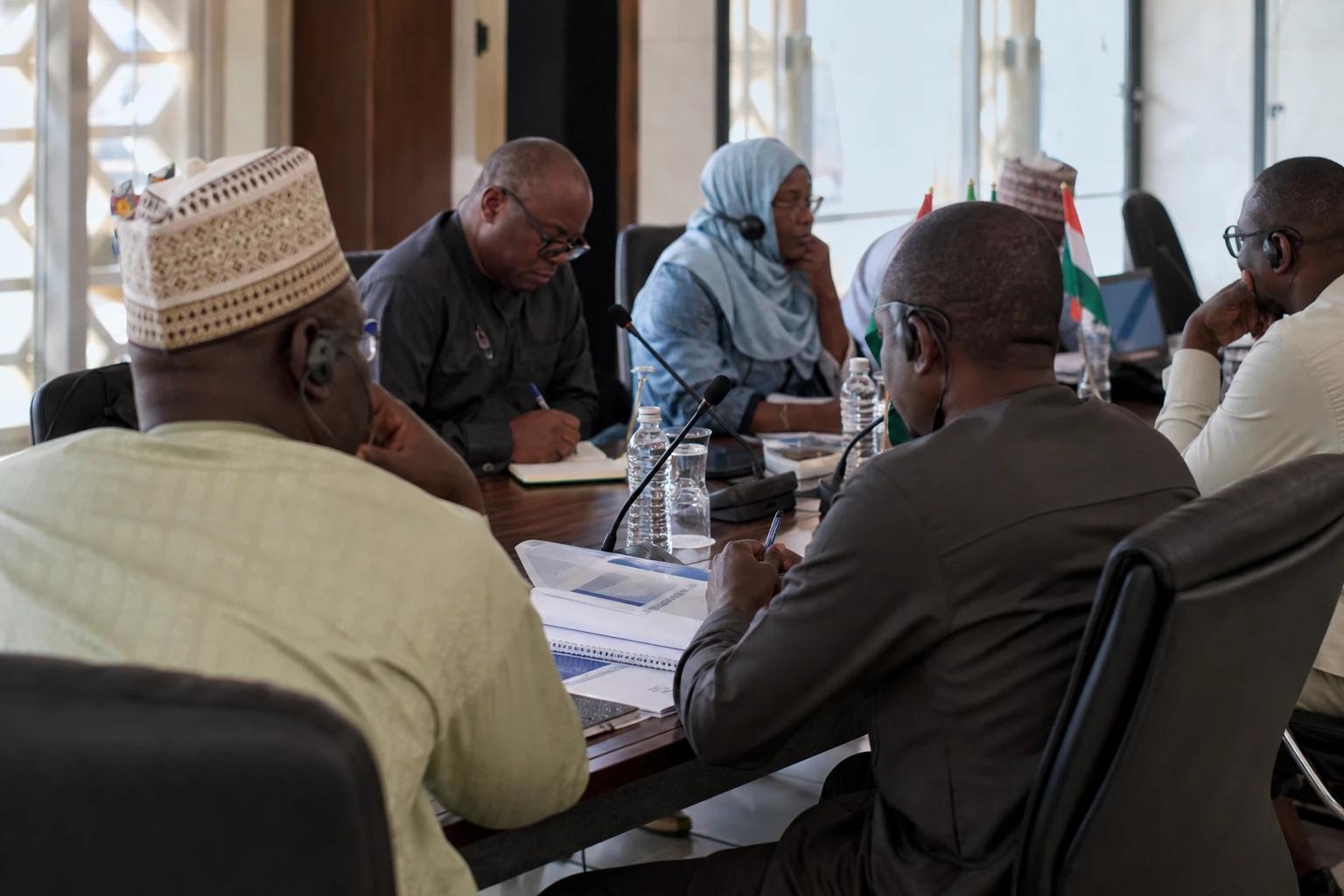
In Arlit and Niamey, reviving uranium production is no longer simply a matter of opening new deposits. It raises a broader question: how can Niger regain control of a strategic industry while attracting the capital it needs and securing markets for its output?
The country still has significant resources. But its production has fallen sharply since the mid-2010s. The closure of the Akouta Mining Company (COMINAK) mine in March 2021 marked a turning point. The site had been producing in the Agadez region for more than 40 years.
A weakened industry, but far from abandoned
According to data compiled by the United States Geological Survey, Niger’s uranium production fell from 2,991 tonnes of uranium content in 2015 to 962 tonnes in 2024. The decline reflects the depletion of some reserves, but also shutdowns and difficulties at sites still in operation.
COMINAK’s closure reduced the sector’s industrial base. The Azelik mine, operated by the Azelik Mining Company, known as SOMINA, had also been placed on care and maintenance in 2015 amid low prices. The Aïr Mining Company, or SOMAÏR, then remained the main pillar of Niger’s production.
This trajectory subsequently ran up against the consequences of the political crisis triggered by the coup d’état of 26 July 2023. Sanctions imposed by the Economic Community of West African States (ECOWAS), a regional organisation comprising West African countries, complicated the supply of facilities and the transport of products.
Relations between the Nigerien authorities and Orano, SOMAÏR’s long-standing French shareholder, also deteriorated sharply. The group announced in December 2024 that it had lost operational control of its subsidiary. The Nigerien authorities, for their part, said they wanted to maintain operations under more nationally directed management.
Dasa and Madaouela, two projects at the heart of the restart
Against this uncertain backdrop, two projects could change Niger’s production capacity: Dasa, backed by Canadian company Global Atomic, and Madaouela, revived by Australia’s Atomic Eagle, formerly known as GoviEx Uranium.
The Dasa project is in the Agadez region, at the heart of the Tim Mersoï basin. On 1 October 2026, Global Atomic said it had closed a C$56.9 million fundraising round, equivalent to about US$39.9 million. The funds are intended to support the project’s development work, as the company continues to seek the financing needed to build the mine.
The company has also revised upwards several parameters in its economic study. Its mine plan now envisages an operating life of nearly 24 years, from 2026 to 2049, and total production estimated at 68.1 million pounds of uranium oxide, known in the industry as U3O8.
These projections remain dependent on Global Atomic’s ability to complete its financing and conclude sales agreements. The company says it has received enquiries from nuclear industry players interested in uranium from Dasa. For a mine still under development, future contracts can serve as commercial guarantees for investors.
Madaouela has had a more turbulent trajectory. The project’s permit was withdrawn in July 2024 after a dispute between the Nigerien state and the project’s former owner. A new agreement was eventually reached in 2026. The mining agreement signed in Niamey gives Atomic Eagle a 60% stake in the project and the Republic of Niger 40%, through a direct holding and a carried interest held by the state.
The deposit has an estimated mineral resource of 116.5 million pounds of U3O8, according to an estimate conducted under Canadian standards. Atomic Eagle still needs to convert these figures to the Australian JORC standard, used by international mining markets. This step will clarify the recognised resource base and the technical conditions for any potential development.
Global markets offer an opportunity, not a guarantee
The revival of Niger’s uranium industry comes as global interest in civil nuclear power is returning. After the Fukushima accident in 2011, reactor construction slowed in several countries. In recent years, projects have resumed, particularly in China, while several states have sought to secure their supplies of nuclear fuel.
Prices have risen since 2024. The uranium oxide futures benchmark reached about US$97 a pound in early July 2026, according to TradeTech, its highest level in more than 18 years. The consultancy later said that level had held in the third quarter.
The rise improves the economic outlook for Dasa and Madaouela. Earlier studies of the projects were based on significantly lower price assumptions: US$75 a pound for Dasa and US$55 for Madaouela. However, uranium prices remain exposed to government decisions, reactor construction schedules and the availability of stocks.
The market therefore does not resolve Niger’s industrial challenges. Infrastructure still needs to be financed, equipment transported and the export of concentrate organised. The closure of the border with Benin, which took place amid the crisis with ECOWAS, highlighted northern Niger’s reliance on external logistics corridors.
The recovery will also depend on governance
For Niamey, the stakes go beyond the volume extracted. The authorities want to secure a larger share of the value created, strengthen public oversight and diversify foreign partners. The 40% stake in Madaouela illustrates this new direction.
This strategy could improve Niger’s negotiating position. However, it requires the state to mobilise the funds corresponding to its contributing stakes, monitor technical commitments and provide a clear regulatory framework. Without this, a large stake on paper risks generating limited revenue in practice.
The effects will also vary between localities. In the Agadez region, the resumption of mining could support employment, subcontractors, transport and services. It will not, however, eliminate tensions over access to water, land management and the distribution of benefits between companies, the state and local authorities.
Niger will also have to contend with competition from Namibia, now Africa’s largest uranium producer, and the possible arrival of new suppliers in a reshaping global market. The success of Dasa, the effective restart of Madaouela, the future of Azelik and the resolution of the SOMAÏR case will be the main indicators to watch.
Niger’s industry therefore has a favourable window of opportunity. But its return among the leading producers will depend less on announcements than on three concrete outcomes: raising capital, securing export corridors and turning the recovery of public control into regular production and lasting revenue for Niger.