Algeria
 Egypt
 Libya
 Morocco
 Sudan
 Tunisia
 Benin
 Burkina Faso
 Cabo Verde
 Côte d'Ivoire
 Ghana
 Guinea
 Guinea-Bissau
 Liberia
 Mali
 Mauritania
 Nigeria
 Senegal
 Sierra Leone
 The Gambia
 Togo
 Cameroon
 Central African Republic
 Chad
 DR Congo
 Equatorial Guinea
 Gabon
 Republic of the Congo
 São Tomé and Príncipe
 Burundi
 Comoros
 Djibouti
 Eritrea
 Ethiopia
 Kenya
 Madagascar
 Malawi
 Mauritius
 Mozambique
 Rwanda
 Seychelles
 Somalia
 South Sudan
 Tanzania
 Uganda
 Angola
 Botswana
 Eswatini
 Lesotho
 Namibia
 South Africa
 Zambia
 Zimbabwe
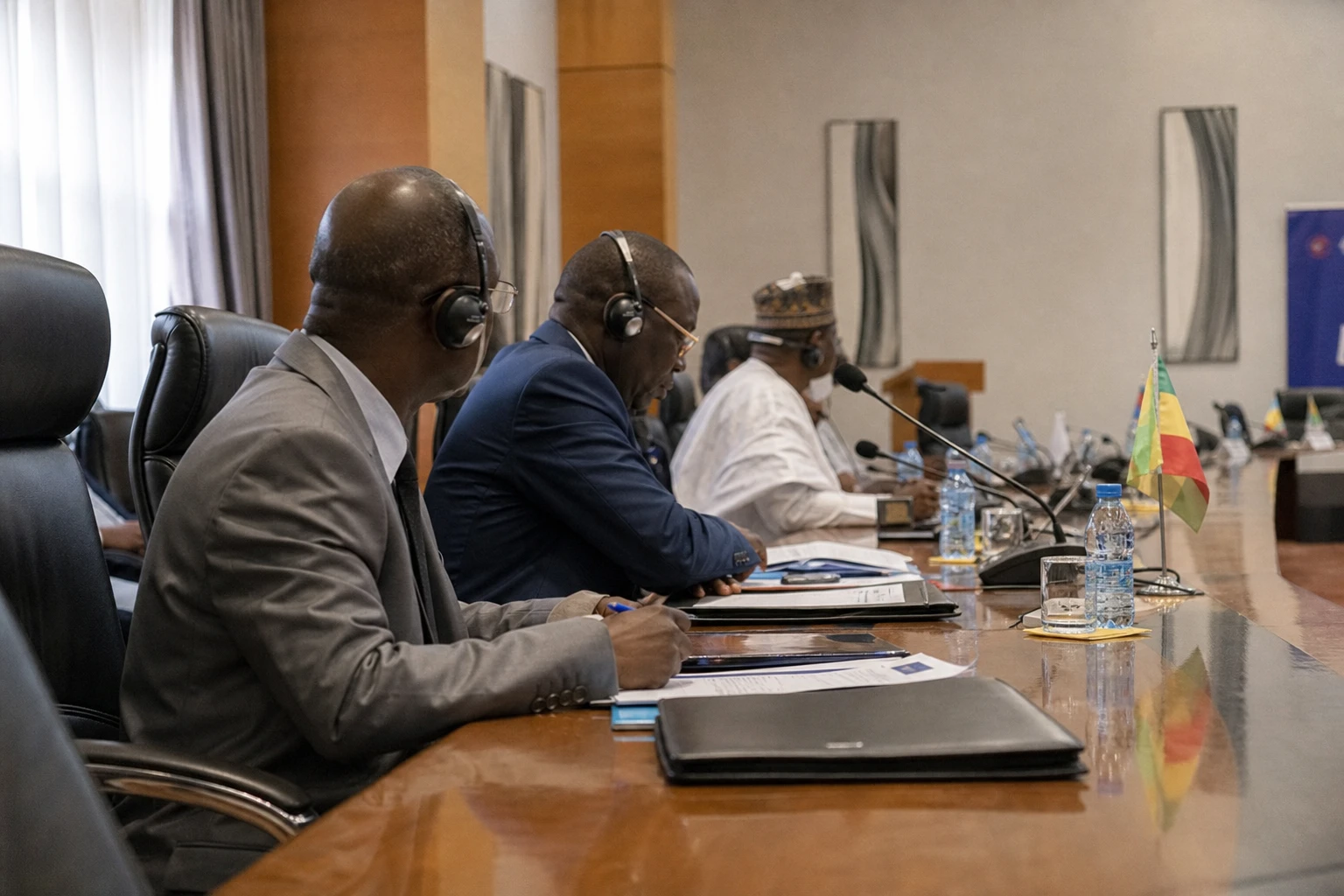
In Niamey, the issue was not only military
In a single night, Niger’s authorities recalled a reality that sovereignty rhetoric cannot conceal: when the chain of command falters, the regime first seeks allies able to act quickly. In Niamey, the 29 August mutiny revealed not so much a simple security alert as internal fragility at the heart of the state apparatus.
Niger, led by General Abdourahamane Tiani since the coup of 26 July 2023, remains at the centre of Sahelian tensions. Its capital, Niamey, concentrates political, military and diplomatic levers. It is also where the concerns of a government that has broken with France, left ECOWAS and strengthened its ties with the Alliance of Sahel States, alongside Mali and Burkina Faso, are most keenly felt.
What unfolded around Air Base 101
According to several sources corroborated by international and African media, soldiers tried to take control of sensitive sites in the capital, including Air Base 101, located within Niamey airport. Gunfire was also heard not far from the presidential palace. Calm returned on the evening of 30 August, after a day of uncertainty and limited but symbolic fighting.
The most sensitive point concerns the intervention of the Africa Corps, the Russian military organisation that has replaced some of the operations formerly associated with the Wagner Group. Nigerien officials, according to international media, thanked Russian personnel at the base for their help in retaking the site. Russia’s ambassador in Niamey also presented their presence as assistance to contain the mutiny.
No detailed official death toll had been published at the time of the first announcements. Security sources reported several deaths among the mutineers and at least three members of the presidential guard killed, but these figures should still be considered provisional. In such episodes, caution is necessary: information circulates quickly, but the state often communicates in fragments.
A widening security dependence
This episode highlights a deep contradiction. Niger’s junta was built on a narrative of taking back control nationally. It denounced partnerships inherited from the French era, promised restored sovereignty and presented the army as the foundation for restoring the state. But when the mutiny threatened the heart of the system, the response was to seek outside support, this time from Russia.
This choice is not unique. Mali and Burkina Faso, also governed by military authorities, have followed a similar path by turning to Moscow after breaking with Paris and with West African regional mechanisms. In all three cases, Russia is seen not only as a partner in the fight against jihadists. In the eyes of these regimes, it has become a provider of political protection and support for staying in power.
This is where the issue goes beyond the mutiny itself. In the Sahel, armed groups linked to Islamic State or to JNIM, affiliated with al-Qaeda, continue to weigh on national armies and civilian populations. Local forces remain dispersed, underequipped and often overstretched. In this context, the Africa Corps promises a rapid response, but its record against jihadist groups remains contested, particularly in Mali, where military offensives have not eliminated insecurity.
Niamey, Moscow and the new Sahelian balance of power
For Niger, the stakes are twofold. On the one hand, the regime wants to demonstrate its ability to respond to internal threats. On the other, it shows that it needs foreign support to secure the capital and preserve its cohesion. This dependence may consolidate Tiani’s position in the short term. It may also further undermine his sovereignty rhetoric, because the public can now see that proclaimed sovereignty relies on imported protection.
The regional implications are clear. The AES, which claims to have a joint force of around 5,000 troops, did not visibly respond during the mutiny. The silence of this military solidarity raises questions about the operational reality of the Sahelian confederation, beyond political declarations. It also highlights the gap between claims of regional autonomy and the immediate needs of a government in difficulty.
At the continental level, the episode confirms that Russia continues to advance its position in Africa, especially where military regimes seek partners who do not scrutinise the nature of the government in power. The crisis in Niamey therefore says more than just something about the state of the barracks. It shows how the Sahel’s new alliances are being forged in an emergency, at the cost of a dependence that could weigh on the region’s political balance for a long time.