Algeria
 Egypt
 Libya
 Morocco
 Sudan
 Tunisia
 Benin
 Burkina Faso
 Cabo Verde
 Côte d'Ivoire
 Ghana
 Guinea
 Guinea-Bissau
 Liberia
 Mali
 Mauritania
 Nigeria
 Senegal
 Sierra Leone
 The Gambia
 Togo
 Cameroon
 Central African Republic
 Chad
 DR Congo
 Equatorial Guinea
 Gabon
 Republic of the Congo
 São Tomé and Príncipe
 Burundi
 Comoros
 Djibouti
 Eritrea
 Ethiopia
 Kenya
 Madagascar
 Malawi
 Mauritius
 Mozambique
 Rwanda
 Seychelles
 Somalia
 South Sudan
 Tanzania
 Uganda
 Angola
 Botswana
 Eswatini
 Lesotho
 Namibia
 South Africa
 Zambia
 Zimbabwe
Three years after the upheaval, a country still under strain
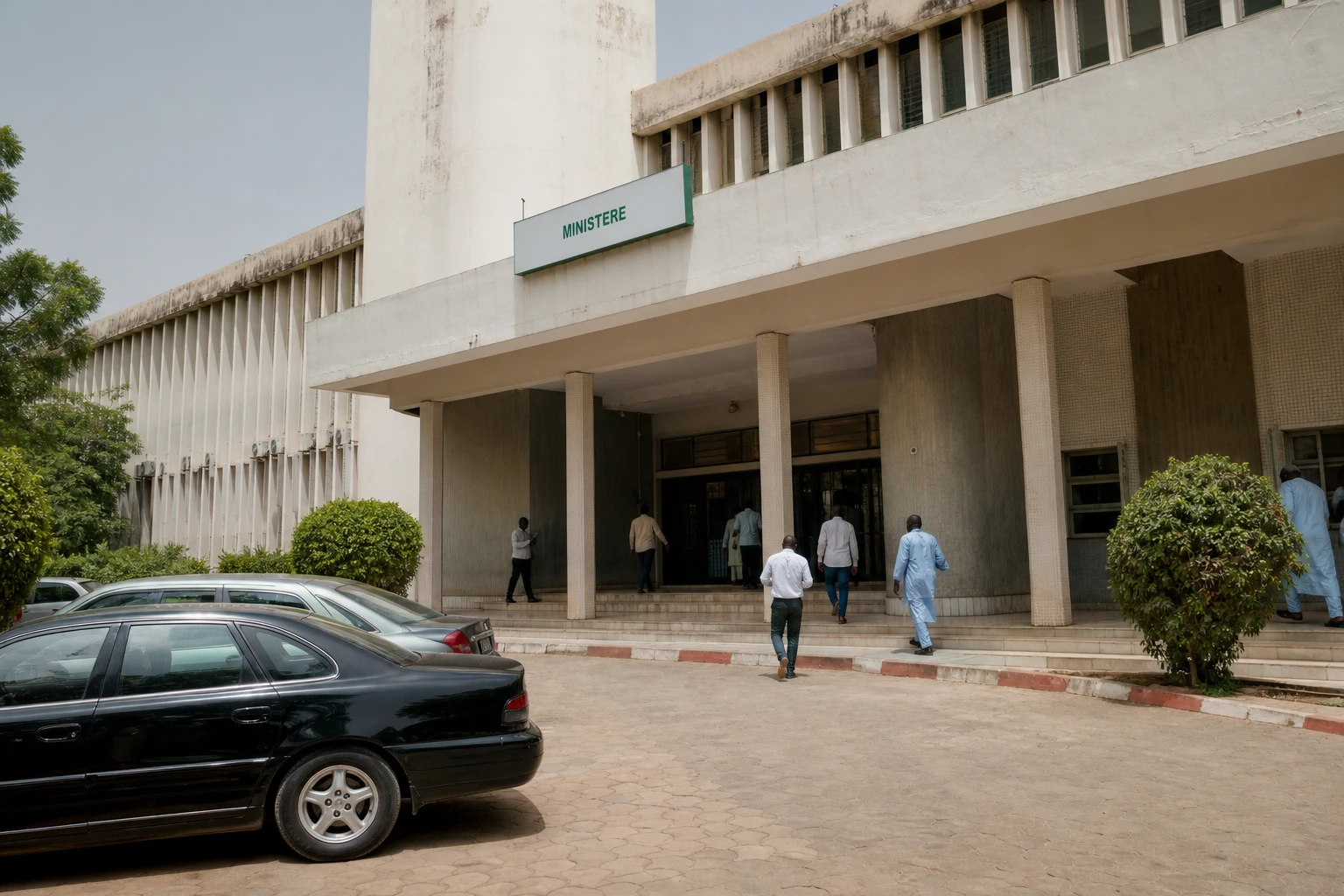
In Niamey, political time did not simply stop on 26 July 2023. It was above all reorganised around a double lock: a military transition that closed down democratic space, and a security threat that did not disappear with the change of power. Three years on, Niger remains exposed on several fronts, from the centre of the country to border areas, while Mohamed Bazoum remains deprived of his liberty.
The country has also emerged from a major regional episode. After the coup, ECOWAS (Economic Community of West African States) suspended Niger and demanded a return to constitutional order, while the African Union also suspended the country from its activities. These positions have had a lasting impact on relations between Niamey, its neighbours and external partners.
A coup that became a fault line
On 26 July 2023, President Mohamed Bazoum was ousted by soldiers grouped within the National Council for the Safeguard of the Homeland. The UN immediately condemned the unconstitutional change of power and expressed concern about the fate of the deposed head of state. Since then, several international and regional organisations have called for his release, without securing a lasting solution.
Two years later, and again in 2026, the position on this issue had not changed. On 23 July 2026, Human Rights Watch reiterated that Mohamed Bazoum remained arbitrarily detained, and said that the UN Working Group on Arbitrary Detention had found his detention unlawful in 2025 and in May 2026. Amnesty International, for its part, noted in 2025 that Bazoum and his wife remained detained despite a ruling by the ECOWAS Court of Justice.
The political significance of this case goes beyond the personal fate of a former president. It also reveals how the junta intends to lock down the institutional process. The lifting of Bazoum’s presidential immunity in 2024 entrenched the prospect of a political and legal dispute involving the former head of state.
Security, the main test for the authorities in Niamey
On security, Niger continues to face armed groups active in the west, south-east and border areas of the Sahel and Lake Chad Basin. Human Rights Watch’s 2026 report names the Islamic State in the Sahel, JNIM, Boko Haram and the Islamic State in West Africa among the groups still operating in the country. The United Nations also describes the threat level in the central Sahel and northern Nigeria as persistently acute.
The Nigerien authorities nevertheless maintain that the defence and security forces retain the initiative on several fronts. The Nigerien News Agency reported in February, April and June 2026 on figures for people neutralised and arrested, provided by the Integrated Operations Coordination Centre. The figures ranged from 13 to 43 individuals described, depending on the period, as terrorists, suspects or accomplices. These reports point to real operational activity, but are not, on their own, enough to establish a structural improvement in the situation.
A recent incident highlighted this fragility. On 18 June 2026, gunfire and explosions targeted the area around Niamey’s Diori Hamani International Airport. The national civil aviation agency subsequently said that airport operations had resumed. The African Union and CEN-SAD condemned the attack, while several analyses saw the incident as a sign of the urbanisation of the jihadist threat in the Sahel.
What this means for Nigeriens
In practice, the population bears the heaviest cost of this equation. In Niamey, administrative life continues, but traffic, travel and gatherings remain subject to heightened vigilance. In rural and border areas, the effects are even more direct: disrupted access to markets, schools exposed to risk, families displaced, and pressure on local economies and informal networks. The security advisories issued in 2026 by French and US diplomats also describe a country where the risk of kidnapping and attack remains high.
For the junta, the challenge is as much political as military. The authorities seek to present themselves as champions of sovereignty and the restoration of public authority, in an environment where security rhetoric remains central. But on civil liberties, the signs remain troubling. Amnesty International described a crackdown in 2025 on former officials from the previous administration and critical voices, while the UN High Commissioner for Human Rights continued its examination of the human rights situation in the country in 2026.
This tension between proclaimed security and restricted rights also weighs on Niger’s external legitimacy. In July 2025, the European Union again welcomed the release of several political prisoners while expressing regret over the detention of Mohamed Bazoum and other political figures. In other words, the authorities in Niamey cannot expect full normalisation without addressing the question of detainees and the country’s institutional course.
Niger’s trajectory closely watched across the Sahel
The situation in Niger matters beyond its borders. Along with Mali and Burkina Faso, Niger has left ECOWAS to build an alternative framework for cooperation in the Sahel, reshaping West African balances. At the same time, continental organisations continue to monitor the deteriorating security situation and the issue of military transitions, which has become a recurring concern in several parts of the continent.
The next development to watch is not a symbolic date, but the Nigerien authorities’ ability to turn a military success achieved under specific circumstances into a stable political framework. As long as Bazoum remains held captive and armed threats continue to strike as far as Niamey, the transition will remain incomplete. And as long as it remains incomplete, Niger will remain a central concern for ECOWAS, the African Union and the Sahel as a whole.