Algeria
 Egypt
 Libya
 Morocco
 Sudan
 Tunisia
 Benin
 Burkina Faso
 Cabo Verde
 Côte d'Ivoire
 Ghana
 Guinea
 Guinea-Bissau
 Liberia
 Mali
 Mauritania
 Nigeria
 Senegal
 Sierra Leone
 The Gambia
 Togo
 Cameroon
 Central African Republic
 Chad
 DR Congo
 Equatorial Guinea
 Gabon
 Republic of the Congo
 São Tomé and Príncipe
 Burundi
 Comoros
 Djibouti
 Eritrea
 Ethiopia
 Kenya
 Madagascar
 Malawi
 Mauritius
 Mozambique
 Rwanda
 Seychelles
 Somalia
 South Sudan
 Tanzania
 Uganda
 Angola
 Botswana
 Eswatini
 Lesotho
 Namibia
 South Africa
 Zambia
 Zimbabwe
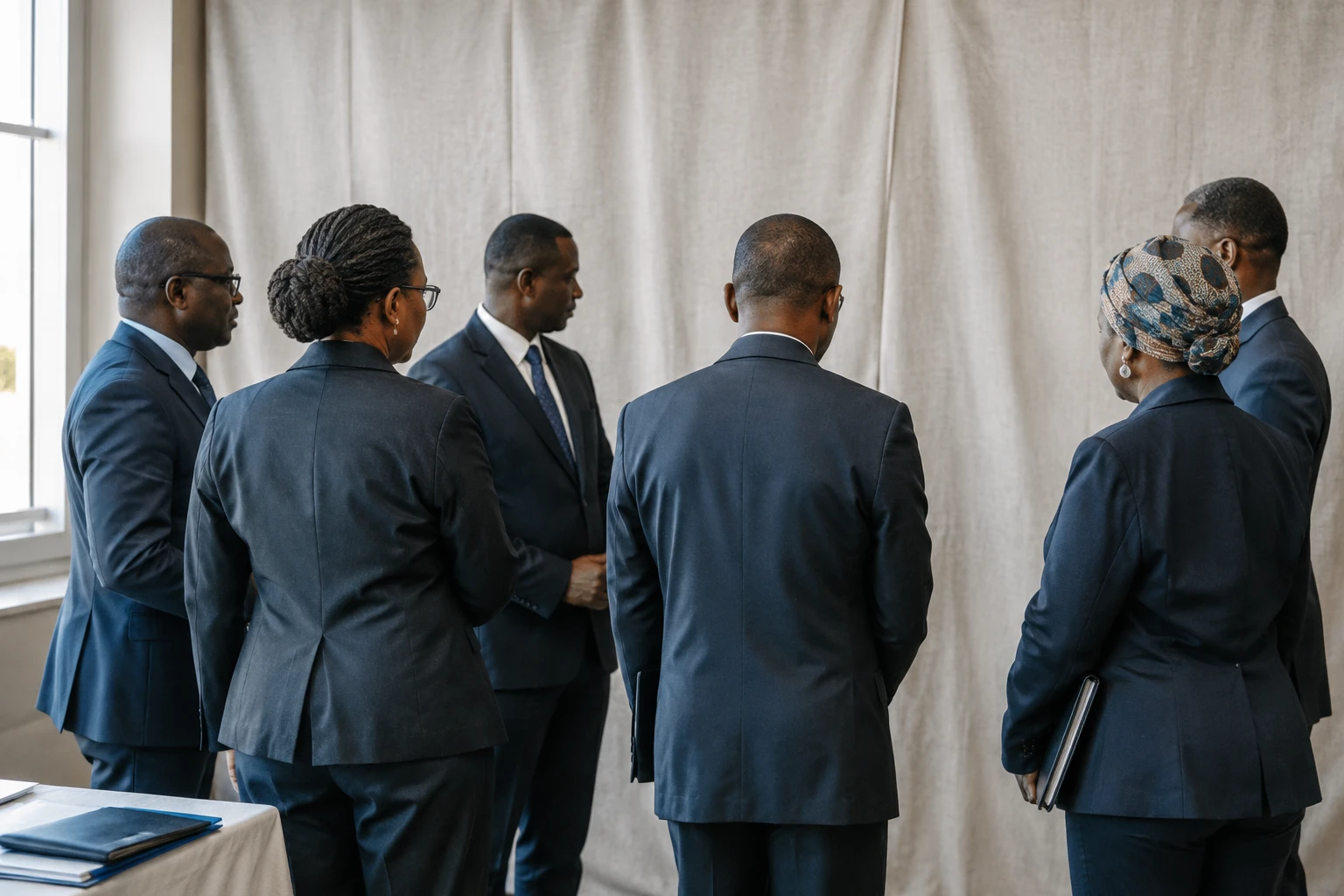
A decision concerning two Nigerien agents posted in Paris has revived a broader question: what remains of the security channels between Niamey and Paris after the breakdown of their military cooperation? For the Nigerien authorities, the expulsion of one of the two men also has a personal and symbolic dimension.
An expulsion that revives a history of cooperation
On 16 September, the French authorities declared two agents from Niger’s intelligence services, assigned to the Nigerien embassy in Paris, persona non grata. The measure means that a state is asking foreign representatives to leave its territory. A French diplomatic source, cited by several media outlets, confirmed their departure. The French foreign ministry did not publicly comment on the decision.
In Niamey, Justice Minister Alio Daouda denounced the expulsion in a statement read on state television. He referred in particular to the case of Abdoul-Razak Ibrahim Moussa Toro. According to the account presented by the Nigerien government, the agent was wounded on a mission in 2014, at a time when the two countries were cooperating militarily, and was then treated in France. The minister believes he should have received “recognition and protection”. These details come from the Nigerien statement; Paris has not publicly responded to the accusations.
The government described the expulsion as “serious and unacceptable ingratitude”. This wording reflects Niamey’s political interpretation. It does not, in itself, shed light on the administrative or security grounds cited by France. The French decision concerns two agents; the publicly available information does not detail the factors that led to their departure.
Bilateral relations already severed on the military front
The crisis comes amid a sustained deterioration in relations since the coup of 26 July 2023, which toppled President Mohamed Bazoum and brought General Abdourahamane Tiani to power. Paris condemned the change of regime and called for the restoration of constitutional order. The Nigerien authorities, for their part, denounced the French presence and challenged the defence agreements.
French soldiers left Niger at the end of 2023. France subsequently closed its embassy in Niamey, while Niger’s embassy in Paris remained open. The expulsion of members of that mission therefore comes in a context where diplomatic relations formally continue, but political and security exchanges have been sharply curtailed.
The two capitals do not present events in the same way. Niamey stresses the services rendered by its agents and the treatment they deserve. The French diplomatic source cited in the press said the agents no longer had any reason to be present in the absence of cooperation. Without a detailed explanation from the French authorities, it is impossible to establish publicly all the grounds for the measure.
Niger between the AES and a region in flux
This bilateral tension is also unfolding against a transformed regional backdrop. Niger, Mali and Burkina Faso have created the Alliance of Sahel States (AES), a framework for cooperation between their governments, particularly on security. Their withdrawal from the Economic Community of West African States (ECOWAS), a West African political and economic integration organisation, took effect on 29 January 2025.
ECOWAS has nevertheless said that transitional arrangements will continue to protect the movement of people and exchanges with the three countries, pending longer-term arrangements. This matters to citizens and businesses: political ruptures do not erase the commercial, family and professional ties between the states of the region.
For Niger, reduced ties with Paris affect diplomatic officials and security services, but the effects could extend beyond those circles. Less direct cooperation may complicate institutional exchanges and the handling of shared issues. People, meanwhile, remain affected by mobility, consular procedures and economic relations, although the expulsion of the two agents alone is not enough to gauge any concrete impact on their daily lives.
A signal beyond the Franco-Nigerien standoff
The affair is a reminder that relations between states are not limited to public statements: they also depend on diplomatic missions, professional contacts and security arrangements. When these channels narrow, each administrative measure can carry greater political weight. This is especially true in the Sahel, where security partnerships and regional alliances are being reshaped.
In the short term, the established facts are limited: two Nigerien agents were declared persona non grata in France on 16 September, and Niamey condemned the decision. What happens next will depend in particular on how the two governments manage their diplomatic relations and whether they can maintain practical exchanges despite their disagreement. For neighbouring countries, the challenge is also to preserve regional mechanisms that serve local populations, as the AES and ECOWAS continue to work out their future relations.