Egypt
 Libya
 Morocco
 Sudan
 Tunisia
 Benin
 Burkina Faso
 Cabo Verde
 Côte d'Ivoire
 Ghana
 Guinea
 Guinea-Bissau
 Liberia
 Mali
 Mauritania
 Niger
 Nigeria
 Senegal
 Sierra Leone
 The Gambia
 Togo
 Cameroon
 Central African Republic
 Chad
 DR Congo
 Equatorial Guinea
 Gabon
 Republic of the Congo
 São Tomé and Príncipe
 Burundi
 Comoros
 Djibouti
 Eritrea
 Ethiopia
 Kenya
 Madagascar
 Malawi
 Mauritius
 Mozambique
 Rwanda
 Seychelles
 Somalia
 South Sudan
 Tanzania
 Uganda
 Angola
 Botswana
 Eswatini
 Lesotho
 Namibia
 South Africa
 Zambia
 Zimbabwe
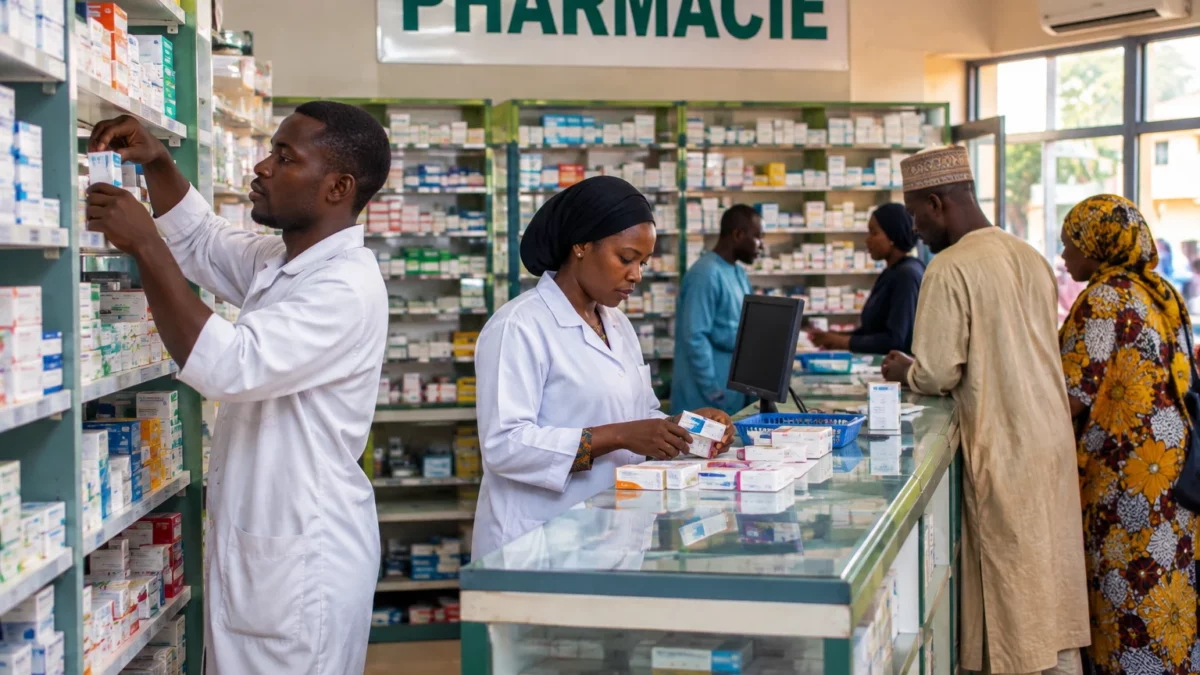
When a medicine is unavailable or too expensive, the issue is not resolved solely in hospitals. It also depends on suppliers, delivery times and the rules governing its sale. The new agreement between Niger and Algeria addresses all three, but its impact will depend on the products actually delivered and their availability to patients.
A commercial contract, but also a regulatory undertaking
On 25 November 2026, in Niamey, Niger’s National Office for Pharmaceutical and Chemical Products (ONPPC) and Algeria’s Saidal Group signed a framework supply contract worth $6 million. It covers medicines manufactured by eleven Algerian laboratories. Saidal is to coordinate exports and represent the partner laboratories. Both the Nigerien News Agency and Algeria’s APS news agency reported the signing and the announced amount. The Nigerien News Agency’s report and the Algerian APS report corroborate these main details.
The first shipments are expected « in the coming days », followed by deliveries in stages. Prices are described as firm and non-revisable, with payment by bank transfer. However, in the information available, the authorities have not publicly provided details of the list of medicines, volumes for each product or how the order will be divided among the eleven manufacturers. The contract value alone therefore does not make it possible to estimate how many treatments will be available.
A second aspect concerns the rules governing market access. Niger’s Pharmaceutical Regulatory Agency (ANRP) and Algeria’s National Agency for Pharmaceutical Products (ANPP) have signed a memorandum of understanding on product registration. This process assesses medicines before they are marketed. The agreement may facilitate cooperation between regulators, but it does not mean that all the products concerned are automatically authorised for sale in Niger.
Diversifying suppliers without confusing imports with self-sufficiency
Niger relies heavily on foreign supplies. The country’s 2022–2026 Health and Social Development Plan, published by the authorities and available in the World Health Organization’s document database, states that Niger imports more than 99% of its requirements for medicines and other health products. This figure describes structural dependence, not the precise share of each supplier in 2026. Niger’s health plan also sets the development of local production as a priority.
The contract with Algeria could therefore broaden the pool of suppliers and provide a market for Algerian manufacturers. But a new source does not eliminate dependence on imports. Rather, it could reduce exposure to a single supplier or a disruption along a trade route, provided deliveries are regular, meet needs and comply with quality requirements.
For patients, the impact will then depend on distribution beyond Niamey. Stock arriving in the capital does not in itself guarantee access for pharmacies and health facilities in the regions. Inland transport times, stock availability and prices at the point of sale will affect the practical impact. The contract sets firm prices between the parties, but the published information does not yet specify final prices for patients.
Local production remains a separate challenge
Alongside external procurement, Nigerien authorities are seeking to strengthen domestic manufacturing capacity. In June 2026, Health Minister Garba Hakimi visited a Saidal production unit in Algiers as part of pharmaceutical cooperation between the two countries. The Nigerien News Agency had also reported in August 2025 on his visit to Nigerien manufacturing and distribution companies, including NIPHAR and LANSPEX. These initiatives point to an interest in industrial and regulatory expertise, but do not in themselves establish that a new Nigerien manufacturing unit is already operating on a large scale.
Imports and local production operate on different timescales. Purchases can replenish stocks more quickly, while domestic manufacturing requires investment, equipment, inputs, skilled staff and constant quality control. Niger’s pharmaceutical policy aims to ensure the availability of quality, affordable essential medicines. The bilateral contract may contribute to that objective, but it does not replace the work of building an industrial base.
A bilateral partnership in a changing region
The signing took place on the sidelines of the « Invest in Niger » forum, held in Niamey. It forms part of closer economic ties between two countries with shared Saharan and Sahelian concerns. For Algeria, the agreement opens up a commercial market for its producers. For Niger, it adds a supply option and a framework for dialogue between regulatory authorities. The benefits, however, remain to be assessed on the basis of deliveries and their distribution.
This cooperation comes as Niger, Mali and Burkina Faso have formed the Alliance of Sahel States (AES) and withdrawn from the Economic Community of West African States (ECOWAS), the regional economic integration organisation. This context makes practical arrangements that facilitate trade and the movement of essential products all the more important. The contract does not resolve regional challenges on its own: its implementation, the authorisations granted for each product and the health services’ capacity to deliver medicines to the regions will need to be monitored.