Algeria
 Egypt
 Libya
 Morocco
 Sudan
 Tunisia
 Benin
 Burkina Faso
 Cabo Verde
 Côte d'Ivoire
 Ghana
 Guinea
 Guinea-Bissau
 Liberia
 Mali
 Mauritania
 Niger
 Nigeria
 Senegal
 Sierra Leone
 The Gambia
 Togo
 Cameroon
 Central African Republic
 Chad
 DR Congo
 Equatorial Guinea
 Gabon
 Republic of the Congo
 São Tomé and Príncipe
 Burundi
 Comoros
 Djibouti
 Eritrea
 Ethiopia
 Kenya
 Malawi
 Mauritius
 Mozambique
 Rwanda
 Seychelles
 Somalia
 South Sudan
 Tanzania
 Uganda
 Angola
 Botswana
 Eswatini
 Lesotho
 Namibia
 South Africa
 Zambia
 Zimbabwe
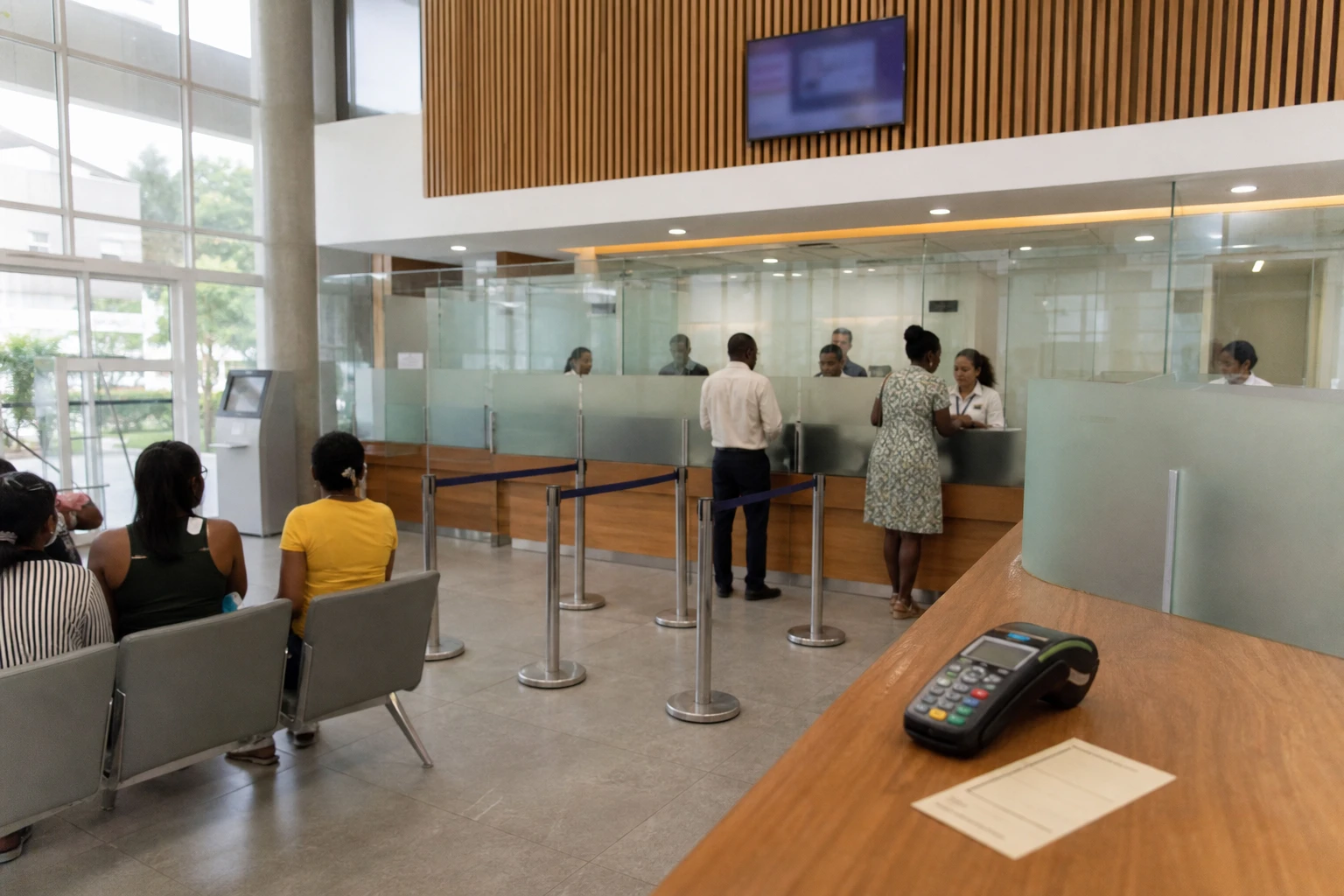
In Madagascar, digital finance is no longer just about money transfers
On the ground, the debate has already changed. For many Malagasy people, mobile money is no longer simply a tool for sending or withdrawing money. It is becoming a gateway to savings, payments, credit and, in time, more comprehensive services. In this landscape, MVola wants to play a broader role than that of a conventional electronic wallet.
This shift is part of a broader transformation of the Malagasy economy. The Central Bank of Madagascar is closely monitoring the growth of digital payments, while the World Bank noted that the country saw marked growth in the mobile money market over the five years to 2022. In other words, the issue is no longer marginal. It now affects everyday access to money, in cities and rural areas alike.
Moving upmarket to meet very practical needs
MVola says it was launched in 2010, became the country’s first electronic money institution in 2018, and then a digital bank in 2021. The company also says it received dual GSMA certification for its application programming interfaces in October 2023, an important signal for the interoperability and security of transfers. These milestones point to one simple fact: mobile finance in Madagascar has moved beyond the experimental stage.
MVola’s new head is setting out a clear course: improve service quality, broaden the offering and reduce friction for users. This means a more available platform, shorter processing times and sufficient liquidity across the network of service points, including in remote localities. The group says it draws on more than 55,000 Cash Points, MVola PoPs, Yas Stores, customer service and digital channels.
This dense network matters greatly in an island country where distance adds to everyday costs. The World Bank has already noted that the expansion of digital financial services in Madagascar meets very practical needs: paying a salary, collecting a producer’s earnings, sending money to family or paying bills without having to travel for a long time. Digital finance is therefore not a technological slogan. It is a response to remoteness, irregular incomes and the burden of cash.
Fiercer competition, but higher expectations
Madagascar’s market is no longer one in which a lone pioneer faces emerging uses. Competition has taken shape among operators and financial players, with mobile money services increasingly aligned with everyday needs. The World Bank’s report on Madagascar highlights this broader trend, while the Central Bank regulates a system in which digital payments are playing an ever-greater role. In this context, differentiation no longer rests solely on having an app. It depends on reliability, accessibility and speed of execution.
MVola is emphasising precisely this point. The company highlights merchant payments, bill payments, salary payments, supplier payments, savings, financing and insurance. It wants to make the mobile wallet a gateway to a range of financial services, rather than merely a transfer tool. At its heart, this is a change of model: from moving money to managing money.
This shift also reflects market realities. The World Bank notes that mobile money has grown rapidly in Madagascar, but that there is still considerable scope to expand the active use of accounts. In short, opening an account is not enough. It has to be used regularly to pay, save, receive income or cope with an unexpected shock. This is where the next phase of financial inclusion will be decided.
What this means for households, traders and rural areas
For an urban household, the priority is simplicity. For a neighbourhood shopkeeper, it is receiving payments quickly. For a farmer, teacher or field worker, it is being able to receive money without losing a day to travel. In rural areas, access to a Cash Point, USSD on a basic phone or a nearby network of people remains crucial. MVola says it is maintaining this hybrid model, combining an app, a USSD menu and a physical presence.
Trust remains central. MVola says it operates within a regulatory framework and points to its banking status since 2021, as well as its GSMA certifications obtained in 2023. But trust does not rest on a label alone. It also depends on how incidents are handled, fraud is prevented and customer queries are answered. In a sector where every transaction directly affects purchasing power, even a minor outage or delay has an immediate social cost.
The economic impact goes beyond individuals. When a trader can accept a mobile payment, a business can manage its cash flow more effectively. When salaries are paid through a digital channel, the circulation of liquidity improves. When social assistance or agricultural payments are digitised, logistical costs fall. The World Bank also presents digital finance as a lever for entrepreneurship and growth, provided that usage is supported by financial education and reliable infrastructure.
Beyond MVola, a signal for Madagascar and the Indian Ocean region
The issue extends beyond one company. Madagascar belongs to the Southern African Development Community, or SADC, and shares with several countries in the region the same challenge: expanding access to financial services without waiting for a bank branch to open everywhere. In this region, digital finance has become a tool for catching up, as well as a source of competition among telecoms operators, banks and fintechs.
The message from Antananarivo is therefore broader than an internal appointment. It signals that the next battle in mobile money will not be fought solely over the number of accounts opened, but over how extensively they are used. The challenge for Madagascar, as for other African markets, will be to make cash, basic phones, smartphones and integrated financial services coexist without leaving behind those furthest from the banking system. This is where, in the years ahead, a tangible part of financial inclusion on the continent will be shaped.