Algeria
 Egypt
 Libya
 Morocco
 Sudan
 Tunisia
 Benin
 Burkina Faso
 Cabo Verde
 Côte d'Ivoire
 Ghana
 Guinea
 Guinea-Bissau
 Liberia
 Mali
 Mauritania
 Niger
 Nigeria
 Senegal
 Sierra Leone
 The Gambia
 Togo
 Cameroon
 Central African Republic
 Chad
 DR Congo
 Equatorial Guinea
 Gabon
 Republic of the Congo
 São Tomé and Príncipe
 Burundi
 Comoros
 Djibouti
 Eritrea
 Ethiopia
 Kenya
 Malawi
 Mauritius
 Mozambique
 Rwanda
 Seychelles
 Somalia
 South Sudan
 Tanzania
 Uganda
 Angola
 Botswana
 Eswatini
 Lesotho
 Namibia
 South Africa
 Zambia
 Zimbabwe
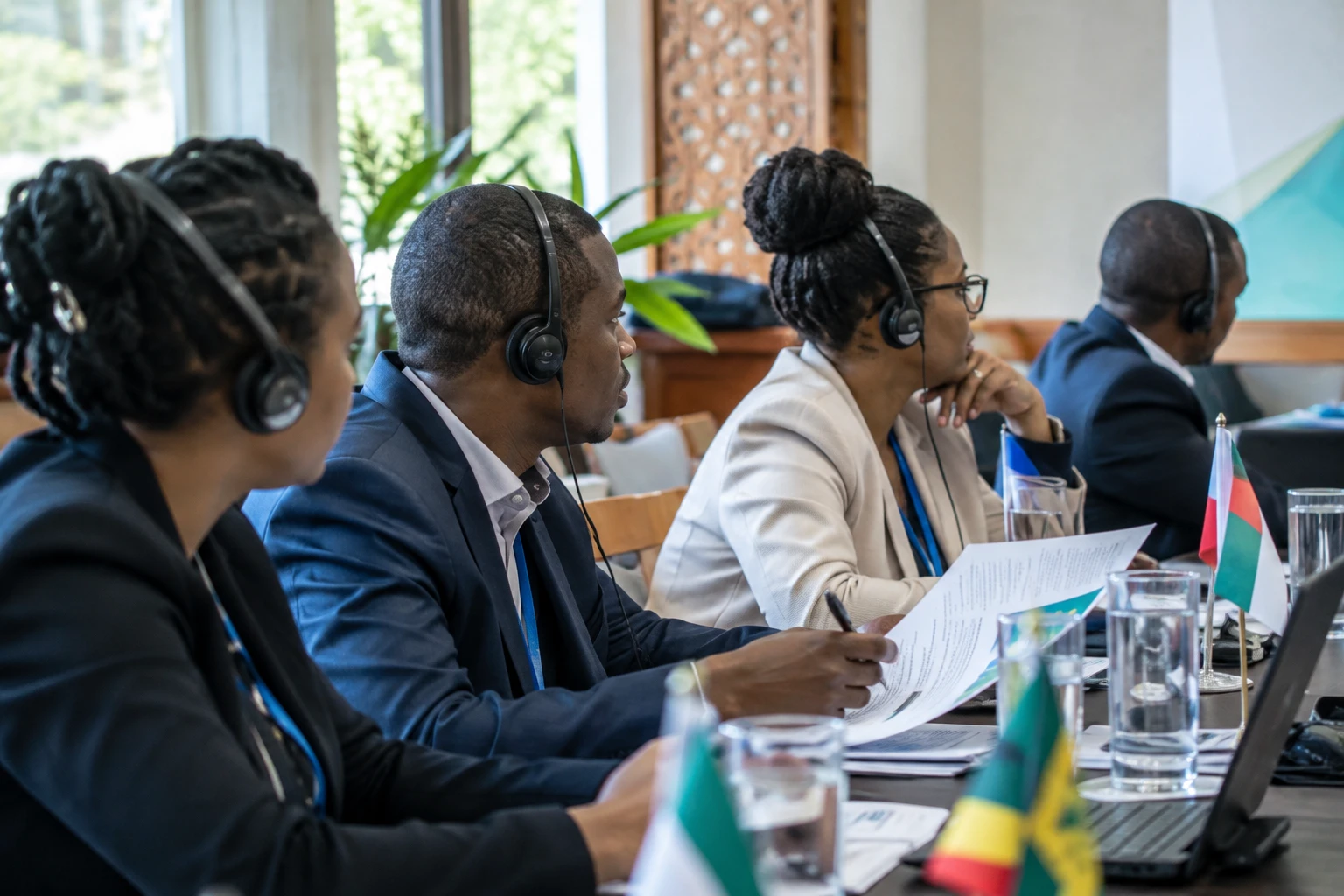
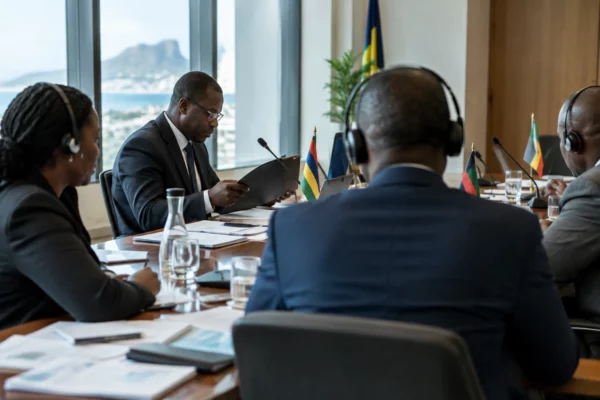
In Madagascar, climate promises also come down to a very practical question: who will finance the necessary changes, and in what form? At COP31, President Michaël Randrianirina linked emissions-reduction and energy-transition targets to a call for funding in the form of grants rather than new loans.
Quantified commitments, costs still to be clarified
On 11 November in Antalya, the head of state presented the commitments in the third nationally determined contribution (NDC), the plan in which each country sets out its climate targets. Madagascar aims to cut its greenhouse gas emissions by 34% by 2035 and to reach an 85% share of renewable energy by 2030.
The figure of $13.86 billion was associated with these targets in reports of the speech. However, a Malagasy press publication consulted puts the figure at $16.86 billion. This discrepancy makes it necessary to distinguish between the figure stated at the lectern and a detailed assessment of needs: the national document and its assumptions should clarify exactly what the announced amount covers.
The president called for grants, with direct, simplified and predictable access to climate finance. He also called for greater support for adaptation and loss and damage, as well as recognition for countries that preserve carbon sinks. He described the funding gap as a major threat to the country’s ability to fulfil its commitments.
Energy transition faces realities on the ground
The challenge is not just to mobilise capital. National targets must be turned into viable projects: renewable power plants, grids capable of delivering electricity, storage, maintenance and affordable access for households. Priorities must also address the needs of cities and less well-served regions, without making lower-income households bear the cost of the transition.
In urban areas, a reliable electricity supply is vital to businesses, public services and households. In rural areas, access to decentralised solutions can meet different needs, but also requires durable equipment, local expertise and maintenance arrangements. A national target alone does not explain how these disparities will be addressed.
The roadmap has therefore prompted questions about its implementation. Nanie Ratsifandrihamanana, director of WWF Madagascar, said the country’s renewable potential must be backed by an action plan and clearly identified resources. Her point concerns the shift from ambition to implementation: which projects will be launched, on what timetable, and how will their results be monitored?
There are also reservations about the place accorded to forests. In Antalya, the president highlighted Madagascar’s natural forests, mangroves and coral reefs, which contribute to carbon storage and ecosystem protection. But Zo Randriamaro, of the Centre for Research and Support for Development Alternatives, challenges the idea that they are guaranteed carbon sinks. She warned against deforestation and stressed that these areas are neither unlimited nor automatically protected.
Available data confirm that pressure on forests remains a serious concern. WWF Madagascar’s 2026-2030 strategic plan notes, among other things, losses of primary rainforest and widespread reliance on wood fuel for cooking. Ecosystem protection and access to energy are therefore linked: without affordable alternatives to wood and charcoal, pressure on forest resources is likely to continue.
Funding action without increasing debt
The call for grants rather than loans reflects budgetary concerns. Adapting to cyclones, floods and other climate risks requires investment, but debt can reduce the funds available for public services. Grants prevent every climate project from becoming a new repayment obligation. They do not, however, resolve questions of management, transparency and how funds are allocated.
The effects also vary among stakeholders. The authorities must set priorities and account for spending; businesses can build and operate infrastructure; local authorities and residents need solutions suited to their areas. Communities that depend directly on forests, agricultural land or coastal resources must be able to take part in decisions affecting their livelihoods.
COP31 discussions provide a platform for putting these demands to other states and international mechanisms. But announcing a funding requirement guarantees neither that the money will be provided nor that it will match the projects. The challenge will be to make funding available in time, publish how it is allocated and verify whether the announced results — including an 85% share of renewable energy — are achieved.
Regional significance, results to be tracked
Madagascar is part of East Africa and the Southern African Development Community (SADC), a regional organisation bringing together states in southern Africa and the Indian Ocean. Madagascar’s choices therefore resonate beyond its borders: financing adaptation, access to energy, forest protection and vulnerability to extreme events are shared regional concerns, even though each country has its own resources and constraints.
The Malagasy delegation’s presence in Antalya is not limited to emissions targets. Météo Madagascar also discussed strengthening observations, maintaining equipment and early warning systems with international partners. These tools can help authorities and residents better anticipate risks, provided they are maintained and information reaches the communities concerned.
The next test will therefore be national as well as diplomatic: clarifying costs, setting a verifiable timetable and showing how the money requested translates into services, infrastructure and ecosystem protection. For the Malagasy people, the credibility of the promise will be judged by these tangible results, long after the conference speeches.