Algeria
 Egypt
 Libya
 Morocco
 Sudan
 Tunisia
 Benin
 Burkina Faso
 Cabo Verde
 Côte d'Ivoire
 Ghana
 Guinea
 Guinea-Bissau
 Liberia
 Mali
 Mauritania
 Niger
 Nigeria
 Senegal
 Sierra Leone
 The Gambia
 Togo
 Cameroon
 Central African Republic
 Chad
 DR Congo
 Equatorial Guinea
 Gabon
 Republic of the Congo
 São Tomé and Príncipe
 Burundi
 Comoros
 Djibouti
 Eritrea
 Ethiopia
 Kenya
 Malawi
 Mauritius
 Mozambique
 Rwanda
 Seychelles
 Somalia
 South Sudan
 Tanzania
 Uganda
 Angola
 Botswana
 Eswatini
 Lesotho
 Namibia
 South Africa
 Zambia
 Zimbabwe
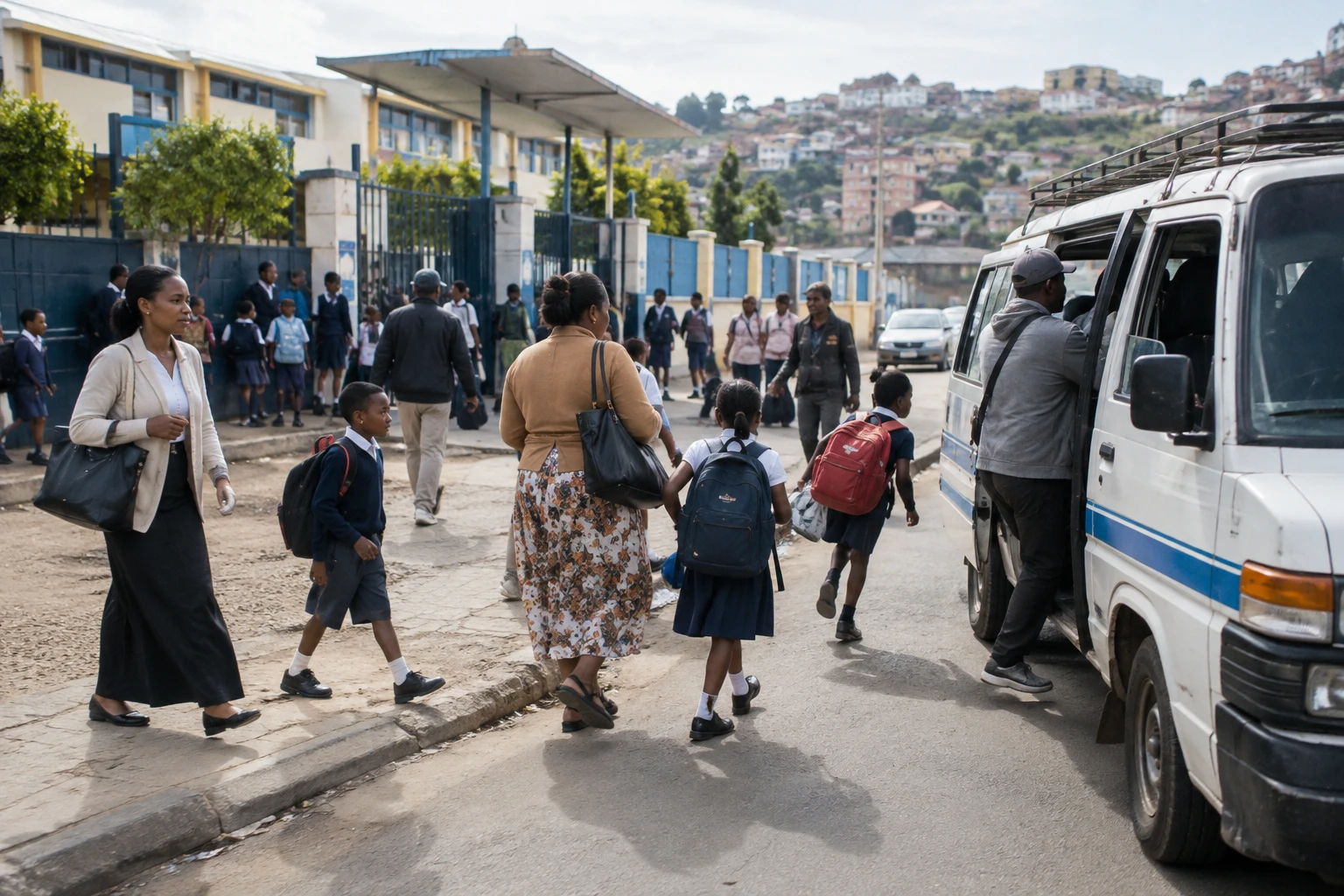
At a school, deciding together how to use resources can matter as much as finding new funding. In Madagascar, committees bringing together parents, teachers and residents are seeking to turn this participation into more regular attendance and better learning outcomes.
A school also run by its community
The initiative is part of the École pour tous programme, run in Madagascar by the Ministry of National Education with support from the Japan International Cooperation Agency (JICA). School management committees bring schools closer to the people who attend them and help run them. They can assess needs, discuss priorities and monitor how available resources are used.
At a school on the outskirts of Antananarivo, committee chair Marie Harivola Malala Razanadrasoa emphasises the importance of transparent management. Parents, teachers and community members meet to discuss educational priorities and budgets. This arrangement gives families a forum for discussion, without replacing the responsibilities of the state or the school administration.
The project began in Madagascar in 2016, according to JICA. Committees trained to analyse problems have helped find classrooms, supplies and textbooks. They have also organised catch-up classes led by volunteers. These activities aim to address practical needs, particularly when pupils fall behind in reading, writing or arithmetic.
The programme also includes community-led school meals and pre-school activities using kamishibai, a Japanese form of illustrated storytelling. Tinasoa Helimalala Rabezandry, the headteacher of a primary school, says she has seen an improvement in reading. This testimony describes a local experience; on its own, it is not an independent measure of the programme’s impact nationwide.
Needs that go beyond local management
The challenges are significant. UNICEF’s cooperation programme for Madagascar says that 56% of children complete primary school and 27% begin lower secondary education. It also highlights learning difficulties in the early years of schooling. These figures describe a structural situation that initiatives at individual schools cannot solve on their own.
Shortages of qualified staff and limited resources undermine the continuity of lessons. According to the same UNICEF document, nearly two-thirds of teachers are recruited and paid by communities, often without sufficient qualifications. In this context, committees can help identify problems and mobilise local responses. But their capacity depends on the resources available to families and residents, which vary from place to place.
School meals illustrate this tension. They can support attendance and concentration in class, but their organisation relies on local contributions and does not guarantee regular funding. JICA reports that Malagasy communities have started providing meals during the agricultural lean season, from around January to March. This calendar is a reminder that school life is linked to the seasons and to households’ economic circumstances, particularly outside urban centres.
Community participation must therefore be distinguished from shifting the burden. Parents can contribute to decision-making and oversight of spending; they should not have to make up for a lack of public funding, training or sufficient numbers of teachers on a lasting basis. The challenge is to relay local needs to education authorities, then link initiatives to national budgets and policies.
A third phase running until 2027
The project is entering a third phase, planned for 2024 to 2027. According to Malagasy media outlet Moov, this stage aims to strengthen participatory school management, expand the model to new areas and improve oversight of the committees. Pilot projects will also test ways to make access to basic education easier and improve school results.
This new phase raises the question of sustainability: will these practices continue when external support declines? The answer will depend in part on the role committees are given in the education system, the training they receive and the ability of public services to act on their findings. Transparency is a useful tool, but it cannot replace qualified teachers or the necessary investment.
École pour tous was launched in Niger in 2004 and later adapted in several African countries. Madagascar, however, is not simply an extension of an imported model: the initiative must work within its own institutions and take account of the constraints facing its schools, the languages used and local realities. Regional cooperation can facilitate the exchange of experience without erasing these differences.
As a member of the Southern African Development Community (SADC), a regional organisation in southern Africa, Madagascar also places its education efforts within exchanges that extend beyond the island. For the authorities and families, the next measure of progress will not simply be the number of committees set up. The question will be whether children stay in school, consolidate what they have learnt and move on to the next levels, in cities and rural areas alike.