Algeria
 Egypt
 Libya
 Morocco
 Sudan
 Tunisia
 Benin
 Burkina Faso
 Cabo Verde
 Côte d'Ivoire
 Ghana
 Guinea
 Guinea-Bissau
 Liberia
 Mali
 Mauritania
 Niger
 Nigeria
 Senegal
 Sierra Leone
 The Gambia
 Togo
 Cameroon
 Central African Republic
 Chad
 DR Congo
 Equatorial Guinea
 Gabon
 Republic of the Congo
 São Tomé and Príncipe
 Burundi
 Comoros
 Djibouti
 Eritrea
 Ethiopia
 Kenya
 Malawi
 Mauritius
 Mozambique
 Rwanda
 Seychelles
 Somalia
 South Sudan
 Tanzania
 Uganda
 Angola
 Botswana
 Eswatini
 Lesotho
 Namibia
 South Africa
 Zambia
 Zimbabwe
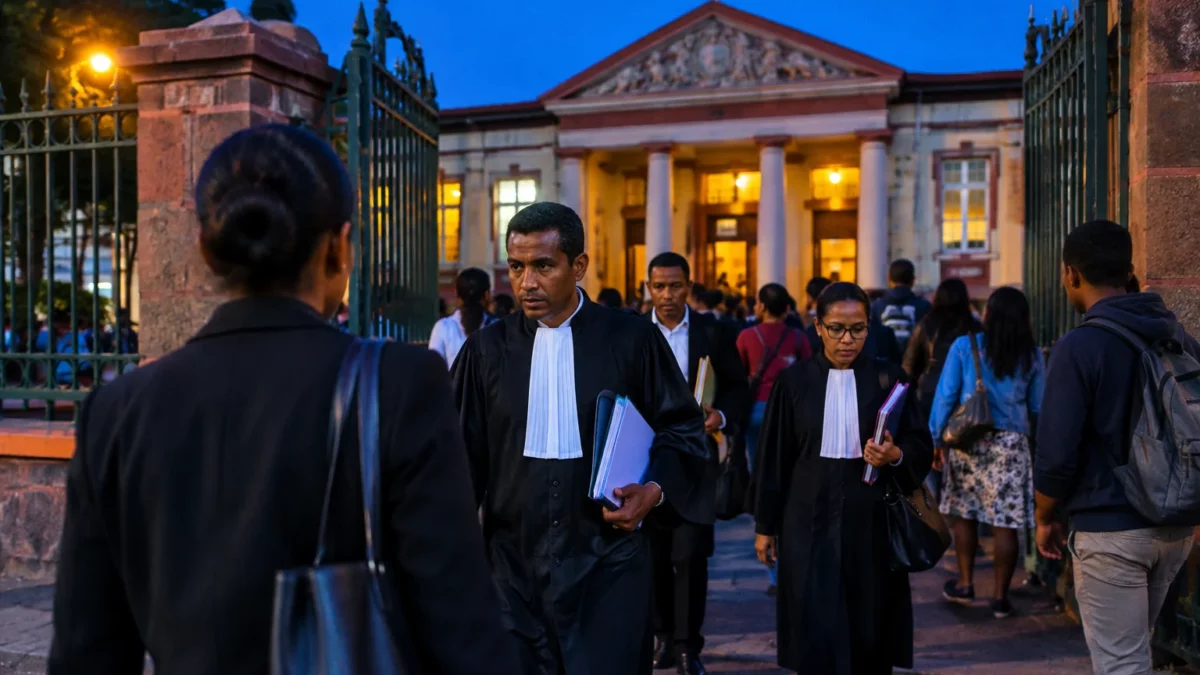
In Ambohimalaza, the question is no longer simply who is appearing before the courts. Families want to understand what happened at a birthday party after which more than thirty people died. Yet on the first day of the trial, a new toxicological theory revived questions rather than settling them.
A hearing overshadowed by conflicting accounts
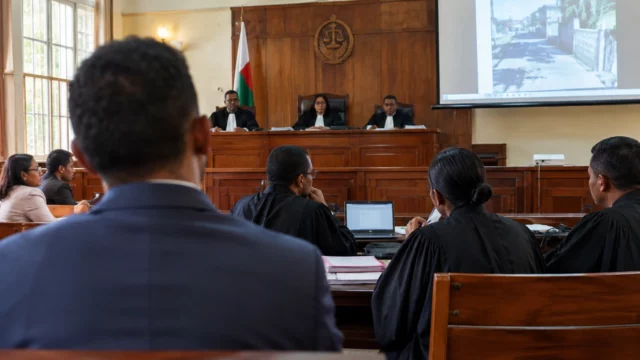
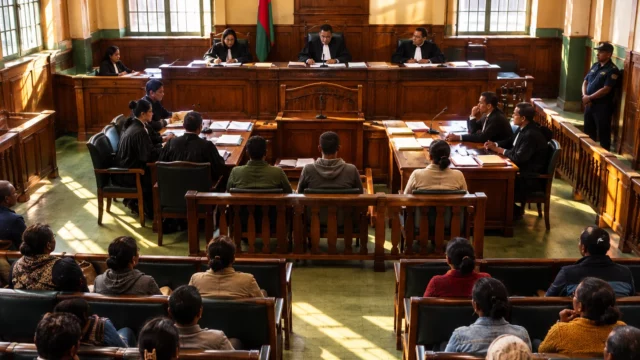
The trial opened on Wednesday 18 November 2026 before the Ordinary Criminal Court at the Anosy court in Antananarivo. Eleven people are facing charges, including the party’s organiser and her mother. The defendants deny the allegations. Malagasy media outlet 2424.mg reports that some also said they had been beaten or threatened during questioning. The court will have to examine these statements, which do not in themselves constitute proof of mistreatment.
The tragedy dates back to the night of 14-15 June 2025. Guests at a party in Ambohimalaza, near the capital, fell seriously ill. The death toll changed over the following weeks as reports were updated. Malagasy sources cite more than thirty victims, most of them young. In the absence of a consolidated judicial toll in the information available, this figure remains attributed to the reports at hand.
The first day combined questioning with medical testimony. According to 2424.mg, the doctor who testified, identified in its report as Pierre Rasolofonirina, cited test results mentioning methanol and GHB. He reportedly said the substances could have been ingested before symptoms appeared. This account, reported at the hearing by the outlet, does not yet establish how they might have been introduced or who was responsible.
One point calls for particular caution: the same report says methanol was also among the medicines administered to treat patients. The doctor reportedly linked the possibility of prior ingestion to GHB and another substance, but the information available does not independently confirm that food or drink was contaminated. He also said the tests cited had not screened for botulism.
Successive theories, no definitive cause established
Since 2025, the case has been marked by diverging explanations. Former president Andry Rajoelina publicly favoured the theory of deliberate poisoning involving plants, notably belladonna and datura. After the change of power in October 2025, the authorities highlighted botulism, a serious poisoning caused by a bacterial toxin that can develop in some improperly stored foods.
At the hearing, however, the doctor reportedly said the tests in question had not detected substances derived from these plants. He also reportedly clarified that the laboratory concerned had not tested for botulism. These two points therefore neither confirm poisoning by plants nor rule out botulism. Rather, they underline the limits of the available results and the need to make the full reports, their methods and their chain of custody accessible.
The context surrounding the tests partly explains the mistrust. As early as the summer of 2025, public information about examinations carried out at different laboratories was fragmentary and sometimes contradictory. An investigation published by TV5MONDE in July 2025 reported 28 deaths at the time and noted that toxicological results did not establish the cause of death with certainty. That earlier toll does not replace more recent figures, but it is a reminder of how conclusions have shifted during the case.
In a criminal case, detecting a molecule is not enough to reconstruct the full sequence of events. It is necessary to establish when it was present, in what quantity, whether it was consumed, and what link it has to the symptoms or deaths. Expert reports, medical records and testimony will have to be examined against these questions. The court must also distinguish scientific evidence from theories put forward during the investigation.
For relatives, transparency is a condition for grieving
The trial is being followed by families who have been waiting for answers for more than a year. Guillaume Pariset, whose fiancée Sitraka died after the party, described the breathing difficulties that preceded her death. He specifically mentioned the lack of a ventilator for her at the hospital. His account describes a personal experience and cannot, on its own, establish the hospital’s capacity that day.
“We are not asking for revenge,” he said, according to the account of the hearing provided in the original material. “We just want the truth.” The demand concerns both any potential responsibility and the way the investigation was conducted. For relatives, a verifiable explanation also matters in helping them grieve, without artificially naming a culprit.
The public broadcast of hearings announced by the Ministry of Justice and reported by Malagasy media may help the public follow the proceedings. But broadcasting does not replace access to essential documents or a clearly explained expert assessment. The trial must also examine the allegations and the defence cases of the eleven defendants, in accordance with the presumption of innocence.
A matter of trust that extends beyond the island
In Madagascar, the case touches on trust in the judicial and health institutions. It is unfolding during a period of political transition, following Andry Rajoelina’s departure in October 2025. The succession of public accounts makes it all the more important to distinguish political communication, medical findings and judicial evidence. Residents of Antananarivo and nearby municipalities are following the case closely, while the victims’ families bear its direct human cost.
The issue also has a regional dimension. Madagascar is a member of the Southern African Development Community (SADC), a regional cooperation organisation comprising sixteen states. The credibility of investigations into mass poisonings matters across the region: it depends on laboratories able to document their methods, coherent public communication and a justice system that examines conflicting evidence.
Proceedings are due to continue on Thursday 19 November. The points to watch are specific: the experts’ conclusions, the publication or full examination of the test results, the defendants’ responses and the establishment of a link between the substances cited and the deaths. At this stage, neither methanol, GHB nor botulism can be presented as a definitively proven cause of the tragedy.
For more on the Malagasy judicial context, see reports by 2424.mg on substances cited at the trial, Newsmada on the broadcast of the hearings and TV5MONDE’s investigation into the initial theories. Madagascar is one of the SADC’s member states.