Algeria
 Egypt
 Libya
 Morocco
 Sudan
 Tunisia
 Benin
 Burkina Faso
 Cabo Verde
 Côte d'Ivoire
 Ghana
 Guinea
 Guinea-Bissau
 Liberia
 Mali
 Mauritania
 Niger
 Nigeria
 Senegal
 Sierra Leone
 The Gambia
 Togo
 Cameroon
 Central African Republic
 Chad
 DR Congo
 Equatorial Guinea
 Gabon
 Republic of the Congo
 São Tomé and Príncipe
 Burundi
 Comoros
 Djibouti
 Eritrea
 Ethiopia
 Kenya
 Malawi
 Mauritius
 Mozambique
 Rwanda
 Seychelles
 Somalia
 South Sudan
 Tanzania
 Uganda
 Angola
 Botswana
 Eswatini
 Lesotho
 Namibia
 South Africa
 Zambia
 Zimbabwe
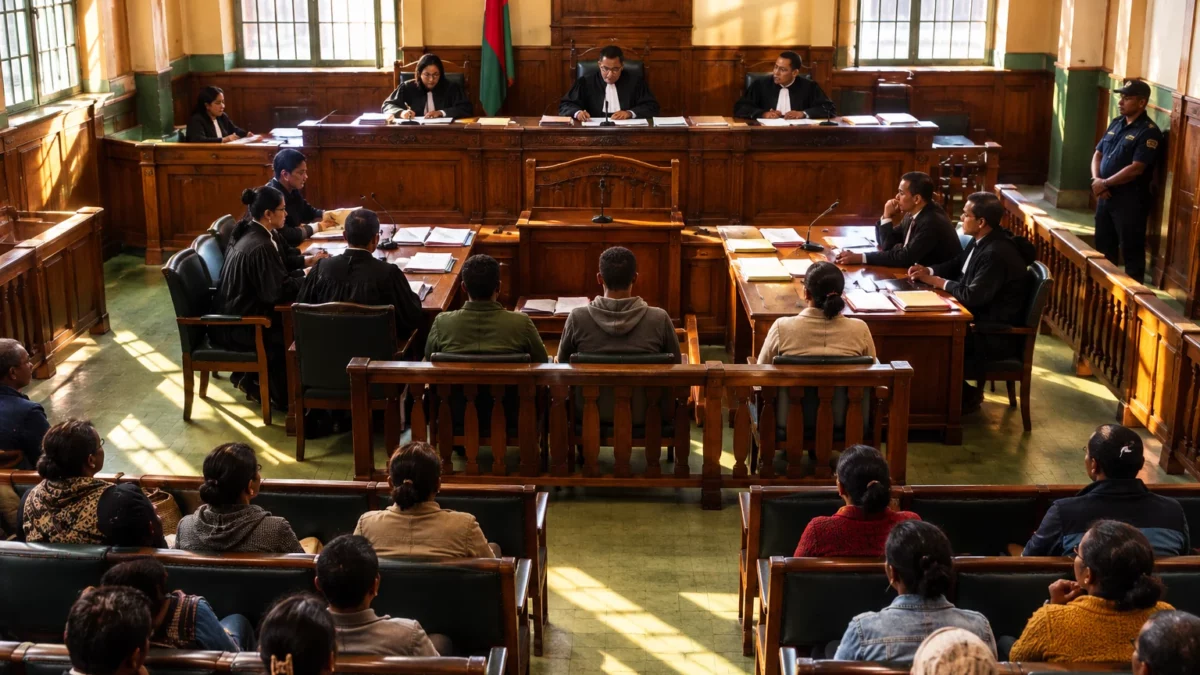
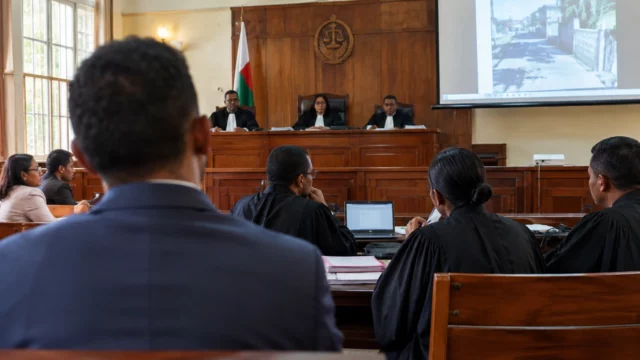
In Ambohimalaza, near Antananarivo, the trial must answer a question that has remained open since June 2025: what made guests at a birthday party ill, then cost dozens of people their lives? The hearings have brought new toxicological leads, but no conclusion yet on the cause of the tragedy or any possible responsibility.
A tragedy with disputed figures and causes
The party took place on 14 June 2025 in Ambohimalaza, about 15 kilometres from Madagascar’s capital. Guests and other people who consumed food or drink linked to the event fell ill. The death toll changed over the following weeks, and media outlets reported different totals. When the trial opened on 18 November 2026, reports referred to around 30 deaths; some put the toll at 33 or 35. A single figure should therefore not be presented as definitively established.
In the first few days, the Malagasy authorities spoke of food poisoning. But the medical results publicly available did not immediately settle the matter. Tests carried out on samples sent to Strasbourg had reportedly failed to establish the cause of death with certainty, according to information published in July 2025. The possibility of botulism poisoning was also raised in public debate, but the evidence presented at the trial has not resolved it.
This uncertainty has fuelled particular expectations: those of families seeking to understand what happened, and those of a public closely watching how the investigation and medical treatment were handled. The trial is therefore not only about the charges against individuals. It must also examine the quality and limits of the scientific evidence submitted to the court.
Substances cited in court, but no definitive proof
At the hearing on 18 November before the Ordinary Criminal Court, doctor Pierre Rasolonirina presented his interpretation of test results. He cited methanol, GHB — or gamma-hydroxybutyric acid — and a benzodiazepine in samples from, according to his testimony, a patient. Methanol is a toxic alcohol; benzodiazepines are a family of drugs with sedative effects. GHB is a psychoactive substance that can cause severe drowsiness and other serious effects.
These findings are not, on their own, enough to determine what happened at the party. The doctor said he did not know the date of the sample or the identity of the patient concerned. The presence of a substance in a sample does not automatically prove that it caused the deaths, or how it might have been ingested. Nor does it identify anyone responsible. The hearings will need to clarify where the samples came from, the testing methods used and their link to the victims.
Eleven defendants were questioned on the first day, according to Malagasy media outlet 2424.mg. Several denied the charges. Some female defendants also said they had been beaten or threatened during questioning and disputed confessions attributed to them. These statements remain to be examined in adversarial proceedings; on their own, they do not constitute proof of ill-treatment. They nevertheless raise a crucial issue: the reliability of the conditions in which testimony and confessions were obtained.
Justice under the gaze of families
Hearings on 19 and 20 November broadened the debate. Relatives, caterers and people who had ordered meals from some suppliers were heard. The civil parties asked for the former health minister, doctors from Joseph Ravoahangy Andrianavalona Hospital and gendarmes involved in the investigation to appear, to clarify symptoms, treatment and allegations made by defendants in particular. The public prosecutor said a summons procedure was under way, 2424.mg reports.
The conduct of the hearing is a reminder that the proceedings must meet several expectations that can be difficult to reconcile: hearing victims’ families, safeguarding the rights of those charged and testing the strength of the evidence. On 20 November, after a tense moment in the courtroom, the hearing was extended. Requests from the civil parties and the expected testimony of health professionals could still shed light on issues that remain unclear.
For relatives, the questions are concrete: what was served, how guests were treated and why the deaths continued. For the accused, the issue is answering the charges in proceedings where allegations of coercion must be examined seriously. For the health and judicial authorities, the transparency of the expert assessments and the traceability of samples will affect public confidence in the conclusions.
A national issue with regional resonance
Madagascar is a member of the Southern African Development Community (SADC), a regional organisation that includes island and mainland countries in the Indian Ocean and southern Africa. The Ambohimalaza case is not, in itself, a regional matter. It does, however, raise questions that cross borders: the ability of health services to document a mass poisoning, the circulation of dangerous products and guarantees of a fair criminal trial. The country also lies at the crossroads of Indian Ocean maritime trade, where health monitoring and cooperation between institutions play a role in preventing risks.
The significance of this trial will depend less on the hypotheses put forward than on how they are tested. The next steps to watch are testimony from the doctors and investigators requested by the civil parties, examination of the test results and closing arguments. Until the findings clearly link a substance, exposure and the deaths, methanol and GHB must remain leads raised at the hearing, not a definitive explanation.