Algeria
 Egypt
 Libya
 Morocco
 Sudan
 Tunisia
 Benin
 Burkina Faso
 Cabo Verde
 Côte d'Ivoire
 Ghana
 Guinea
 Guinea-Bissau
 Liberia
 Mali
 Mauritania
 Niger
 Nigeria
 Senegal
 Sierra Leone
 The Gambia
 Togo
 Cameroon
 Central African Republic
 Chad
 DR Congo
 Equatorial Guinea
 Gabon
 Republic of the Congo
 São Tomé and Príncipe
 Burundi
 Comoros
 Djibouti
 Eritrea
 Ethiopia
 Kenya
 Malawi
 Mauritius
 Mozambique
 Rwanda
 Seychelles
 Somalia
 South Sudan
 Tanzania
 Uganda
 Angola
 Botswana
 Eswatini
 Lesotho
 Namibia
 South Africa
 Zambia
 Zimbabwe
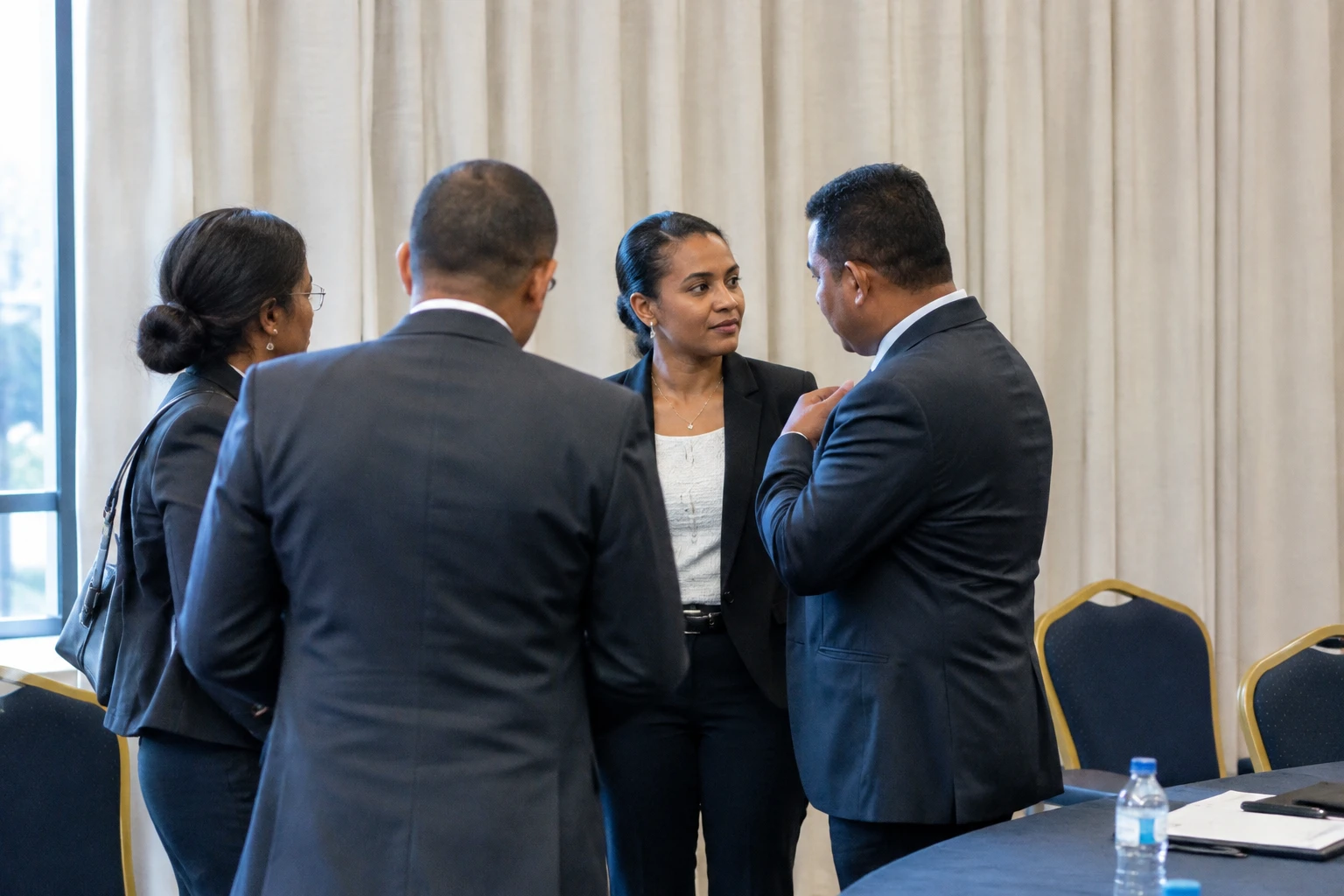
In Madagascar, choosing the order of elections also means choosing the rules for the next government. Discussions in November in Antananarivo put a constitutional referendum before the presidential election at the centre of debate. But voters still have no official dates for going to the polls.
A transition under regional scrutiny
The military takeover on 14 October 2025, after Andry Rajoelina’s departure, ushered in a new period of institutional uncertainty. Michaël Randrianirina is leading the transition, which is not expected to last more than two years. The African Union condemned the unconstitutional change of government and suspended Madagascar from its activities until constitutional order is restored.
The Southern African Development Community (SADC), a regional organisation of which Madagascar is a member, is calling for an inclusive national dialogue led by the Malagasy people. It has also tasked a panel of elders, led by former Malawian president Joyce Banda, with supporting efforts to resolve the crisis. These positions place dialogue and election preparations under sustained regional scrutiny.
The debate comes after several political crises and disputes over previous elections. In 2023, some opposition groups boycotted the presidential election, denouncing a lack of impartiality in the electoral institutions. The new authorities therefore present reform of the voting rules as a step in the political “refoundation”. It remains to be seen who will take part in the decisions and how they will be translated into law.
Referendum features in discussions, but not yet in the timetable
On 9 and 10 November 2026, political and institutional stakeholders met at the Ivato International Conference Centre, near the capital. The meeting presented proposals arising from earlier consultations, with a specific aim: preparing for the next elections. It was not yet the national dialogue called for to consider institutional reforms more broadly.
According to the president of the transition, 95% of the proposals gathered during the preliminary consultations supported holding a constitutional referendum before the presidential election. This figure is a statement attributed to the authorities: it does not mean that all Malagasy people were consulted, nor that a legally definitive decision has been taken.
In an opinion issued on 4 November, the High Constitutional Court said a referendum on a new constitutional order could precede the presidential election. It nevertheless stressed that the conditions for a credible poll must be in place. Holding a referendum with multiple choices would also require amendments to electoral legislation.
As a result, the Ivato discussions outline a possible sequence but do not set voting dates. The Independent National Electoral Commission (CENI), which is responsible for organising elections, is still waiting for the government’s go-ahead to draw up a clear timetable. Planning documents have referred to a referendum in June 2027 and a presidential election in October, but these dates have yet to be officially confirmed.
Credibility will depend on rules and participation
The debate goes beyond the question of timing. If the referendum comes before the presidential election, the content of the draft constitution, how it is drawn up and the balance between the options put to voters will all shape the next phase of the transition. The composition and independence of the electoral body, the reliability of voter rolls and avenues for appeal will matter just as much.
The refoundation programme published by the presidency provides for consultations, electoral governance reform, the drafting of a Constitution and, subsequently, elections. It sets out a process that could last 24 months and may be adjusted. This official framework describes an ambition; it does not replace an electoral timetable set by the competent institutions.
The national dialogue must still reach areas beyond Antananarivo. Officials organising it have said they want to begin discussions in the fokontany, Madagascar’s local communities, and cover half of the districts before the end of the year. Logistics, representation of remote areas and the role of civil society will determine whether the dialogue extends beyond the capital’s political circles.
The authorities have announced a budget of 32 billion ariary to fund the dialogue. Michaël Randrianirina has said he wants to mobilise Malagasy funds to avoid foreign interference. Domestic funding can strengthen ownership of the process, but transparency over how the money is spent and access to the discussions for all stakeholders will remain tangible tests of trust.
A test for Madagascar and SADC
For residents, the stakes are direct: knowing when to vote, on what text and under what conditions. The timetable also matters to political parties, observers and administrations that will have to prepare electoral operations across the regions. Without legislative decisions and an approved timetable, these stakeholders cannot fully plan their work.
At the regional level, Madagascar is testing the ability of SADC and the African Union to support a transition without taking the place of national actors. The African Union has already linked the country’s return to its bodies to the restoration of constitutional order. SADC is calling for inclusive dialogue and reforms carried out within the agreed timeframe.
The next step will therefore be less a new announcement than a series of verifiable decisions: the effective launch of local consultations, possible revisions to laws, clarification of the CENI’s role and publication of official dates. These actions will determine whether the promise of elections in 2027 is fulfilled.