Algeria
 Egypt
 Libya
 Morocco
 Sudan
 Tunisia
 Benin
 Burkina Faso
 Cabo Verde
 Côte d'Ivoire
 Ghana
 Guinea
 Guinea-Bissau
 Liberia
 Mali
 Mauritania
 Niger
 Nigeria
 Senegal
 Sierra Leone
 The Gambia
 Togo
 Cameroon
 Central African Republic
 Chad
 DR Congo
 Equatorial Guinea
 Gabon
 Republic of the Congo
 São Tomé and Príncipe
 Burundi
 Comoros
 Djibouti
 Eritrea
 Ethiopia
 Kenya
 Madagascar
 Malawi
 Mauritius
 Rwanda
 Seychelles
 Somalia
 South Sudan
 Tanzania
 Uganda
 Angola
 Botswana
 Eswatini
 Lesotho
 Namibia
 South Africa
 Zambia
 Zimbabwe
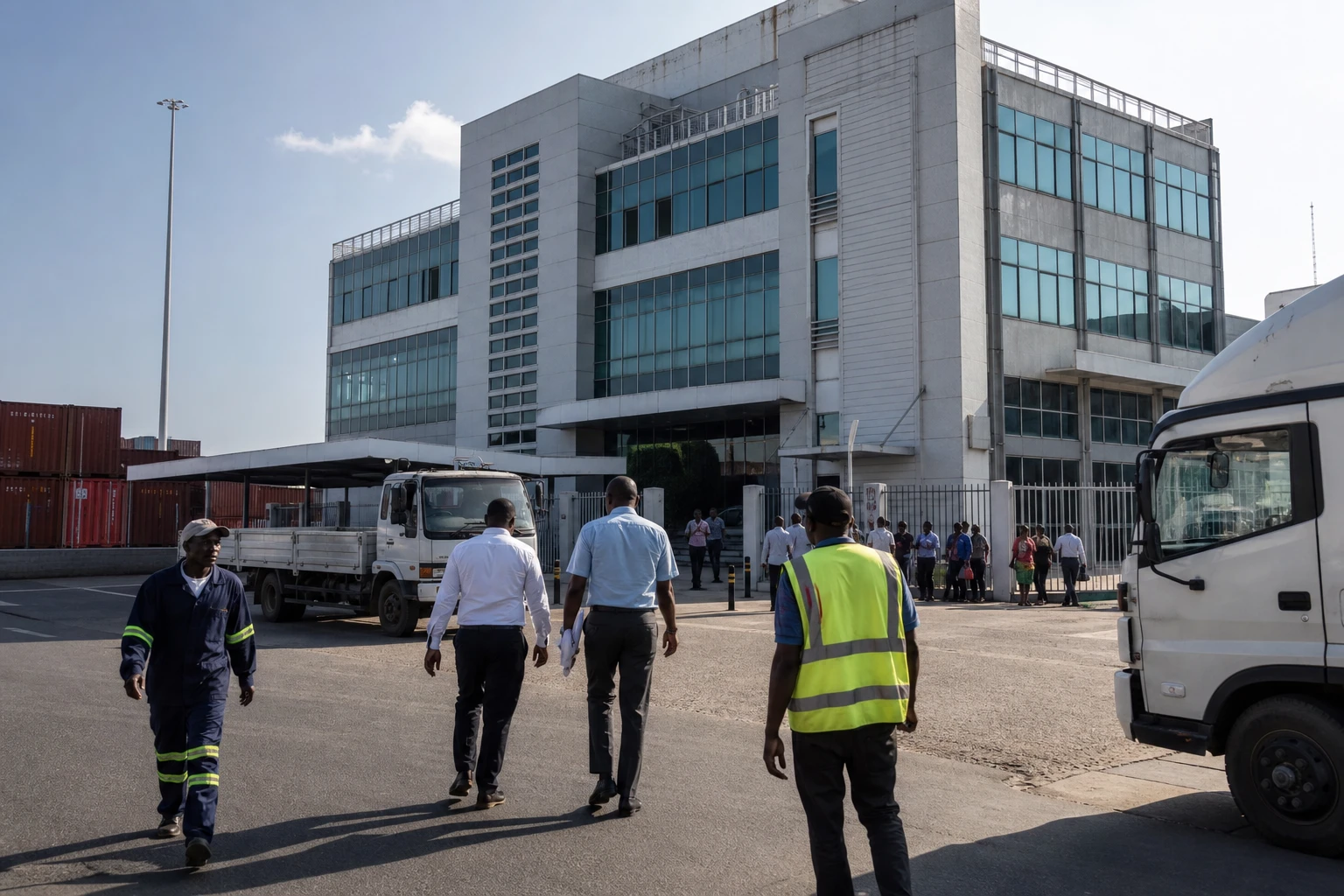
A new sea route for a project with an impact across northern Mozambique
At Afungi, in Cabo Delgado province, gas is not just about what lies underground or offshore. It is also about roads, ports and transit times. When an industrial project of this scale gets back on track, the first battle is often logistical. And in Mozambique, the issue has an immediate bearing on Maputo and Nacala, as well as on the corridors that serve the country’s interior and neighbouring states.
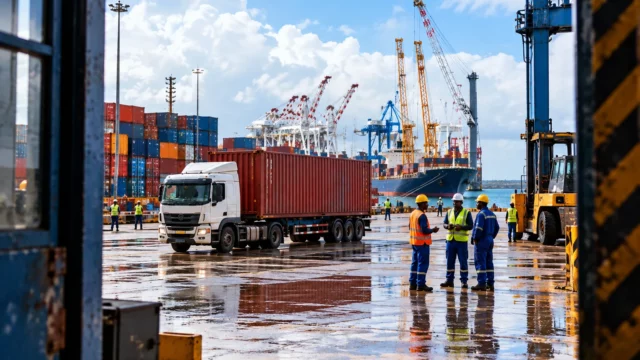
It is in this context that Mediterranean Shipping Company has launched Afungi Shuttle, a dedicated sea link for the Mozambique LNG project. The service is intended to transport construction materials, machinery, spare parts and other cargo to the site. MSC presents the service as designed to support growing activity in northern Mozambique.
Nacala and Maputo, two gateways taking on a new scale
The choice of Nacala and Maputo is no coincidence. Nacala is one of the main outlets for the northern logistics corridor, linked to the hinterland by rail and connected to trade with Malawi and Zambia. Maputo, meanwhile, remains the main gateway in the south, anchored to the economic corridor with South Africa. These two platforms are now handling a growing share of flows linked to Afungi.
This arrangement says much about Mozambique’s strategy. The country is not betting on a resource alone. It is also seeking to develop corridors that can serve gas, as well as other goods, to the hinterland and the region. This is one reason why SADC is closely monitoring Mozambique’s energy and transport infrastructure, particularly in the context of a regional gas market.
For shipping companies and subcontractors, the benefit is simple: a single point of contact, one booking and a more transparent transport chain between Europe, Asia, the Middle East and Cabo Delgado. For a site this isolated, that simplification is almost as valuable as new equipment.
Afungi’s restart revives promises, but also very concrete expectations
The launch of such a sea link comes after the full resumption of Mozambique LNG activities, announced in Afungi on 29 January 2026 by TotalEnergies and Mozambican President Daniel Chapo. The presidency then cited a total investment of about $15.4bn and potential public revenues of $35bn over the project’s lifetime. TotalEnergies, for its part, said that more than 4,000 workers were already engaged at that date, including more than 3,000 Mozambicans.
In July 2026, the group also said that construction was 42% complete and involved more than 6,000 people, according to statements reported by the trade press. These figures show that the industrial phase is gathering pace. But they also serve as a reminder that every stage of the project depends on a robust supply chain, in a province long marked by insecurity and work stoppages.
For the Mozambican state, the challenge is twofold. On the one hand, it must turn a gas field into revenue, jobs and infrastructure. On the other, it must ensure that the local economy is not confined to the role of transit zone. The announced direct jobs, technical training and expansion of port services could benefit Mozambicans, provided the gains are not limited to major contracts and industrial enclaves.
What this service says about Mozambique in 2026
The Afungi case therefore goes beyond the gas project alone. It shows how Mozambique is trying to turn its geographical position into a strategic advantage. Maputo remains tied to South African trade. Nacala serves the north and the regional interior. Afungi, meanwhile, is becoming a test of capacity for the country’s entire logistics arc. If this link holds, it could make the case for other mining, energy or industrial projects in southern Africa.
But its continental significance is even broader. Mozambique LNG is one of sub-Saharan Africa’s major gas projects. Its revival is being watched by SADC states, investors and neighbouring countries already observing how port corridors are used. For southern Africa, the real question is not only when the first LNG cargo will leave, expected in 2029. It is whether the infrastructure built around the project will durably strengthen regional connectivity, or remain a system geared towards a single construction site.
In Mozambique, where the capital Maputo remains the political centre and Cabo Delgado concentrates hopes for gas, this new sea link sums up a simple equation: gas does not travel alone. It brings ports, railways, jobs, security and economic trade-offs in its wake. That is where the strength of Mozambique’s bet will be determined, far beyond Afungi.