Algeria
 Egypt
 Libya
 Morocco
 Sudan
 Tunisia
 Benin
 Burkina Faso
 Cabo Verde
 Côte d'Ivoire
 Ghana
 Guinea
 Guinea-Bissau
 Liberia
 Mali
 Mauritania
 Niger
 Nigeria
 Senegal
 Sierra Leone
 The Gambia
 Togo
 Cameroon
 Central African Republic
 Chad
 DR Congo
 Equatorial Guinea
 Gabon
 Republic of the Congo
 São Tomé and Príncipe
 Burundi
 Comoros
 Djibouti
 Eritrea
 Ethiopia
 Kenya
 Madagascar
 Malawi
 Mauritius
 Rwanda
 Seychelles
 Somalia
 South Sudan
 Tanzania
 Uganda
 Angola
 Botswana
 Eswatini
 Lesotho
 Namibia
 South Africa
 Zambia
 Zimbabwe
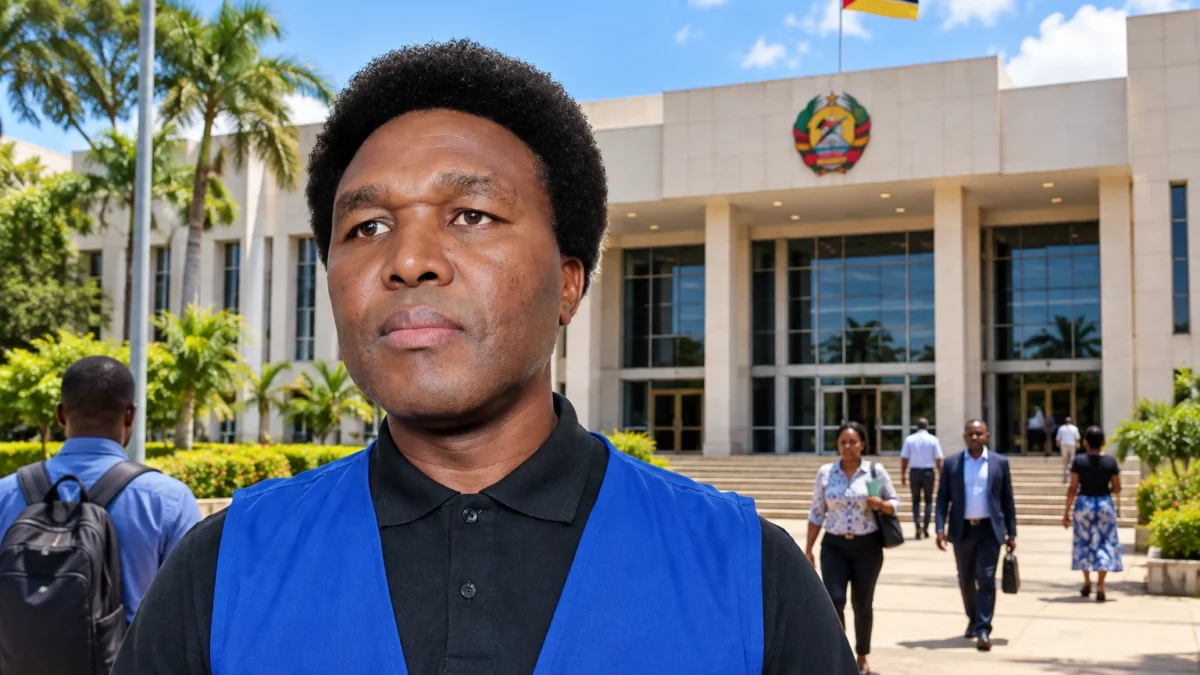
In Maputo, the opening of Venâncio Mondlane’s trial puts a question back in the spotlight that goes beyond the fate of an opposition figure: how can the justice system deal with the aftermath of a disputed election without deepening political mistrust? The case is part of a crisis that affected the capital, as well as several cities and regions of Mozambique.
A disputed election, and trust that remains fragile
On 9 October 2024, Mozambicans voted to elect their president, MPs and provincial officials. Daniel Chapo, the FRELIMO candidate from the party that has been in power since independence in 1975, was declared the winner. Venâncio Mondlane, who came second according to the official results, challenged the election and mobilised his supporters.
Criticism of the process has not come solely from the opposition. The European Union’s election observation mission noted irregularities in the counting and called for greater transparency on results by polling station. The Southern African Development Community (SADC), a regional organisation of which Mozambique is a member, also deployed an observation mission. These findings fuel debate about the credibility of the election, without superseding decisions by Mozambican institutions.
The protests that followed were suppressed. The death toll remains difficult to establish: Amnesty International, drawing in particular on data from the Mozambican organisation Plataforma DECIDE, reports about 315 deaths between 21 October 2024 and 16 January 2025. Other counts put the figure higher. In the absence of a consolidated, agreed toll, estimates should remain attributed.
Five charges before the Supreme Court
On Tuesday 17 November 2026, the Supreme Court opened Mondlane’s trial in its criminal division in Maputo. He faces five offences linked to the post-election protests, including incitement to terrorism, collective disobedience and the commission of criminal acts. He disputes the proceedings and says they are intended to silence the opposition. These charges do not amount to a finding of guilt: the court must examine the evidence presented by both sides.
According to information released before the hearing, 36 witnesses are due to testify, including 20 called by the defence. Telecommunications specialists are also expected to appear. If Mondlane were found guilty of the most serious charge, he could face up to 24 years in prison, according to information reported by the press. The length of the hearing and the date of any possible judgment have not been established.
Security has been stepped up around the Supreme Court. Traffic restrictions have been imposed on nearby streets and police have been deployed. This presence is intended to manage a politically sensitive trial; it does not, by itself, mean that unrest is imminent.
Proceedings watched beyond the courtroom
Mondlane, 52, gained considerable visibility during the protests, particularly among young voters. His influence also stems from his ability to rally support beyond conventional party structures. The trial could therefore have wider political consequences than those directly affecting the accused.
For the government and institutions, the challenge is to uphold the law while guaranteeing defence rights and transparent proceedings. For Mondlane’s supporters, the outcome will be viewed through the question of equal treatment of the government and opposition. For residents, tensions also have tangible effects: checks and road closures can disrupt travel and daily activity in the capital. In other regions, the situation depends on local mobilisations and cannot be reduced to what is happening outside the courtroom.
The case comes after an attempt to ease tensions. In March 2025, a meeting between Mondlane and President Daniel Chapo had raised the prospect of dialogue. But disagreements over the aftermath of the election and the treatment of protesters have not gone away. The trial therefore settles neither the electoral disputes nor calls for justice over the violence.
A test for Mozambique and SADC
Mozambique is a member of SADC, whose electoral principles and regional dialogue mechanisms provide a framework for discussions on political stability. The credibility of Mozambican institutions also matters to the African Union, which upholds continental standards on elections and the rule of law. The case does not allow any assumptions about the future positions of these organisations, but it will be watched in a region where relations between governments, opposition groups and electoral institutions remain an important political issue.
The next developments to watch are the conduct of the hearings, the parties’ access to the evidence and the reasoning behind any possible judgment. At the same time, how the authorities respond to challenges to the election and allegations of violence will weigh on public trust. For now, the trial opens a judicial process whose outcome remains unknown; by itself, it does not resolve the post-election political crisis.
SADC, the European Union and human rights organisations have documented different aspects of this period. Their work can be consulted in the preliminary observations of the SADC Electoral Observation Mission, the post-election statement by the European Union mission and Amnesty International’s report on the crackdown on protests.