Algeria
 Egypt
 Libya
 Morocco
 Sudan
 Tunisia
 Benin
 Burkina Faso
 Cabo Verde
 Côte d'Ivoire
 Ghana
 Guinea
 Guinea-Bissau
 Liberia
 Mali
 Mauritania
 Niger
 Nigeria
 Senegal
 Sierra Leone
 The Gambia
 Togo
 Cameroon
 Central African Republic
 Chad
 DR Congo
 Equatorial Guinea
 Gabon
 Republic of the Congo
 São Tomé and Príncipe
 Burundi
 Comoros
 Djibouti
 Eritrea
 Ethiopia
 Kenya
 Madagascar
 Malawi
 Mauritius
 Rwanda
 Seychelles
 Somalia
 South Sudan
 Tanzania
 Uganda
 Angola
 Botswana
 Eswatini
 Lesotho
 Namibia
 South Africa
 Zambia
 Zimbabwe
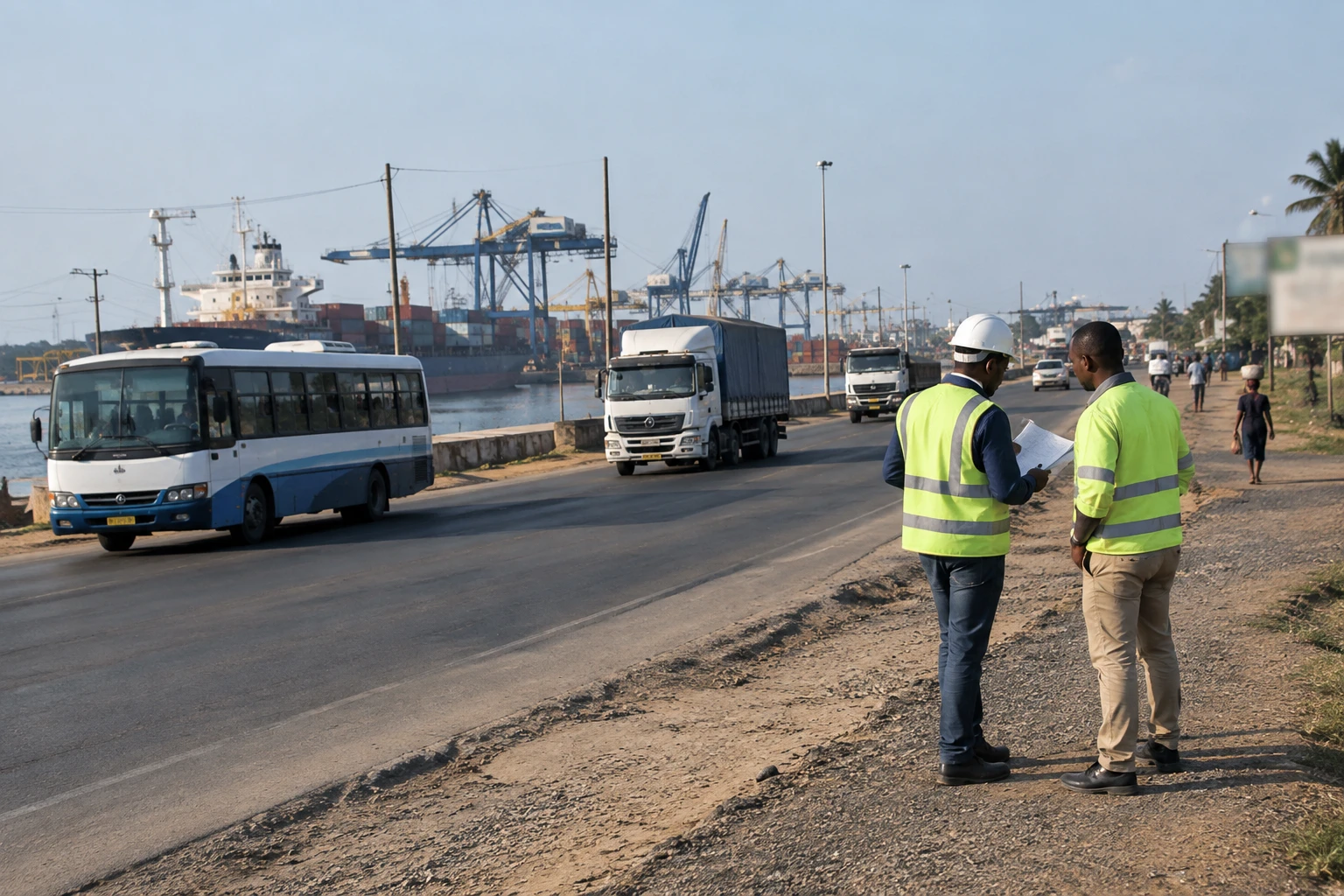
Can a terminal link northern Mozambique’s gas reserves to plants in the centre of the country and consumers in southern Africa? That is the aim of a project still under study, which also seeks to prepare for the expected decline in production from Pande and Temane in the country’s south.
From southern fields to Rovuma’s successors
Since the early 2000s, the onshore Pande and Temane fields have supplied customers in Mozambique and South Africa. Much of the gas travels through the ROMPCO network, an 865-kilometre pipeline linking Temane to the Secunda industrial complex in South Africa. Other connection points serve the Mozambican market, including power generation and industry.
However, production from the fields operated by Sasol is expected to decline. The group has already reported the natural depletion of reserves under its historic production agreement. According to the company’s report for the financial year ended in June 2026, gas production in Mozambique fell by 7% year on year, driven in part by the decline of some wells, operational constraints and flooding. This does not mean that all the country’s gas is running out: it concerns specific fields, while other developments are under way.
In the north, the Rovuma Basin is home to several liquefied natural gas (LNG) export projects. LNG is gas cooled for transport by ship. Coral South is already exporting LNG. Mozambique LNG, Rovuma LNG and Coral North are expected to increase available volumes on different timelines. Their schedules and ability to supply the domestic market remain key factors.
Proposed link between Inhassoro and Beira
On 11 November 2026, in Maputo, state-owned Empresa Nacional de Hidrocarbonetos (ENH) and Sasol signed a memorandum of understanding on the sidelines of the Africa Gas & LNG Summit. It opens a feasibility study phase, not a decision to build. The agreement provides for technical support from Sasol to examine the project and its engineering, environmental and social impact requirements.
The plan under consideration includes floating storage and regasification units, known as FSRUs. They can receive LNG, store it and then convert it back into gas for injection into a network. One facility is envisaged at Inhassoro, in Inhambane province, and another at the port of Beira, in Sofala province. A coastal pipeline of about 140 kilometres could connect this infrastructure to the existing ROMPCO network. Early descriptions of the project cited slightly different distances, so the final route remains to be determined.
The gas could thus flow from the north to consumption centres in the centre and south, and potentially on to South Africa. This arrangement would depend on actual LNG supplies, terminal capacity and network access conditions. In October, ENH cited an overall cost of close to $250 million and a target start-up date between 2030 and 2031. These estimates relate to a proposal: neither full financing nor a final investment decision has been announced.
An industrial opportunity, and a test of how benefits are shared
For Mozambique, the project first raises the question of markets. New resources will contribute to the national economy only if infrastructure can transport them and buyers come forward. ENH wants to link northern fields to demand in the centre and south. Factories, power producers and other connected consumers could benefit from a more diversified supply. The impact on households, however, will depend on access to networks and the price of gas; a terminal alone does not guarantee cheaper energy.
The balance between exports and domestic use will also be closely scrutinised. Gas can support industrial activity and power generation, but revenues, transport costs and financial risks are not automatically shared between the state, companies and the population. The creation of the state-owned company Serviços de Logística Integrada de Gás Natural de Moçambique, involving ENH, EDM, CFM and HCB, among others, places the project within a national infrastructure initiative. It remains to be specified who will finance the equipment, who will bear the risks and on what terms users will buy the gas.
For South Africa, the priority is different: securing supplies for industries already connected to Mozambican gas. Cooperation with Sasol and ROMPCO therefore serves shared interests, without making them identical. Mozambique aims to develop its domestic market and revenues; regional operators also want to preserve volumes for their customers. The balance between these objectives will need to be reflected in contracts and network access rules.
SADC, a regional framework for energy integration
This infrastructure forms part of a broader debate within the Southern African Development Community (SADC), the regional organisation that brings together Mozambique and its neighbours. Its gas master plan covers the period 2023-2038 and identifies gas transport and use infrastructure at regional level. The Inhassoro-Beira project could contribute to this integration, but its coherence will depend on available networks, commercial agreements and actual demand in the countries concerned.
For now, the next step is technical: assessing the feasibility of the terminals, the connection, supply and financing. The Mozambican government has granted ENH a concession covering infrastructure at Inhassoro and the port of Beira. This provides a framework for development, without removing commercial or financial uncertainties. The 2030-2031 dates therefore remain targets, not a confirmed construction schedule.
The issue extends beyond building a pipeline. It tests Mozambique’s ability to turn its Rovuma resources into energy accessible to domestic businesses while maintaining trade with southern Africa. The next decisions on the feasibility study, investments and sales contracts will show whether the corridor becomes a tool for energy security or remains a proposal on paper.